
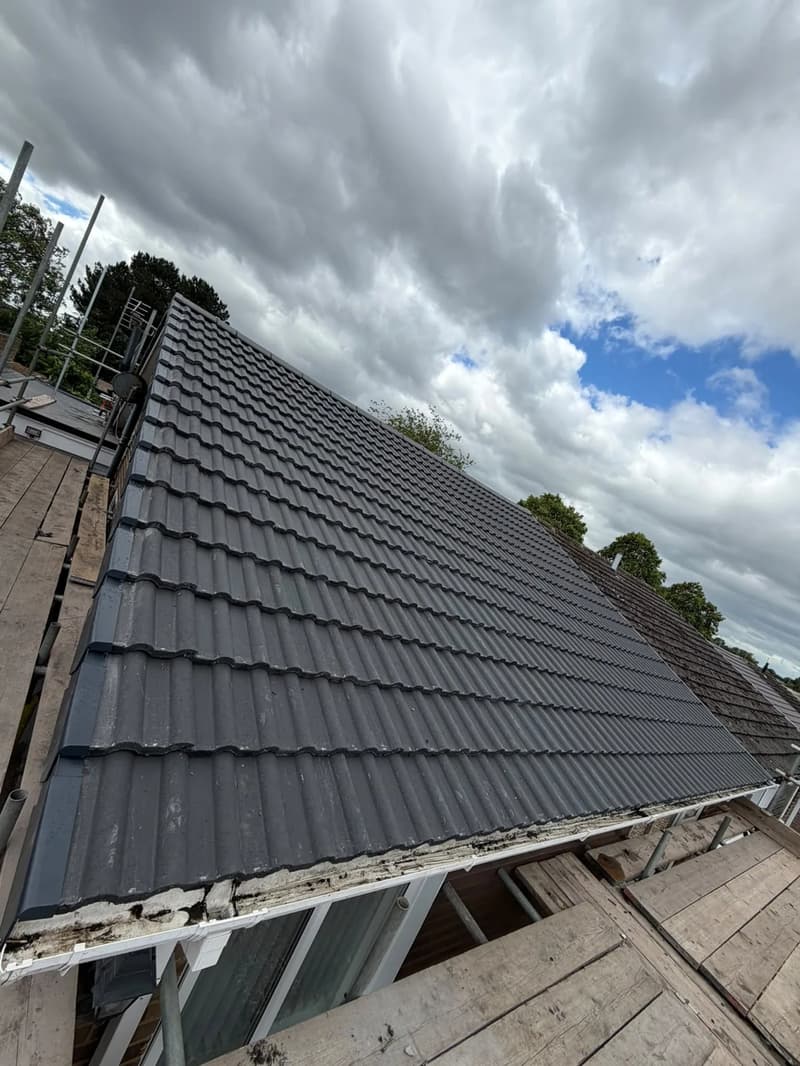
Roof work by McCluskey Roofing
Build checks around your roof’s condition
A roof with mature trees nearby, shared valleys or several flat sections has different maintenance concerns from a clear, simple pitched covering. Notice where debris tends to collect and whether any defect has returned after previous work. The frequency and scope of inspections should reflect these circumstances rather than an arbitrary routine applied to every house.
From the ground, look for displaced tiles, obvious changes at the ridge and overflowing gutters. Indoors, note new damp marks or changes after rain. Keep observations factual: when the symptom appears, which area is affected and whether anything has changed nearby. These details are more useful for an assessment than deciding in advance that the roof needs a particular treatment.
Keep the drainage system effective
Leaves, moss and small fragments can obstruct gutters and outlets, directing water down walls or onto vulnerable roof junctions. Clearance can restore flow where debris is the cause, but joints, brackets and downpipes may have their own faults. Drainage maintenance should distinguish blockage from a damaged or poorly supported fitting.
Shared runs and concealed outlets can make overflow harder to trace. Mention these arrangements when you enquire so access and responsibilities can be discussed. Avoid reaching from an unstable ladder to clear a corner; work at the roof edge still needs an appropriate safe method, even where the obstruction looks easy to remove.
Treat moss as a condition question, not a sales trigger
Growth should be assessed in relation to the covering and drainage. Heavy clumps may hold moisture or shed into gutters, whereas a light surface film may not justify intervention. Aggressive cleaning can damage tiles or disturb fragile details. The objective is suitable care, not making an older roof appear newly installed at any cost.
Where removal is appropriate, the proposed method should suit the roof material and include collection of debris. Pressure washing is not a universal maintenance solution. A cleaning discussion should also identify any slipped coverings or failing mortar that need repair, rather than treating cleaning as a substitute for putting those defects right.
Address local defects before they become wider problems
A displaced slate, split flashing or loose ridge component can let water reach layers that are not intended to remain wet. A targeted repair may be suitable where the surrounding roof is sound. The appropriate response is to assess the cause and secure the detail, not simply apply a patch wherever water appears inside.
Repeated faults in neighbouring areas can indicate a broader issue with fixings or supporting material. At that point, maintenance and replacement need comparing honestly. Records of previous work can help show whether problems are isolated or spreading. Keeping them does not require a technical diagnosis; the date, location and description of the repair are useful.
Use an inspection to set priorities
A roof survey can help separate immediate repairs from monitoring and optional maintenance. It should explain what was seen and where access limits the findings. Hidden underlay or covered timbers cannot all be assessed from a distant view, so further investigation may sometimes be needed before the full scope is understood.
Ask which observations justify action and which can be kept under review. Maintenance should not be presented as a guarantee that no future leak will occur. Roof coverings remain exposed to weather, and conditions can change. The practical aim is a proportionate plan based on the construction and defects actually identified.
Plan the next step without unsafe access
McCluskey Roofing takes enquiries across Wallsend, Newcastle and the North East. Explain what you have noticed, whether there are known previous repairs and if gutters or roof junctions are hard to reach. The existing quote form provides a starting point for a maintenance discussion; any attendance arrangements and work scope can then be agreed for your property.