
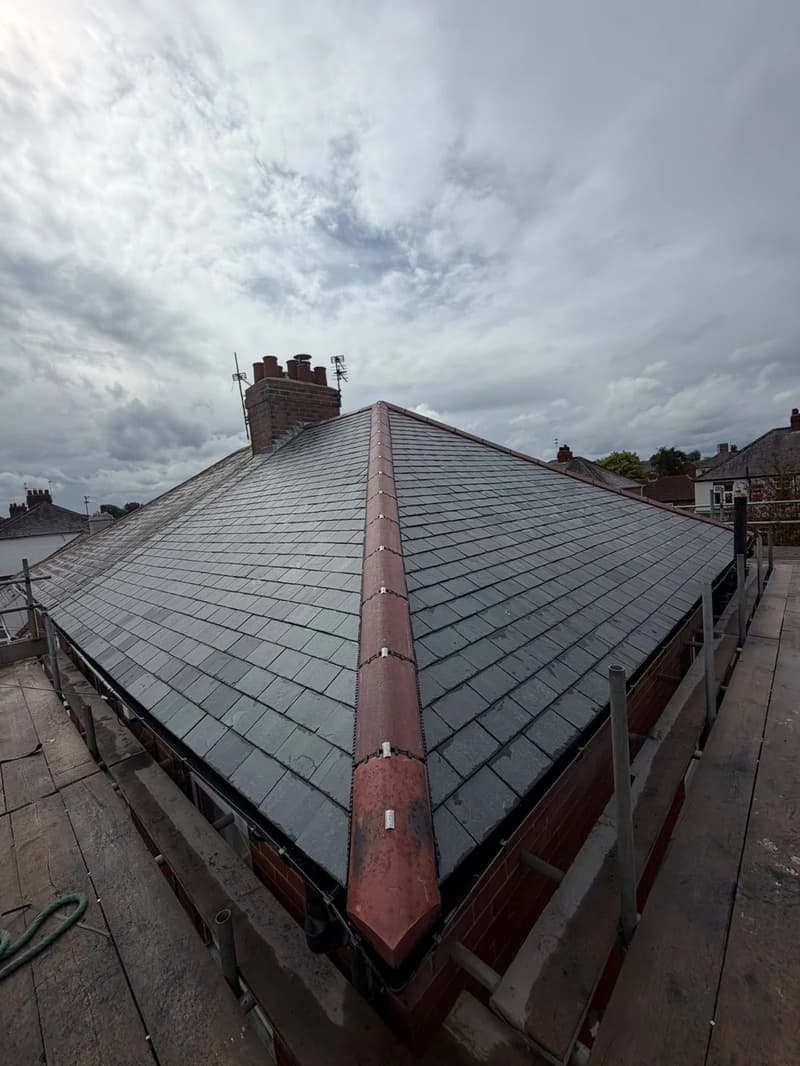
Roof work by McCluskey Roofing
Why one roof has no single expiry date
A pitched roof is an assembly of parts with different jobs. Slates or tiles shed rain, battens support the covering, fixings hold it in place and underlay provides secondary protection. Flashing manages difficult junctions around walls and chimneys. Failure of one component can cause a leak long before every part of the roof has deteriorated. Conversely, an attractive surface can hide weakened supports or damaged underlay.
Exposure, pitch, installation quality and previous alterations all influence performance. A sheltered simple slope is not directly comparable with a complicated roof containing several valleys and shared junctions. The useful starting point is evidence of condition, not a generic lifespan quoted for a material. An assessment should explain which components are sound, which need attention and what remains uncertain without opening the roof.
Slate condition and fixing failures
Natural slate can remain usable while its fixings or surrounding roof details require attention. Slipping pieces may indicate a local fixing issue, but repeated movement across a slope needs a broader examination. Splitting, flaking and damage around nail holes can also affect whether individual slates are suitable for reuse. The appearance from the pavement alone cannot establish the condition of each piece.
When comparing repair and replacement, distinguish isolated slate damage from a recurring pattern. Replacing a few pieces does not renew hidden battens or underlay. Equally, a local leak is not proof that all the slate must be discarded. The decision should reflect the extent of deterioration, safe access and the practicality of dealing with underlying defects without disturbing most of the covering.
roof replacements
- Slate or tile options suited to the roof
- Supporting structure inspected after stripping
- Local defects compared with wider roof condition
Need advice about your roof?
Tell us what you’ve noticed. We’ll discuss the next step towards a free quote.
Request a free quoteTiled roofs and the details between them
Tiles can crack, shift or lose material at exposed edges, but the joints and accessories around them also matter. Ridges, verges and valleys concentrate weather exposure and movement. A failing mortar joint or damaged flashing may explain water ingress even where the main tiles remain sound. The shape and fixing requirements of the existing tile need checking before deciding how a defect should be repaired.
Look for changes rather than trying to calculate a replacement date. New fragments in gutters, repeated slips and staining after particular weather can help direct an inspection. Avoid walking on the roof to test its strength. Tile profiles, hidden damage and the height involved make that unsafe, and an improvised inspection can create additional problems without revealing the underlying cause.
Maintenance, weather and alterations
Blocked drainage, debris in valleys and unchecked local defects can increase the strain on otherwise serviceable parts. Maintenance cannot reverse worn-out materials, but it can identify developing problems before they spread. Roof additions also deserve attention: a new rooflight, extension connection or chimney alteration changes local detailing. Problems near those features should not be attributed to age without investigating the actual junction.
Wind damage can expose an existing weakness, while a sound-looking roof may have concealed deterioration from earlier leaks. Keep a record of what changed, when moisture appeared and what repairs were previously attempted. This history is useful during an assessment because intermittent leaks may not be visible on a dry day. It supports a condition-based decision rather than an assumption about the roof’s age.
Deciding whether to repair or plan replacement
A local repair is easier to justify when the defect is identifiable and the surrounding construction is serviceable. Replacement becomes a different discussion when damage is widespread, hidden layers need renewing or repeated repairs have not resolved the cause. Ask for the reasoning behind the recommendation and which areas were inspected. There is no meaningful deadline that applies equally to every pitched roof.
Flat roofs have different coverings and drainage arrangements, so their condition should be considered separately. For pitched roofs, compare the proposed work against your plans for the building, access requirements and the roof’s supporting structure. A written scope should distinguish confirmed repairs from items that may only become visible after stripping. That clarity is more helpful than being given a fixed number of remaining years.
Need it sorted? Book roof replacements
If you are unsure whether your pitched roof needs repairs or replacement, contact McCluskey Roofing with its covering type and the changes you have noticed. Mention recurring slips, leak history and earlier work, rather than relying on an estimated installation date. A free quote can follow discussion of the roof’s condition and the next assessment step across Wallsend, Newcastle and the North East.