
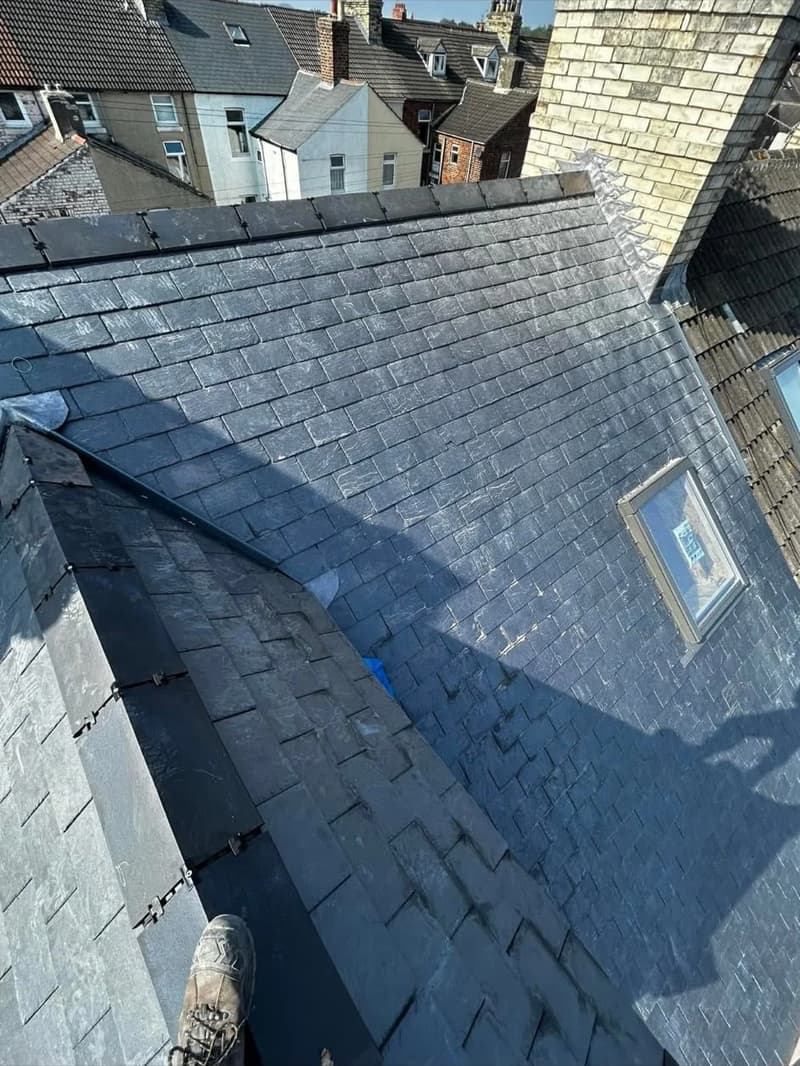
Roof work by McCluskey Roofing
How a lead valley works
The valley boards are fixed between the slopes and lined with lead sheet laid in lengths, each one lapping over the one below. The slates or tiles on each side are cut to line and sit over the edges of the lead, leaving an open channel down the middle.
Water runs down that channel to the gutter. The laps, the edges and the width of the open channel all matter.
Why lead valleys leak
Lead expands and contracts with temperature. If the lengths are too long or fixed too tightly, the metal can crack over the years. Older valleys can also have thin lead, splits from slipped slates landing on them, or holes worn by grit and moss.
Debris is a common culprit. Leaves and moss build up in the channel, water backs up and spills over the edges under the slates. Sometimes the valley was simply laid too narrow for the amount of water it receives.
Signs of a roof leaking at the valley
Damp patches inside that line up with the valley, staining on the timbers in the loft along the valley line and water marks after heavy rain are the usual signs. Outside, you may see moss build-up, cut slates that have slipped or lead that looks split.
Our roof leaks page explains how to narrow down a leak more generally.
Roof valley repair options
If the lead is sound and the issue is debris or a few loose slates, clearing and refixing may be enough. Small splits can sometimes be repaired, but patches on lead rarely last as well as the sheet itself.
Lead valley replacement means lifting the cut slates or tiles each side, removing the old lead, checking the boards and laying new lead in properly sized lengths, then refixing the covering.
GRP and dry valley alternatives
Preformed GRP valley troughs and dry valley systems are used on some tiled roofs. They come in long lengths and are quick to fit. On older slate roofs and where the valley shape is unusual, lead is often still the better fit. We will talk through what suits your roof.
Valley width and capacity
Older valleys were sometimes laid narrow, with the slates cut close together. On a big roof, that may not be wide enough to carry all the water in a heavy storm, so it overflows under the slates. A new valley can be laid with a wider open channel to cope better.
Cut slates and tiles
The slates or tiles along each side of a valley are cut on a slant to follow its line. These cut pieces have fewer fixings than full slates, so they slip more easily. Refixing or replacing them is part of any valley repair.
Where tiles are used, a mortar bedding is sometimes used along the valley edge. Cracked mortar there can let water in and is often replaced at the same time.
Keeping valleys clear
Moss and leaves collect in valleys, particularly where trees overhang. Clearing them now and then prevents water backing up. If the valley is high or difficult to reach, it is safer to have it done as part of a roof check.
Neighbouring roofs
On terraces, a valley sometimes runs between your roof and the next one. Agreeing access with your neighbour makes the work simpler.
Related leadwork and next steps
Valleys are one part of the leadwork on a roof. Our leadwork page covers flashings and abutments. If you think a valley is leaking, tell us and we will check it and give you a free quote.