
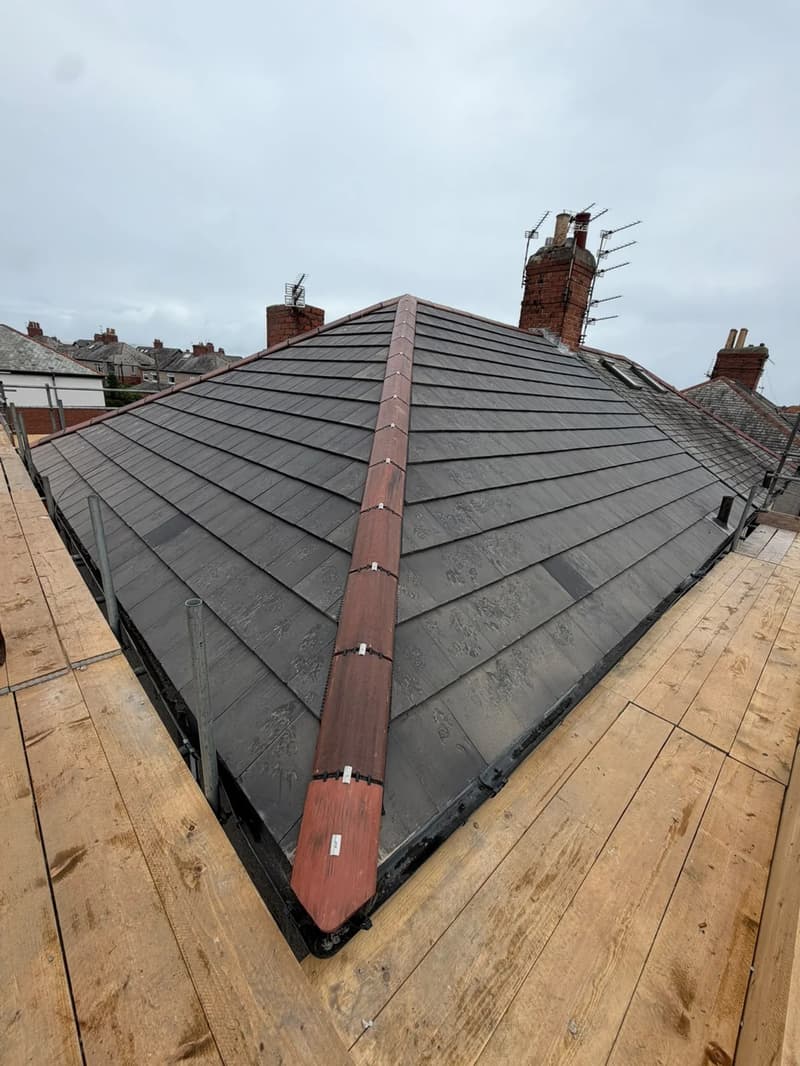
Roof work by McCluskey Roofing
Sudden damage versus gradual wear
Most home buildings policies are designed to cover sudden, unexpected events. Many insurers treat storm damage as one of those events, depending on how the policy defines a storm and the wind speed or rainfall at the time.
Gradual problems are a different matter. Policies commonly exclude wear and tear, poor maintenance and gradual deterioration. A roof that has been slowly leaking because of worn mortar, rotten battens or old felt may not be covered, even if the leak finally showed up after heavy rain.
Does insurance cover storm damage?
If tiles, slates or ridge tiles were dislodged during a recognised storm, and the roof was otherwise in reasonable condition, many policies may respond. The insurer may check weather records for the date, and may ask whether the damage could have happened in normal conditions.
Our storm damage page explains the types of damage high winds commonly cause.
Roof repairs
- Leaks traced beyond the visible damp patch
- Ridge, verge and leadwork repairs
- Repeated leaks compared with replacement options
Need advice about your roof?
Tell us what you’ve noticed. We’ll discuss the next step towards a free quote.
Request a free quoteDamage to the inside of the house
Some policies distinguish between the damage to the roof itself and the damage caused inside by the water, such as ceilings, decoration and belongings. One may be covered when the other is not. Contents and buildings cover can also sit on different policies.
What evidence helps
Take dated photographs of the damage inside and of any visible damage outside from the ground. Keep a note of when you first noticed the leak and what the weather was doing. Keep any receipts for emergency measures.
A roofer can write down what they found and what they believe caused the damage. We can do that for you after an inspection, describing the condition honestly so you can pass it to your insurer.
Making a claim
Contact your insurer or broker as early as possible, as many policies require prompt notification. Ask whether they want to send their own assessor before repairs are made, and whether temporary repairs are allowed to prevent further damage.
Usually you are expected to take reasonable steps to stop things getting worse, such as catching water and having the roof made safe.
Why claims are declined
Common reasons include evidence of long-term wear, missing maintenance, leaks that pre-date the storm and damage below the policy excess. Understanding your policy wording before you need it can save frustration later.
Keeping the roof in good order
Regular checks, clearing gutters and fixing small faults early make a sudden failure less likely and help show the roof has been maintained. Our roof leaks page explains how leaks are traced and repaired.
Accidental damage and other covers
Some policies include optional accidental damage cover, which may respond to events such as someone stepping through a ceiling while checking a leak. Others offer trace and access cover, which helps pay to find a hidden leak, though this usually relates to pipes rather than roofs. Reading the policy schedule tells you which extras you have.
Excesses and no-claims
Every claim usually carries an excess, the amount you pay before the insurer contributes. For a small roof repair, the cost may be close to or below the excess. Making a claim can also affect future premiums or a no-claims discount, so some people choose to pay for small repairs themselves. That is a personal decision, and your insurer or broker can explain the effect.
Landlords and leaseholders
If you rent your home, roof repairs are normally the landlord’s responsibility, and you should tell them as soon as you notice a leak. In flats, including Tyneside flats, the roof may be covered by a shared or block policy. Check your lease or ask your managing agent who holds the buildings insurance before arranging any work.
Questions to ask your insurer
Ask whether your policy covers storm damage to the roof, damage to the inside from the water, temporary repairs, and whether they need a report or photographs before work goes ahead. Having those answers early makes the process smoother.
Need it sorted? Book a storm damage repair
If your roof has been damaged, call us and tell us what has happened. We will inspect it, explain what we find and give you a free quote.