
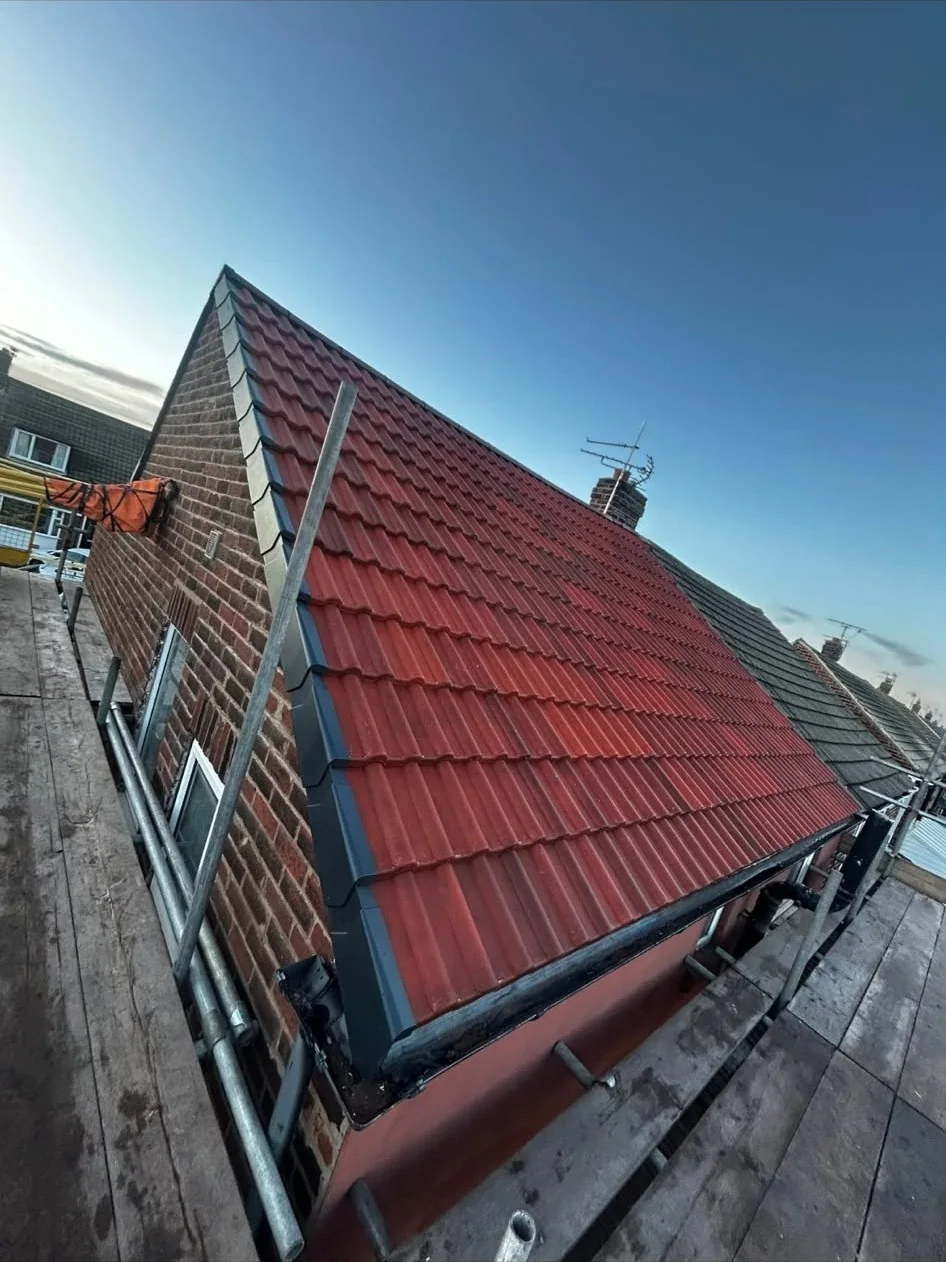
Roof work by McCluskey Roofing
First steps when water comes in
Start with safety. If water is near a light fitting, a ceiling rose or sockets, switch off that circuit at the consumer unit and keep people out of the room. A ceiling that is sagging or bulging with water can come down, so do not stand underneath it.
Put a bucket or a tray under the drip and move furniture, rugs and electrical items out of the way. If you can get into the loft safely, look for wet timber or a damp patch on the underside of the roof and place something to catch the water. Take photos inside and of the roof from the ground. Please do not climb onto the roof or a ladder in wet or windy weather to look for yourself.
Then call us on 07770 714430, Monday to Friday between 8am and 5pm. Tell us when the leak appears, roughly where it is in the house and what the roof is made of, if you know.
Where roof leaks usually start
On pitched roofs, a slipped, cracked or missing slate or tile is the most obvious culprit. Nails rust and break with age, and once one slate moves, rain can run straight onto the battens below. Ridge and hip tiles with failed mortar are another common source.
Lead flashings around chimneys, dormers and walls are just as frequent. Lead that has cracked, lifted, been nicked by a storm or simply patched with sealant will let water in at the junction. Valleys, where two slopes meet, carry a lot of water and can leak if the lead or valley tiles have failed or are blocked with moss and debris.
Chimneys themselves can also be the problem. Eroded pointing, a cracked flaunching at the top or a missing cowl lets water soak into the stack. On flat roofs, splits at the seams, tired upstands and blocked outlets are the usual causes.
How we trace a leak
Water rarely drips directly below the point where it gets in. It can run along a rafter, follow the underlay or track along the top of a wall before it shows on a ceiling. So we look at the whole route rather than the stain alone.
We ask when the leak happens. Only in heavy rain, only with wind from one direction, or after snow are all clues. We then inspect the roof above the affected area, the loft below it where accessible, and any nearby chimney, valley, rooflight or flat-roof junction. Once we have found the cause, we explain it to you, ideally with photos, before agreeing the repair.
Repair or replace?
Most leaks can be fixed with a targeted repair: refixing or replacing slates and tiles, renewing a section of flashing, re-bedding a ridge or rebuilding a valley. If the rest of the roof is sound, there is no reason to spend more.
Sometimes, though, the leak is a sign of a roof that is wearing out across the board. If slates are slipping all over, the underlay has perished or you are calling a roofer every winter, it is worth comparing the cost of repeated repairs with a planned replacement. Our guide on whether to repair or replace a leaking roof goes into this in more depth.
Leaks on flat roofs and conservatories
Flat roofs leak in different ways. Ponding water, blistered or cracked felt, split joints and failed upstands at the wall are the usual suspects. Water can travel a long way under a flat covering, so the drip inside may be some distance from the defect.
Conservatory leaks are often at the junction with the house wall or around the roof bars and glazing seals. If your conservatory roof keeps leaking, replacing it with a solid tiled roof may be worth considering rather than chasing individual seals. Our flat roof repairs page covers flat roofs in more detail.
After the repair
Once the repair is done, we tell you what we found, what we fixed and anything else we noticed that you might want to keep an eye on. We clear away old materials and debris before we leave.
Give damp ceilings time to dry out completely before redecorating. A stain-blocking primer stops the mark coming back through new paint. If a leak was caused by wind damage, our storm damage page explains what to look for.
Information that helps us
Before we visit, note down which rooms are affected, whether the leak gets worse in certain weather and when you first noticed it. If you have had work done on the roof before, let us know what it was. These details often shorten the search.
Areas covered
We are based in Wallsend and repair roof leaks across Newcastle, North Tyneside, South Tyneside and the wider North East, including Durham and Morpeth. See the full list on our areas page.