Roof work by McCluskey Roofing
Repeated leaks: follow the pattern
Write down where damp appears and which weather conditions precede it. A leak beside a chimney during driven rain suggests a different investigation from widespread damp after a long wet spell. The interior mark may be some distance from the actual entry point because water can travel along timbers or supporting layers.
Several visits for the same symptom do not automatically prove a whole roof is worn out. An unresolved junction defect could be the cause. Equally, repairs spread across several slopes may indicate that the supporting system deserves broader attention. Bring any previous descriptions of work into the discussion so the assessment does not begin without that useful history.
Changes across the covering rather than one piece
A single cracked tile or slipped slate may have a local cause. Repeated slippage, many broken pieces or signs of widespread fixing deterioration create a different picture. The important question is whether sound material surrounds a limited defect or whether similar weaknesses recur throughout the roof. That distinction cannot reliably be made from colour or surface weathering alone.
Look from the ground where the view is clear, without trying to reach the roof. Safe photographs can record changes, but shaded slopes and awkward angles may hide details. A roofer may need suitable access to assess the covering properly. The purpose is to understand the extent of the issue rather than count visible pieces and turn that count into a replacement rule.
Supporting layers can change the decision
The finished slates or tiles shed most rain, but underlay, battens and fixings are part of the wider construction. Renewing one tile does not restore deteriorated layers beneath a large area. Where these concealed parts are a concern, limited lifting may be needed to establish their condition. An inspection should explain what can be seen and what remains uncertain.
If work exposes hidden deterioration, the scope may need discussing before proceeding. That is different from assuming an unseen defect exists in every old roof. Ask what evidence supports the proposed approach and which elements would be renewed. A replacement should be described as a construction sequence, not merely a change in the colour of the visible covering.
An uneven roofline calls for assessment
A newly noticeable dip, twist or change in alignment deserves professional attention. It can involve the structure rather than only the outer covering. Photographs taken safely over time may help explain whether the shape has changed. Do not enter an unsafe roof space or move timbers in an attempt to investigate the cause yourself.
A structural concern does not tell you which replacement covering is suitable. Support, load and the proposed work need considering together, with further specialist input where appropriate. Ask the roofer to distinguish surface repair from structural investigation. A new covering alone cannot be assumed to correct a problem in the framework below it.
Interior damp is evidence, not a diagnosis
Ceiling stains, damp insulation or moisture near a roof junction can help locate an investigation. Condensation and other building defects can also produce moisture, so it is important not to label every interior mark as a leaking tile. Explain whether the room is heated and whether the issue follows particular rain or temperature conditions.
Avoid electrical fittings affected by water and keep clear of a sagging ceiling. For an immediate danger, contact the appropriate emergency service. Otherwise record observations from a safe position and arrange assessment. Drying or repainting the mark may conceal the symptom without resolving its source, while automatically replacing the roof could miss another cause entirely.
Compare the proposed scopes, not just the appearance
A repair proposal should identify the affected detail and any nearby components involved. A replacement proposal should explain preparation, support, covering and relevant junctions. Access and waste arrangements matter in both cases. Ask what is included, what assumptions remain and how any findings after stripping would be discussed before extra work is agreed.
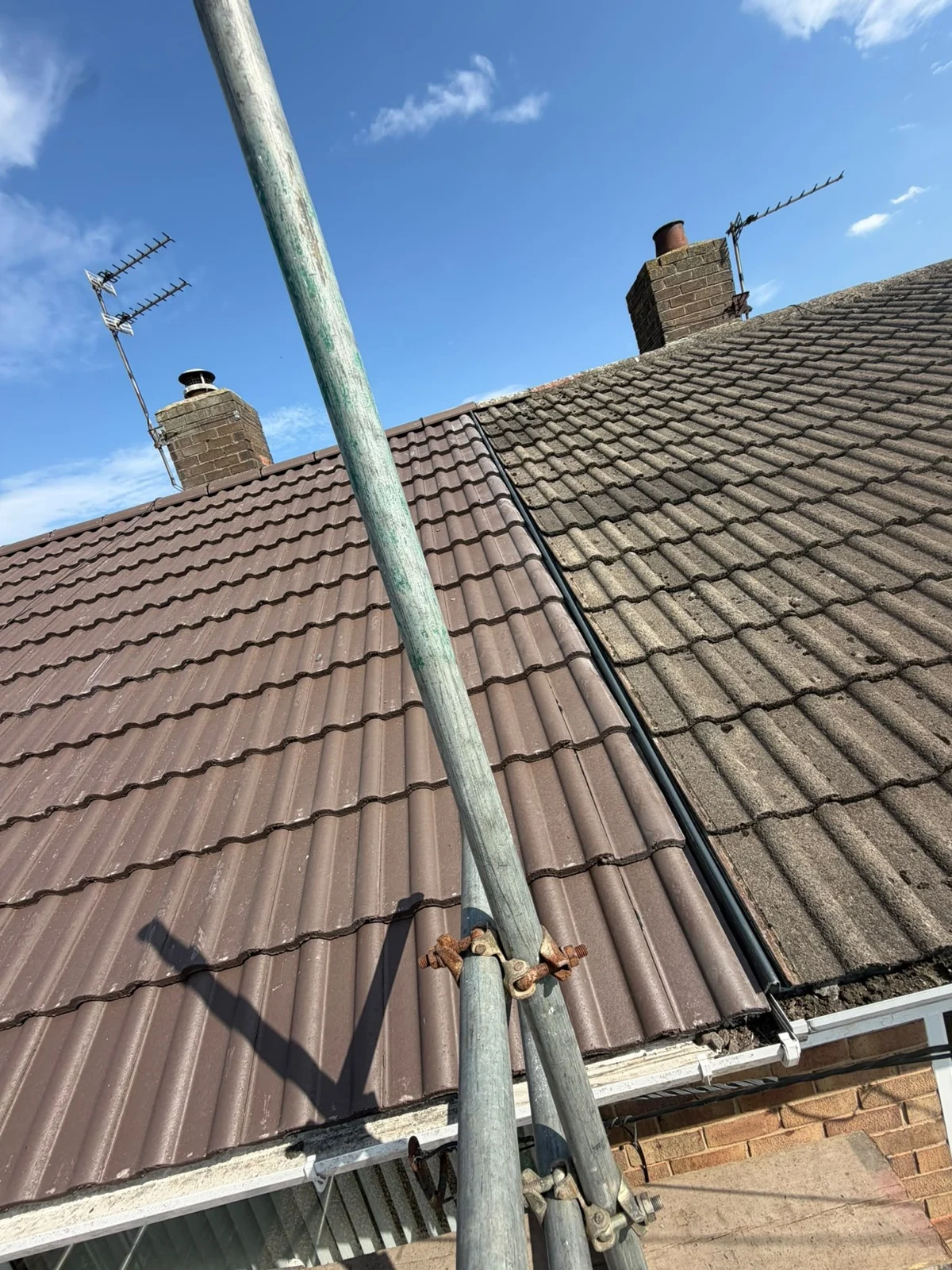
Different coverings on neighbouring homes can look striking, as the photograph illustrates. Appearance can prompt a useful conversation, but it cannot establish the condition of hidden layers or fixings. Your decision should rest on the assessment and an understandable scope, with the distinction between repair and renewal clearly explained.
Keep a useful record without repeated disruption
An ordinary note of dates, weather and the room affected can be more useful than repeatedly disturbing a roof detail. Record changes you can see safely and keep earlier quotations or descriptions of completed work together. This gives the inspection a consistent history instead of several disconnected explanations.
Do not lift tiles, touch damp electrical equipment or move insulation to investigate an uncertain structural problem. The information you provide should help a professional plan the assessment, not create an additional risk while gathering evidence. Ask what further observations would actually be useful before attempting anything beyond a safe view.
Prepare useful questions for the inspection
Ask whether defects are local, whether the surrounding materials can support a repair and what evidence suggests broader renewal. Enquire about ridges, valleys, flashings and ventilation as part of the roof system. If a change in material is proposed, discuss structure and any planning or building control considerations before treating it as a simple visual choice.
There is no need to choose the answer before contacting us. Explain the postcode, roof type and pattern you have observed, including previous work if known. For a free quote and a discussion of the next step, call 07770 714430 during Monday to Friday, 8am to 5pm.