Roof work by McCluskey Roofing
Start by separating the two systems
A roof covering can be visually similar to the existing one yet still involve work that needs building control consideration. Conversely, an appearance change can raise planning questions even where the supporting construction is straightforward. Avoid treating a statement that planning permission is unnecessary as proof that no other approval or assessment is required.
Describe the full proposed scope when asking for advice. Replacing slates, changing the covering material, altering the structure and converting a conservatory roof are not interchangeable descriptions. The more accurately you explain what will happen, the easier it is for the relevant authority or professional to identify which requirements may apply.
Like-for-like re-roofing and planning
In England, replacing a covering on a broadly like-for-like basis usually does not require planning permission. That general position must not be assumed for every building. A change in materials, height or roof form can affect the position, and permitted development rights may be limited by specific controls or conditions attached to the property.
Listed buildings and conservation areas require particular care. Listed building consent and planning permission are separate considerations, and local restrictions can affect external changes. Confirm the actual status and applicable controls with the local authority rather than relying on the age of the house or the appearance of neighbouring roofs as evidence.
Substantial work can raise Building Regulations questions
A re-covering project can involve thermal elements as well as weatherproofing. The extent of the work, existing construction and insulation proposals can influence the requirements. Structural loading also matters when the covering changes. The appropriate building control body should confirm what needs approval or inspection for the scope being considered.
Do not assume that retaining the visible roof shape makes the work exempt. Equally, this guide does not set a universal approval rule for every minor repair. Ask how the work is being classified and what documentation or inspections may be needed. Understanding those steps before stripping the roof helps avoid a decision made too late in the sequence.
Changing a glazed conservatory roof to a solid one
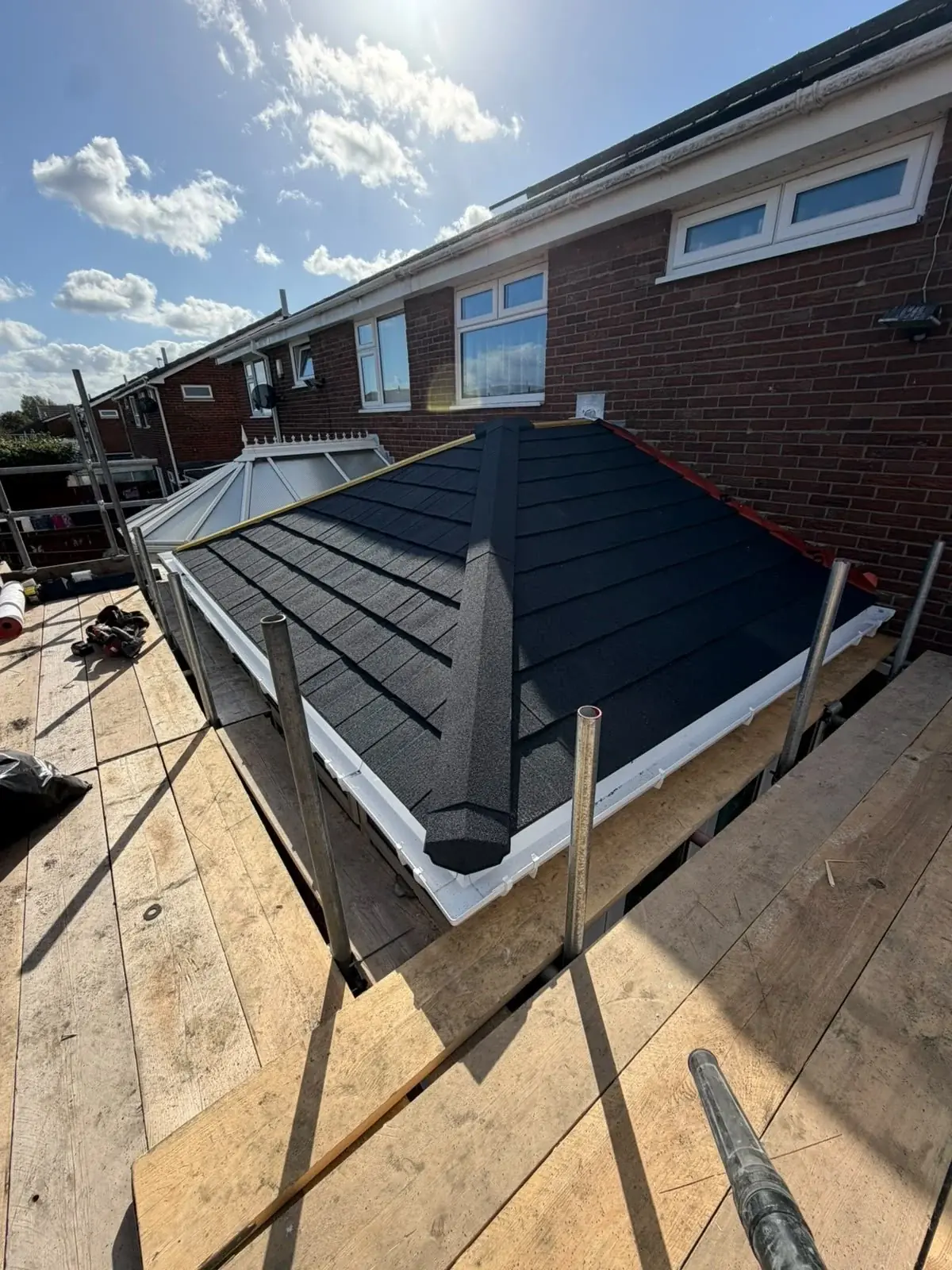
Replacing a glazed or polycarbonate conservatory roof with a solid insulated construction normally brings Building Regulations into consideration. The change affects the structure and thermal performance, not just the covering above the room. Existing frames, supporting elements and the connection to the house need assessing for the proposed system.
Planning permission may still be a separate question, depending on the property and changes involved. Do not assume a claim that the original conservatory was exempt automatically applies after conversion. Seek building control confirmation and ask what structural information will be required. A product photograph cannot establish that an existing conservatory is suitable for the same roof.
Restrictions are attached to the individual property
Two homes on the same street can have different planning histories. Permissions, conditions and removed permitted development rights can change what is allowed. Local designations should be checked using the authority records rather than inferred from a general neighbourhood description. This is especially important before changing a prominent covering or roofline.
If you know the building is listed or has a relevant restriction, mention it at the first roofing enquiry. If you are unsure, ask the local authority how to establish the position. A contractor can discuss the proposed roofing scope, but this website does not provide a legal guarantee or replace an official decision about consent.
Useful questions before agreeing a proposal
Ask whether the specification changes load, insulation, roof height or appearance. Clarify who will establish the approval requirements, submit any necessary application and arrange inspections. Those responsibilities should not be left ambiguous simply because the practical roofing work seems familiar. The proposal can then be considered alongside the relevant process and timing.
Where further design or structural advice is required, establish what information is needed before work begins. Hidden defects found after stripping can also affect the scope, so discuss how those findings would be handled. Approval questions and construction decisions are related, but neither should be treated as a substitute for understanding the other.
Keep consent and completion information distinct
A planning decision does not certify that construction complies with Building Regulations, and a building control process does not determine whether a separate planning consent is needed. Ask which records relate to each system so the documentation is understood correctly rather than collected as interchangeable proof.
Where a property-specific condition is unclear, resolve it through the relevant authority before relying on a contractor quotation alone. The roofing proposal identifies intended work; it does not replace a regulatory decision. This distinction remains important even when the change seems small or several neighbours have already altered their roofs.
Use current official guidance, then confirm locally
The Planning Portal provides a useful starting point for England guidance on roofing and conservatory changes. Its general explanations help frame questions but do not determine the position for every property. The local planning authority and the relevant building control body are the places to confirm project-specific requirements and any local restrictions.
Keep a record of the advice or approval relevant to the work, and ask what completion information may be needed. Rules and guidance can change, so check the current position rather than relying on an old forum discussion. For the roofing assessment itself, call 07770 714430 for a free quote during Monday to Friday, 8am to 5pm.