
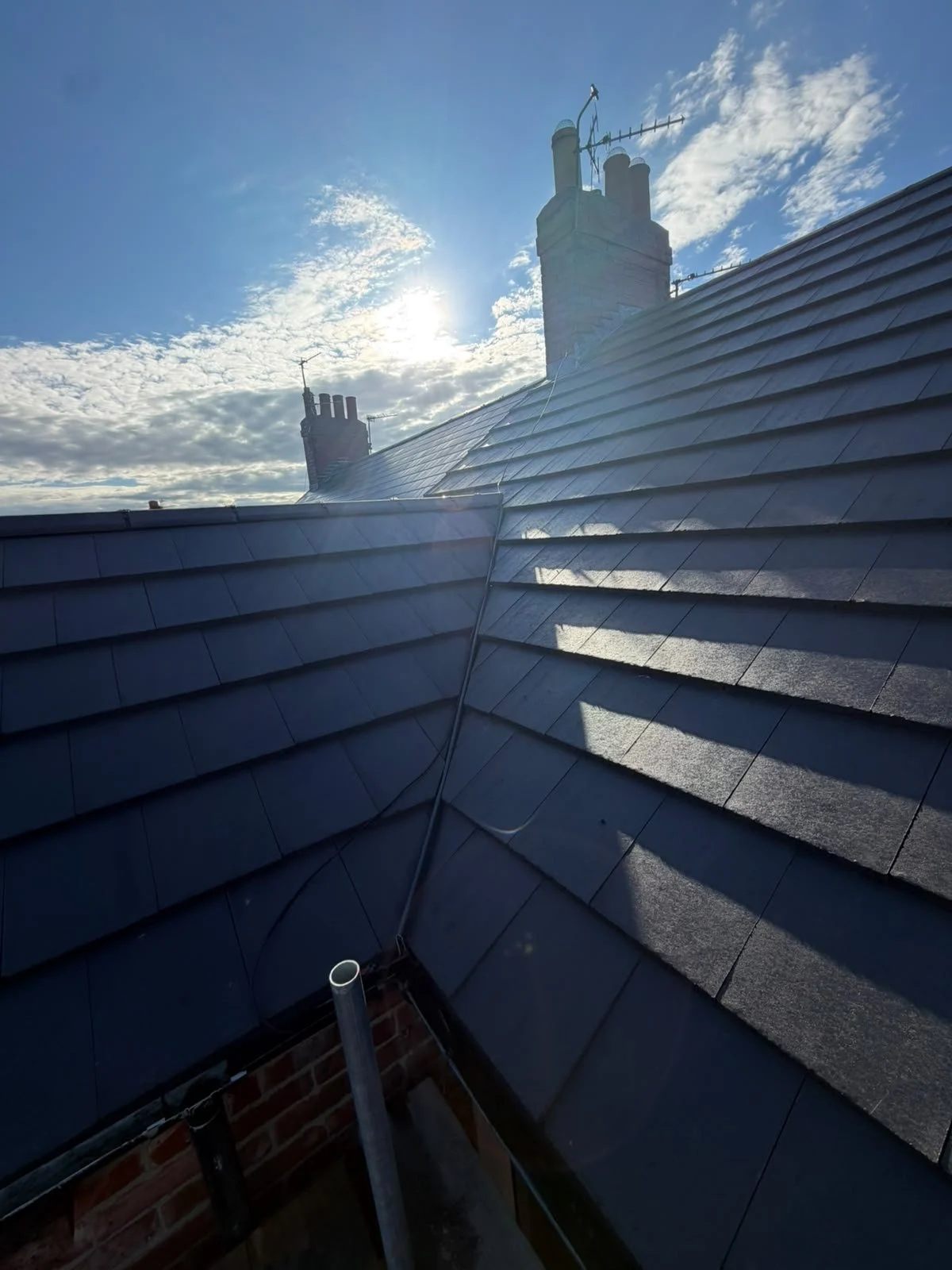
Roof work by McCluskey Roofing
Slipped, missing and broken coverings
A slipped slate, missing tile or damaged ridge can leave part of the roof exposed. Sometimes the defect is local. In other cases, the visible damage points to failed fixings or movement affecting a wider area. Replacing one piece without checking its surroundings may miss the reason it came loose.
Following strong winds, look for changes from the ground rather than climbing up. Pieces of slate, tile or mortar around the property should be mentioned when you contact us. Keep people away from areas where material could fall, and do not approach a visibly unstable roof edge.
Tracing a leak properly
Water can travel beneath a covering or along a timber before it becomes visible inside. The place where it drips may not sit directly below the point of entry. Flashings, valleys, rooflights and junctions are all potential routes, as well as damaged slates or tiles.
It helps to explain when the leak occurs: during prolonged rain, only with wind from a particular direction or after a recent alteration. Those observations support an inspection but do not replace it. Our repair-or-replace guide explains why the extent of the defect matters more than the size of the indoor stain.
Ridge, verge and leadwork repairs
Roof edges and the ridge have their own fixing and weathering details. Cracked mortar, loose components or failing lead can allow water in while the main covering remains largely serviceable. A suitable repair may focus on those details rather than replacing an entire slope.
The existing arrangement influences what can be renewed locally. Different products and materials need compatible methods, and adjacent sound work should not be damaged while accessing the defect. We discuss the proposed repair after assessing what is already on the roof.
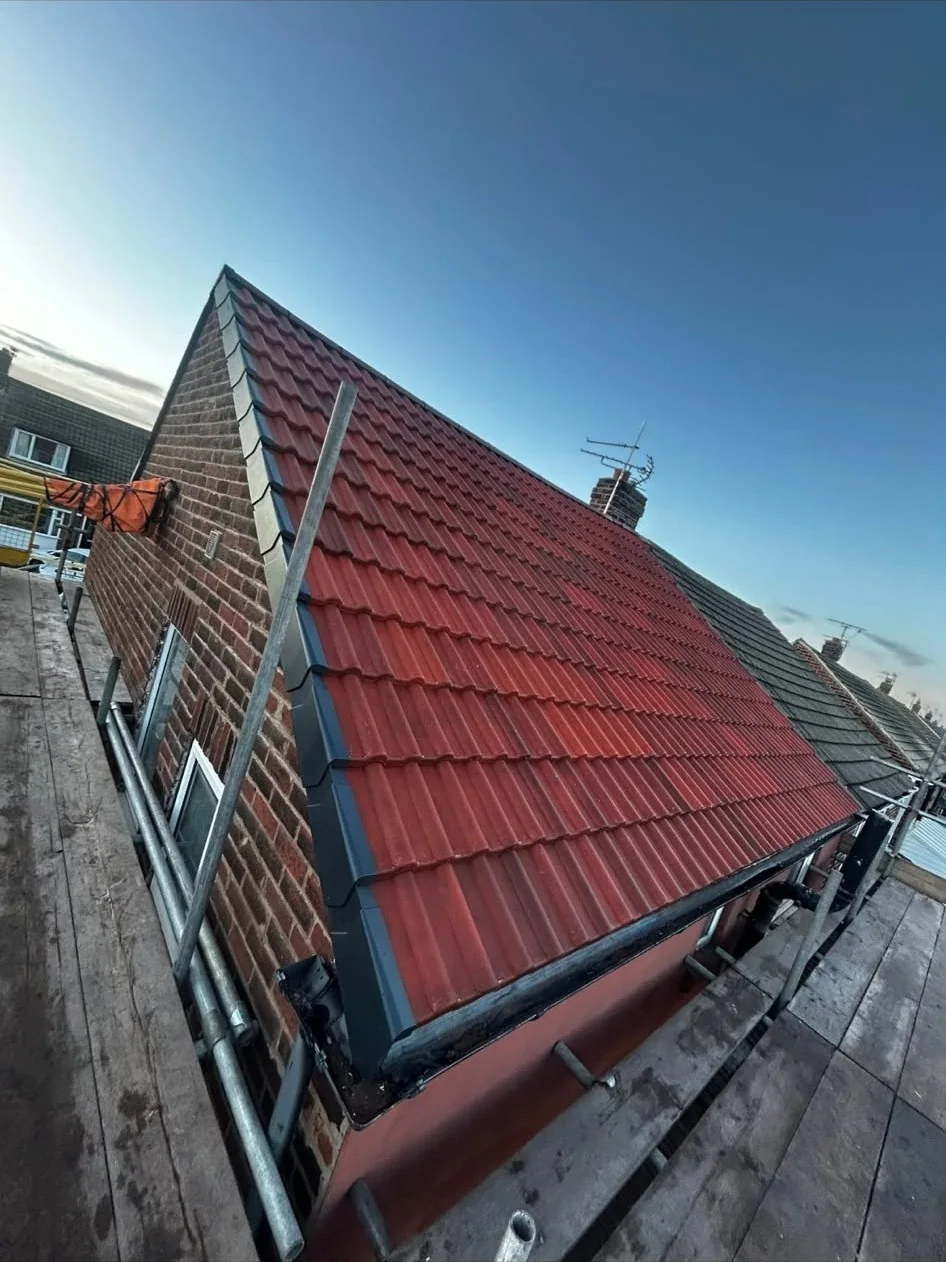
Bay windows and smaller roof sections
A bay window roof or small extension may appear straightforward but can have awkward wall junctions and edges. Water concentrated into a short gutter or a narrow valley still needs a clear route away from the building. Small surface area does not mean the detailing is unimportant.
Tell us if a repair concerns a porch, bay or other separate roof rather than the main house. Access and the material may differ, and the problem may be linked to runoff from the roof above. Photographs taken safely from outside can help explain the layout when you first enquire.
When a repair is not enough
If leaks keep returning or defects are widespread, a replacement may need comparing with ongoing repair work. There is no automatic rule based on one missing tile or the age of the house. The condition of the roof covering, membrane, battens and supporting structure gives a better basis for that decision.
We provide free quotes and cover the listed North East areas from Wallsend. Contact us during our Monday to Friday hours, or use the form with your postcode and a description of the damage. If there is an immediate danger to people or services, contact the appropriate emergency service rather than waiting for a roofing enquiry response.
Common causes of roof leaks and damage
Roofs can develop leaks and damage for a variety of reasons, often linked to the age of the materials or the impact of severe weather. A roofer should investigate common problem areas such as slipped or broken tiles and slates, which can leave the underlying felt exposed to the rain. In many older properties in the North East, the mortar in the ridge and verge tiles can become brittle and crack, allowing water to seep in. Lead flashings around chimneys and in valleys are also frequent sources of leaks if they have pulled away from the masonry or developed splits. Clogged gutters can cause water to overflow and back up under the eaves, potentially damageing the timber fascia boards and soffits. During a repair survey, a roofer should look for signs of internal damp, such as staining on ceilings or walls, to help pinpoint the location of the breach. Identifying the specific cause of the problem is the first step toward an effective and lasting repair. Homeowners should ask for a detailed explanation of the findings and the recommended course of action to address the immediate issue and prevent further damage.
Approaches to localised and storm damage repairs
When a roof is damaged by a specific event, such as a storm, a roofer should focus on securing the property and preventing further water ingress as a priority. This might involve temporary measures like tarpaulin covering before the permanent repairs can be carried out. For localised issues like a few missing slates or a small area of damaged leadwork, the repair can often be completed relatively quickly. A roofer should explain the process of replacing the damaged components with matching materials to maintain the appearance of the roof. If the damage is more extensive, such as a large section of tiles being blown off, the roofer should assess if the surrounding areas have also been compromised. It is important to check the condition of the timber battens and the membrane underneath to ensure they are still functional. Homeowners should discuss the scope of the work and whether a localised repair is sufficient or if more comprehensive work is needed to ensure the long-term integrity of the roof. A clear plan for the repair, including the materials to be used and the estimated time for completion, helps the homeowner understand what to expect.
Maintaining the integrity of leadwork and junctions
Leadwork is a vital component of a roof's defence against water, particularly at junctions where different surfaces meet. Over time, lead can experience thermal expansion and contraction, which may lead to cracking or thinning. A roofer should inspect the condition of lead soakers, step flashings, and valley linings to ensure they are still watertight. If the lead has degraded, it may need to be repaired with specialised sealants or replaced entirely to restore the seal. The mortar joints where the lead is 'pointed' into the brickwork also need to be checked, as failing mortar can allow water to run behind the flashing. Properly maintained leadwork is essential for protecting vulnerable areas like chimney stacks and roof intersections. A roofer should also look at the condition of the ridge and hip tiles, as the mortar bedding here is critical for wind resistance. Homeowners should consider a regular inspection of these key junctions to identify small issues before they become major leaks. Addressing these details as part of a routine maintenance programme can help to extend the functional life of the roof and avoid more costly repairs in the future.