Roof work by McCluskey Roofing
How each covering is laid
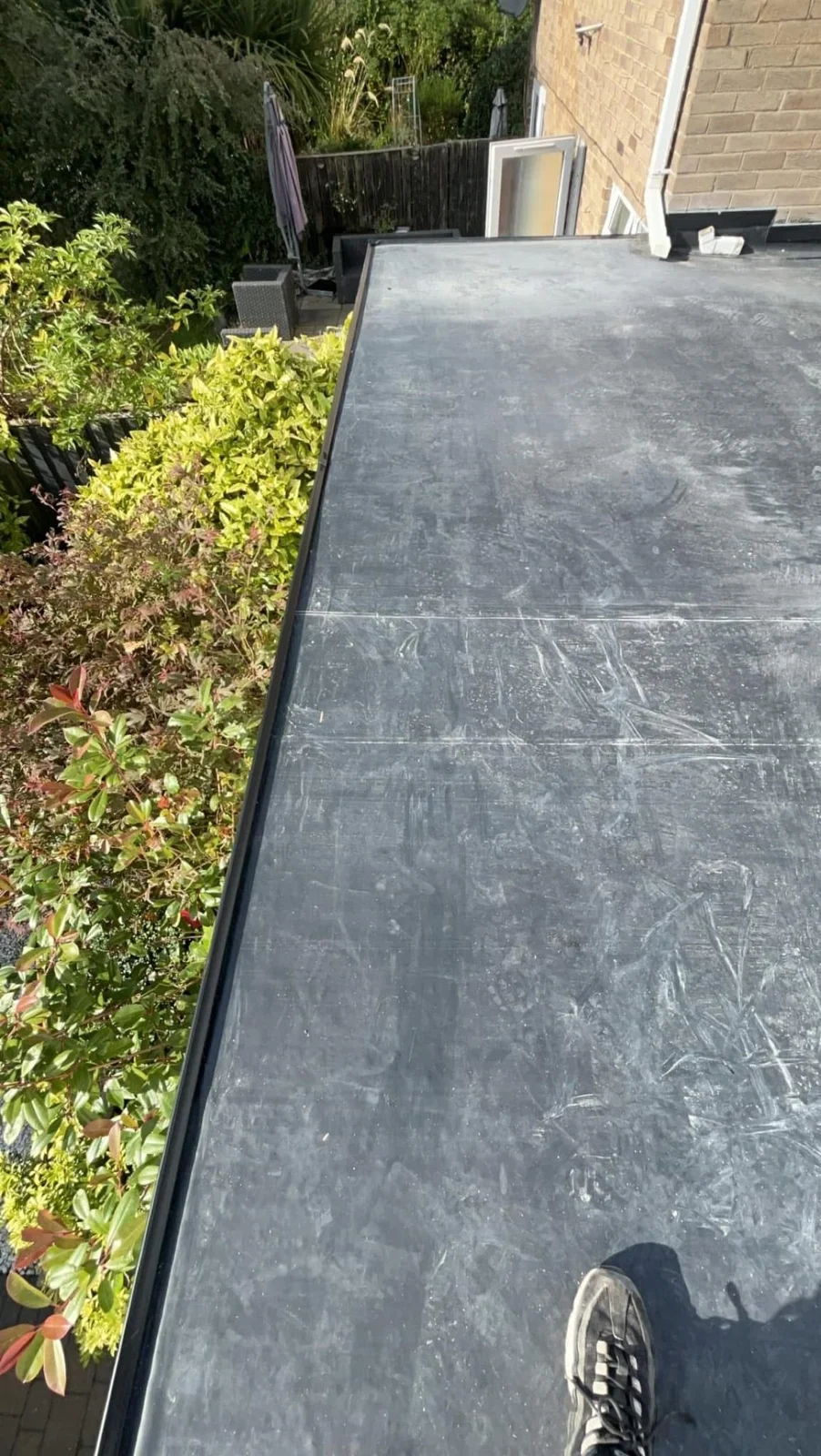
EPDM is a synthetic rubber membrane, often laid as a large sheet on a prepared deck. Felt systems generally use layers with overlapped joints. The exact installation method depends on the chosen product system, so these descriptions are a starting point rather than a universal specification.
Both need a base that is suitable and sound. Rotten boards, trapped moisture or an uneven deck can undermine either choice. A material comparison that ignores what is underneath misses a significant part of the roof replacement decision.
Joins and finishing details
A simple EPDM roof may have fewer field joins because of the available sheet size. A layered felt roof has its own overlap arrangement. Joint count alone does not establish whether a roof will perform: each joint and every edge must be formed correctly.
At walls, outlets, corners and rooflights, both systems require appropriate components and detailing. The shape of a complicated dormer may raise different questions from an open garage roof. Look at the whole perimeter and the drainage arrangement when discussing which system is appropriate.
Flexibility and surface appearance
Rubber has a flexible character and a relatively uniform appearance across its main sheet. Felt coverings have a different texture and may have a mineral finish. These visual differences can matter when the roof is overlooked by an upstairs window, but appearance should not override suitability.
Buildings and roof structures experience movement. The way a chosen covering handles that movement depends on the installation and the details around it, not just the generic material name. Ask about compatible adhesives, fixings and finishing components rather than treating flexibility as a guarantee of a trouble-free roof.
Repair considerations
Certain defects in EPDM can be repaired using compatible patches and preparation methods. Felt may also allow local repairs depending on the system and the condition of the surrounding material. In either case, the cause needs identifying before applying a patch.
If a deck is soft or water repeatedly pools in the same depression, a surface repair may leave the underlying issue unchanged. Widespread deterioration can also make a local patch a short-term measure rather than an appropriate overall solution. The survey helps separate material damage from a wider design or structural problem.
Choosing for your property
Consider the roof shape, use of the space underneath, drainage, access and existing construction. An extension over a heated room raises different insulation questions from an unheated garage. The proposed build-up should address those needs alongside the waterproof layer.
We install EPDM rubber roofs and assess other flat roof enquiries. To discuss the options, describe the building, current covering and any leaks. A property-specific quote lets you compare the work required rather than making a decision from a general materials list.
Comparing material composition and installation
When deciding between EPDM rubber and traditional bitumen felt for a flat roof, homeowners should consider the differences in material composition and how they are installed. EPDM is a synthetic rubber membrane that is typically applied in a single, large sheet. This minimises the number of seams and potential weak points. Bitumen felt, on the other hand, consists of multiple layers of reinforced felt that are bonded together. While modern high-performance felts are much more durable than older versions, the installation still involves multiple layers and joins. A roofer should explain the pros and cons of each method for the specific property. EPDM's single-sheet approach is often favoured for its simplicity and safety, while felt may be preferred for certain applications or where a traditional multi-layer system is desired. The choice often depends on the size and complexity of the roof deck and the homeowner's preference for the installation method.
Performance in varying weather conditions
The North East's weather, with its range of temperatures and precipitation, affects how flat roofing materials perform over time. EPDM is highly flexible and can withstand significant expansion and contraction without cracking. It is also resistant to UV radiation and ozone, which are factors that can cause some materials to become brittle and degrade. Traditional felt systems have improved significantly with the addition of polymers that increase their flexibility, but they still rely on the integrity of the multiple bonded layers. A roofer should discuss how each material handles standing water and the potential for 'ponding.' Neither material makes poor drainage acceptable. Falls and outlets need assessing independently of the covering. Homeowners should ask about the resistance of each material to wind uplift and extreme temperatures. Understanding these performance characteristics helps in selecting a roof that will remain effective through the changing seasons. A roofer's assessment of the property's exposure to the elements is a key factor in this decision-making process.
Maintenance requirements and long-term suitability
The long-term suitability of a flat roof material is often linked to its maintenance requirements. Both coverings need appropriate care and unobstructed drainage; follow the instructions for the specific system. Keeping the surface clear of debris and ensuring that drainage outlets are open are the primary tasks for a homeowner. Felt roofs may require slightly more attention, as the surface mineral finish can wear away over time, potentially exposing the bitumen underneath to UV damage. A roofer should advise on the typical signs of wear for each material, such as blistering or cracking in felt, or punctures in rubber. If damage does occur, EPDM can often be repaired with a simple patch, whereas felt might require more extensive work to reseal a section of the multi-layer system. Homeowners should consider the total cost of ownership, including the initial installation and any potential future maintenance. A roofer's experience with both materials in the local area can provide valuable insights into which system is most appropriate for a long-lasting flat roof solution on a Newcastle home.