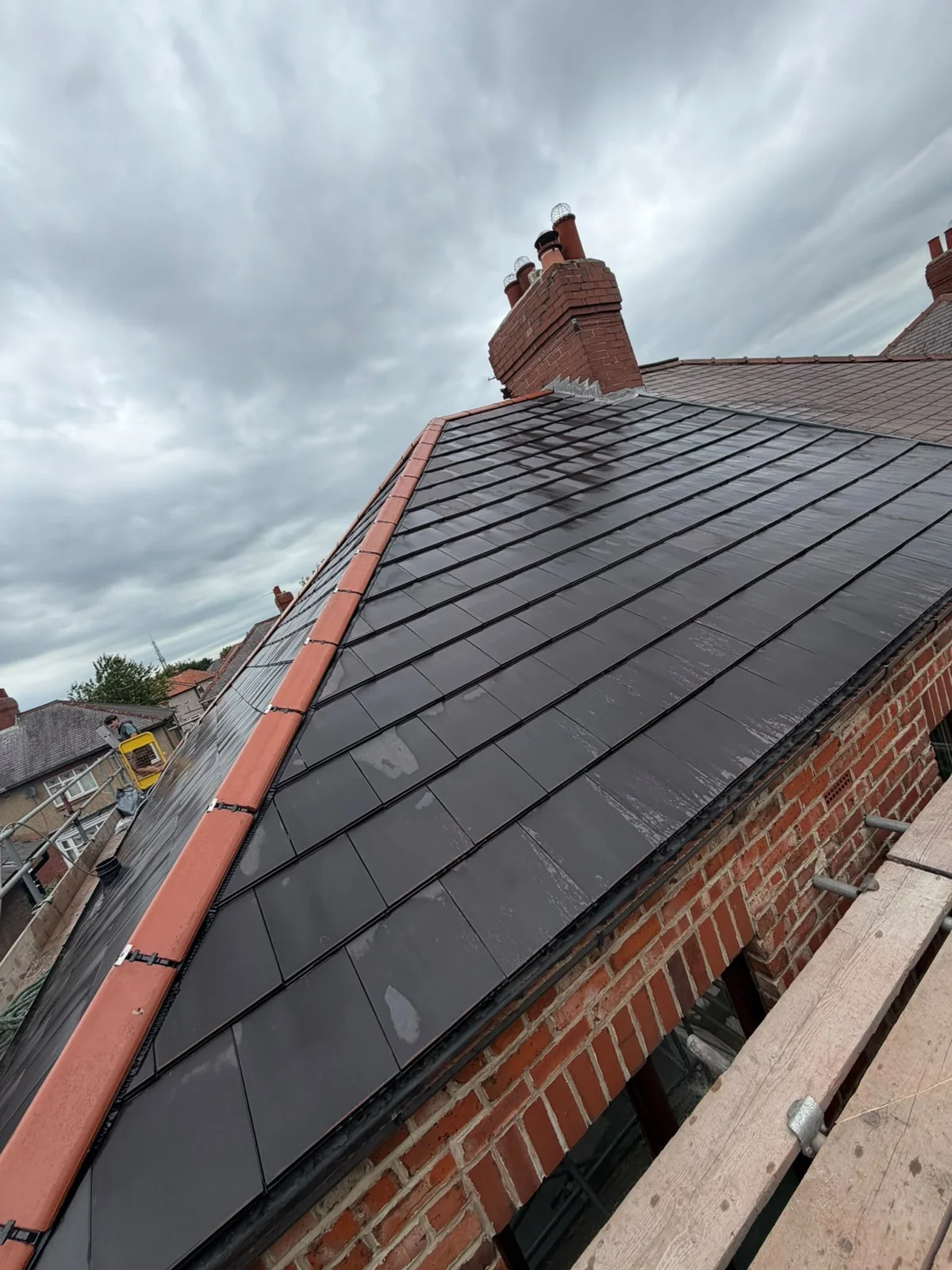
Roof work by McCluskey Roofing
Recognising possible chimney defects
Loose mortar, open joints and pieces of masonry on the ground are reasons to have a chimney assessed. Damp around a chimney breast can also point towards an external defect, although condensation and other causes should not be ruled out. Looking at a stain inside does not tell you which part of the stack is responsible.
Chimney pots and the mortar around them can deteriorate independently of the brick joints. A leaning or visibly unstable component needs professional attention; do not try to reach it from a ladder. Tell us what you have seen from a safe position so access and inspection can be discussed.
What repointing addresses
Repointing renews deteriorated mortar joints between bricks or other masonry. The depth and extent of the preparation depend on the condition of the existing joints. New mortar needs to be suitable for the masonry, rather than applied as a thin cosmetic layer over loose material.
Where bricks themselves are damaged, repointing alone may not resolve the problem. The survey should distinguish between worn joints, deteriorated masonry and wider structural concerns. The extent of the work follows from that assessment, not from assuming every stack simply needs the same treatment.
Lead flashing around the stack
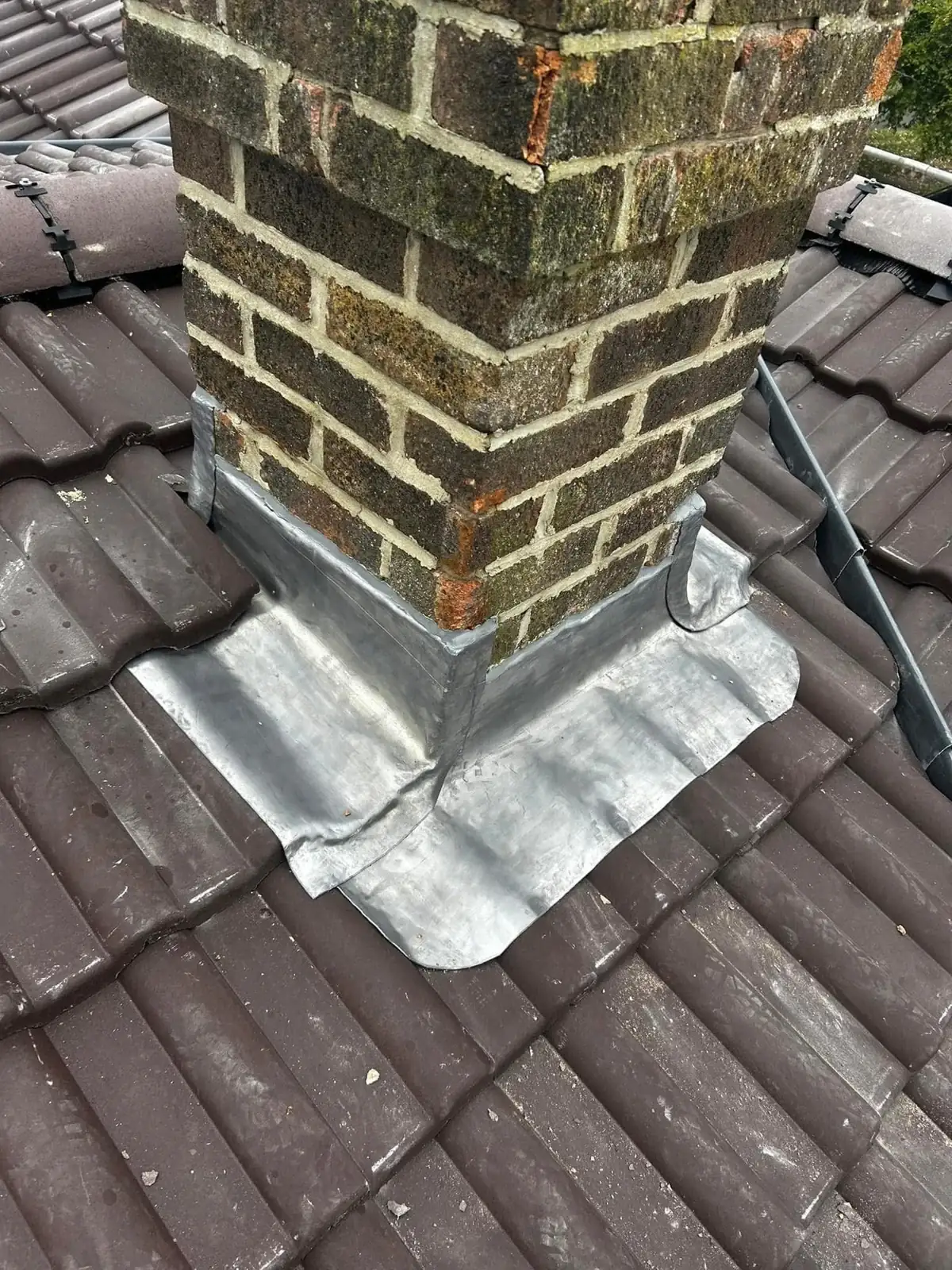
The place where a chimney passes through the roof is a vulnerable junction. Leadwork is arranged to direct water away from the roof opening and prevent it getting behind the covering. Splits, loose edges or inadequate detailing can cause leaks even where the brickwork is sound.
Flashing repairs and repointing are different jobs, but they often need assessing together. Renewing mortar will not fix a split flashing; replacing a flashing will not put unstable masonry right. We look at how the stack, covering and leadwork relate to each other before discussing a solution.
Disused chimneys and capping
A chimney that is no longer in use may need a suitable cap or other attention at the top. The approach depends on the flue’s use, ventilation needs and the condition of the stack. Completely sealing a flue without thought can introduce moisture problems rather than remove them.
Tell us whether the chimney serves an active appliance, a fireplace or no current use. Do not assume a flue is redundant because a fireplace has been covered over indoors. Where specialist advice is needed about an appliance or ventilation, that should be obtained before changing the termination.
Planning safe access
Chimneys are high, exposed parts of a building, so access can form a significant part of the job. Scaffolding needs to provide a suitable working position around the stack. A difficult location or a shared chimney can influence how the work is arranged.
If you are also considering a full roof replacement, let us know. Chimney details can then be discussed alongside the wider roof plan. For a chimney-only enquiry, include your postcode, describe any damp and mention loose material you have noticed from the ground.
Identifying mortar degradation in chimney stacks
Chimney stacks are particularly exposed to the elements, making the mortar joints vulnerable to weathering and erosion. Over time, the wind and rain can cause the mortar to crumble, leaving gaps that allow water to penetrate the masonry. A roofer should assess the condition of the pointing by checking for loose debris or deep recessed joints. If the mortar has significantly degraded, it can compromise the stability of the chimney and lead to damp issues inside the property. Homeowners should look for signs of falling grit or staining on the chimney breast as early indicators of a problem. Repointing involves carefully removing the old, damaged mortar and replacing it with fresh material that is compatible with the original bricks or stone. This process helps to restore the integrity of the stack and prevents further moisture ingress. The choice of mortar mix is important to ensure it bonds well and withstands the specific environmental conditions of the North East region.
The role of lead flashings and chimney pots
The junction between the chimney stack and the roof surface is a common point for leaks. Lead flashings are used to create a watertight seal in this area, but they can become damaged or pull away from the masonry over time. A roofer should inspect the step flashings and aprons to ensure they are securely fixed and properly weathered. Additionally, the condition of the chimney pots and the 'flaunching'—the mortar bed that holds the pots in place—should be checked. Cracks in the flaunching can allow water to seep down into the stack, causing damage to the internal flues. If a chimney is no longer in use, ask what ventilation and termination arrangement is appropriate; confirm the flue is not serving an appliance before alterations. Addressing these peripheral details is a key part of a comprehensive chimney repair, ensuring that every part of the structure is functioning correctly to manage water and airflow.
Managing access and safety for chimney work
Working on a chimney stack presents unique challenges due to its height and location on the roof. Proper access is essential for both the safety of the workers and the protection of the property. In many cases, specialised scaffolding or a roof ladder may be required to reach the stack securely. Homeowners should discuss the access requirements with a roofer to understand how the work will be carried out and what equipment will be needed. The process of repointing can be messy, as old mortar is raked out, so precautions should be taken to protect the surrounding roof tiles and the area around the base of the building. A roofer should coordinate the removal of waste and ensure the site is left clean and tidy upon completion. By planning the logistics carefully, the work can be performed efficiently while minimising the risk of damage to the roof covering. Clear communication about the expected duration of the work and any potential noise or dust helps to set appropriate expectations for the homeowner.