
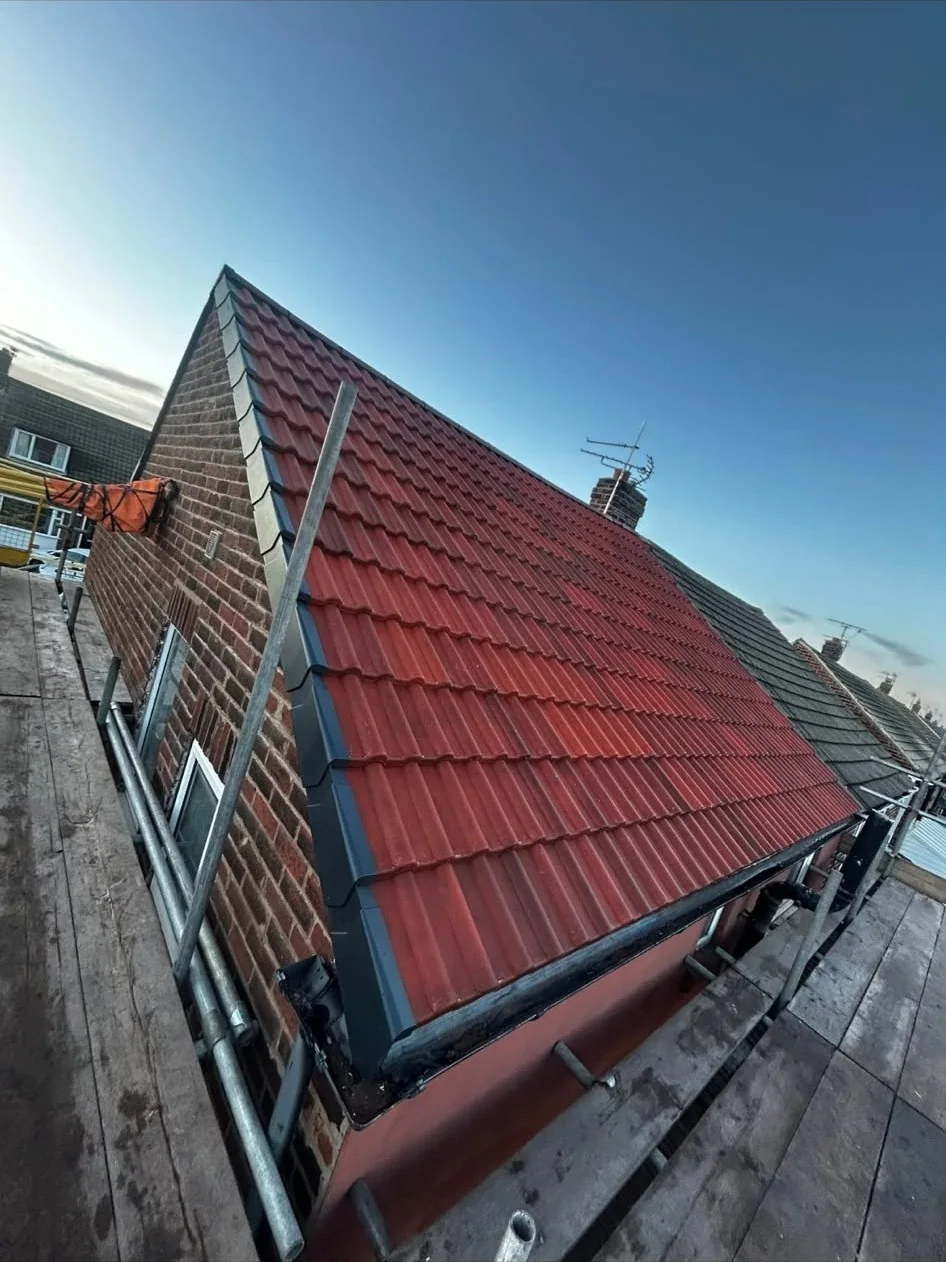
Roof work by McCluskey Roofing
Loose ridge tiles deserve more than a surface patch
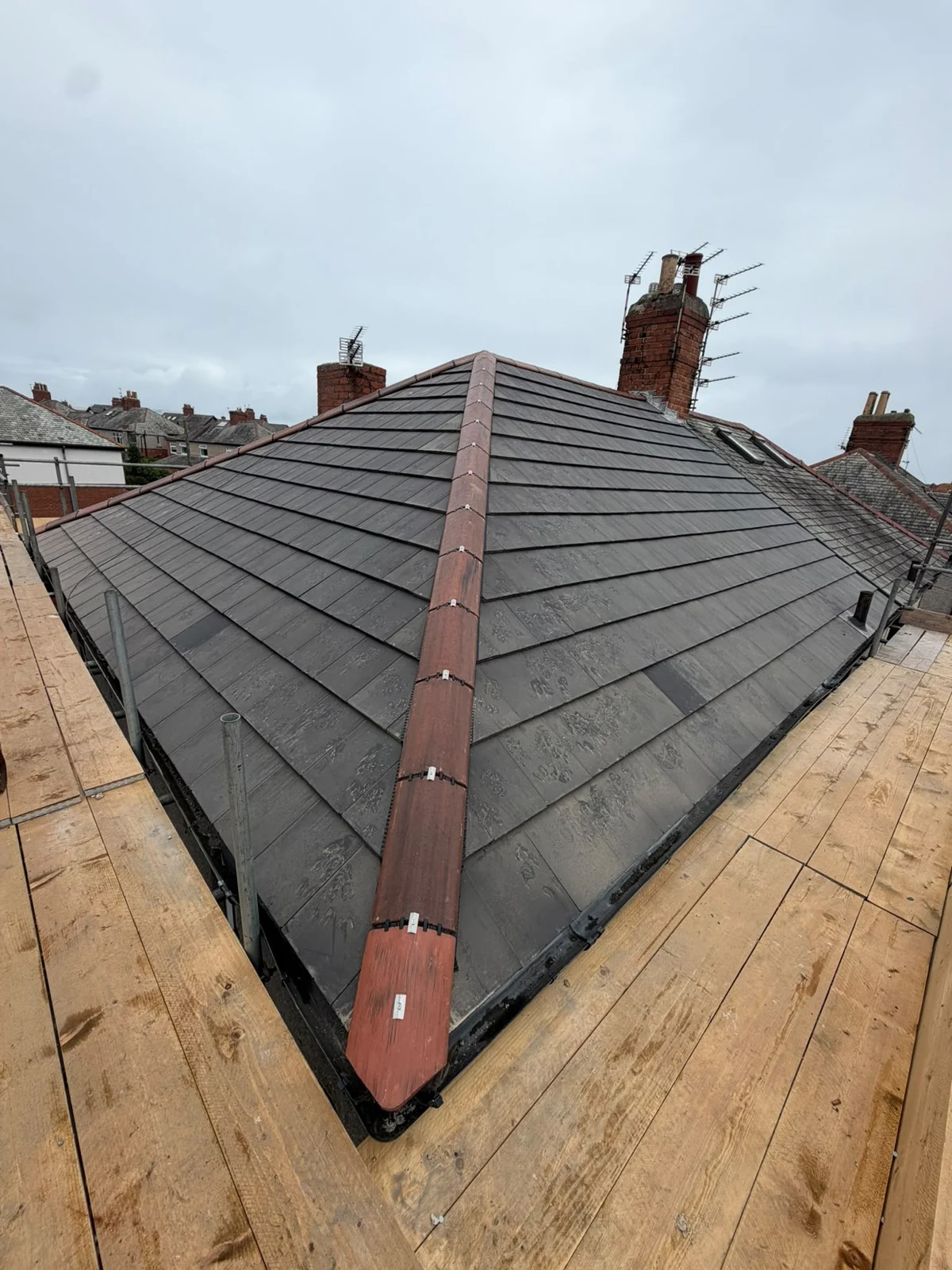
Cracks in bedding can allow a ridge tile to move, and movement can widen the gaps further. Pieces of mortar on the ground or a change in tile alignment are useful warning signs. A tile may also be cracked independently of its bedding, so the inspection should separate the condition of the covering from the condition of its support and fixings.
Adding fresh pointing over a loose bed does not necessarily secure the tile underneath. A suitable repair may require lifting an affected section, removing failed material and rebuilding the detail. Where surrounding components are sound, a limited repair can make sense; widespread deterioration may justify treating a longer run together.
What mortar bedding can and cannot do
Traditional mortar ridges remain present on many roofs. Their appearance may be part of the existing building character, and compatible repair can be appropriate. However, mortar is rigid while roof materials respond to changes in temperature and weather. The condition of the bed, pointing and mechanical restraint should be considered as a system rather than three unrelated matters.
The correct arrangement depends on the roof and relevant fixing requirements. A neat line of pointing is not by itself evidence that a ridge has adequate restraint. Reusing tiles also depends on their integrity after lifting. The quote should make clear whether the proposed work is limited pointing, re-bedding with suitable fixings or renewal of the ridge arrangement.
Dry ridge components need to match the roof
Dry ridge systems use mechanical components rather than a continuous mortar bed. Suitable kits include parts designed to work with particular ridge shapes and coverings. Some incorporate ventilation provision, but the wider roof ventilation strategy still needs considering; a single ridge accessory cannot resolve every airflow or condensation issue in the roof space.
Dry-fix is not a reason to ignore inspection or installation detail. Components must have appropriate support, fixing positions and compatibility. An existing dry ridge can need repair if clips, screws or adjoining pieces have loosened or become damaged. A conversion should be selected because it suits the construction, not because one method is automatically right for every property.
Verge pointing at a gable end
At a mortared verge, missing or cracked material can leave a vulnerable edge exposed to weather. The outer covering, support below and condition of the gable junction all matter. Cracks may reflect local weathering, movement or a detail that was not formed adequately in the first place. The visible gap is therefore a starting point for assessment, not the full diagnosis.
Removing failed material back to a suitable base allows the repair to address the underlying arrangement. Covering an unsupported edge with a thin new fillet may look better briefly without establishing a sound detail. Work should preserve the correct relationship between the last course, the supporting construction and the weathering finish at the wall.
Dry verge and a change in appearance
Dry verge units provide a mechanically secured finish compatible with selected tiles and gable arrangements. They change the visible edge, so colour, profile and the building appearance deserve discussion as well as practical fixing requirements. Not every existing edge can accept an arbitrary unit without preparation or changes to the underlying support.
A mixed approach can be sensible when different parts of the roof have different requirements. Mortar may remain appropriate on one section while another needs a compatible mechanical system. If the property is protected or subject to local restrictions, confirm the position before agreeing a visible alteration. The choice should be explained in terms of your roof rather than a blanket preference.
Discuss what will be retained
A ridge or verge quotation should distinguish retained covering from new components. Ask whether nearby tiles can be lifted and reused, which support is being inspected and what would happen if damaged pieces are discovered. This avoids comparing a limited pointing task with a complete rebuilding detail as though they are the same work.
Appearance is worth considering, but it should be discussed alongside compatibility. Where a new edge system is proposed, understand its relationship with the existing tile shape and gable support. A photograph of another roof can illustrate the difference without proving that the same arrangement suits yours.
Wind exposure and the surrounding coverings
Open aspects, building height and the way air moves around nearby structures can influence loading at roof edges. Coastal locations deserve consideration, but not all roofs in a coastal town are equally exposed. Check the actual condition and fixing arrangement rather than assuming the location alone proves a particular method is necessary.
A loose ridge may coincide with slipped tiles or a disturbed flashing, especially after high winds. The assessment can consider adjacent sections so that an edge repair does not overlook another defect. Keep observations to ground level, avoid areas below loose material and call 07770 714430 to discuss a free quote during our published working hours.