
Roof work by McCluskey Roofing
Why the stain may not reveal the source
Rainwater can travel along a timber, beneath a covering or across a supporting layer before dripping into a room. That means the point of entry may not be directly above the stain. Fixing the nearest visible tile without investigating other details can leave the actual leak unresolved.
Note when water appears and how conditions differ. A leak during wind-driven rain may behave differently from one during prolonged still rainfall. Those observations are useful to a roofer, but they do not provide a definite diagnosis without examining the property.
Common places to investigate
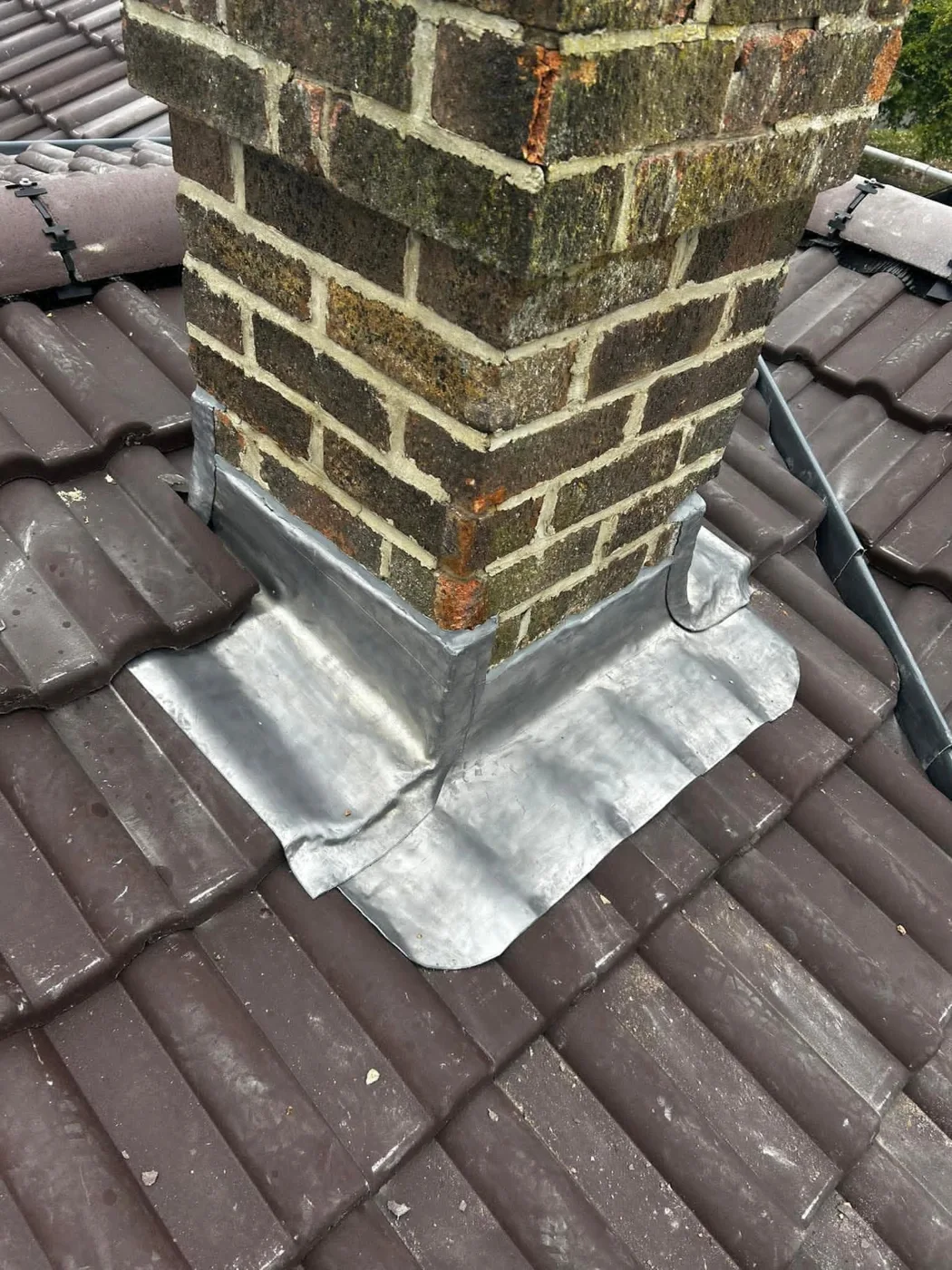
Wind-lifted or slipped slates and tiles can expose parts of the roof. Flashing around chimneys, wall junctions and rooflights can also allow water behind the covering. Valleys handle concentrated runoff, so obstructions or defective details there deserve attention.
On a flat roof, seams, edges, upstands and outlets all influence waterproofing. Water held in a depression may point towards drainage or deck issues. The material name alone does not explain why a particular roof leaks. Its supporting layers and junctions need to be considered.
When a local repair may make sense
A single damaged detail on an otherwise sound roof can often be assessed as a repair job. That might involve a covering, a local flashing problem or a ridge component. The surrounding work needs to be suitable for the repair to connect to, rather than crumbling as soon as it is disturbed.
The aim is to address the identified cause. A repair recommendation should explain what has failed and why the proposed work is appropriate. Previous repairs are relevant too: tell the roofer whether a patch held for a while or whether water returned immediately.
Signs that a wider solution needs considering
Leaks in several places, widespread covering defects and deteriorated supporting layers can make a roof replacement worth discussing. Repeated local patches may become less useful if each new problem reflects the same broader failure.
There is no automatic threshold based on a stain’s size or a roof’s birthday. Inspection gives a more reliable basis for comparing options. The full replacement page explains what a strip and re-roof involves, while the cost guide describes the work that affects a quote.
What you can do safely
Look from the ground for obvious missing coverings or fallen material. Indoors, keep people away from affected ceilings and protect belongings only where it is safe. Do not climb onto the roof, disturb electrical fittings near water or approach a visibly sagging ceiling.
For an immediate risk to people or electrical services, contact the appropriate emergency service or qualified professional. For a roofing assessment, call 07770 714430 during our published hours or send the enquiry form. Include your postcode and a clear account of what you have noticed.
Evaluating the extent of the damage
Deciding whether to repair a localised leak or replace the entire roof is a common dilemma for homeowners. A roofer should perform a detailed inspection to determine the extent of the damage and the overall condition of the materials. If a leak is caused by a single broken tile or a small area of failing leadwork, a targeted repair is often the most sensible and cost-effective approach. However, if there are multiple leaks or if the roofing materials themselves are showing signs of systemic failure, a repair might only be a temporary fix. For example, if slates are thinning and prone to 'holing' or if the mortar in the ridge and verge tiles is crumbling across the whole roof, the underlying issues will likely recur. A roofer should look at the age of the roof and the history of previous repairs to help the homeowner make an informed decision. Homeowners should ask for a clear assessment of the remaining functional life of the roof. If the cost of repeated repairs begins to mount, a full replacement may become the more practical long-term solution to protect the property from moisture ingress.
Assessing the condition of the underlying structure
The decision to repair or replace is not just about the outer covering; the condition of the underlying structure is equally important. A roofer should check the timber battens and the waterproof membrane or felt beneath the tiles or slates. If the felt has become brittle and is tearing, it can no longer provide a secondary barrier against water, even if the tiles are replaced. Similarly, if the timber rafters or joists show signs of rot or structural weakness due to long-term moisture exposure, a more comprehensive replacement will be necessary to ensure the building's stability. Homeowners should understand that a roof is a system of multiple components working together. If one part of that system has failed significantly, it can compromise the others. A roofer should use their expertise to judge whether the core elements of the roof are still sound. If the structural integrity is at risk, a repair to the surface will not address the fundamental problem. Discussing the findings of a survey can help homeowners prioritize the necessary work and understand the risks of delaying a full replacement when the underlying components are no longer performing their roles effectively.
Considering the long-term goals for the property
A homeowner's future plans for their property can also influence the choice between a repair and a replacement. If the intention is to stay in the home for a significant period, investing in a full replacement provides the peace of mind that comes with a completely new and integrated roof system. It also offers the opportunity to upgrade insulation and ventilation, potentially improving the energy efficiency of the house. On the other hand, if a move is planned in the near future, a high-quality repair may be sufficient to keep the property watertight and in good condition for the new owners. A roofer should discuss these factors and provide advice based on the homeowner's specific situation. The appearance of the roof is also a factor, as multiple repairs with non-matching tiles or slates can affect the property's kerb appeal. A full replacement can provide a more consistent appearance, but no increase in property value should be assumed. By weighing the immediate costs of a repair against the long-term benefits and costs of a replacement, homeowners can choose the path that best meets their needs and budget. A roofer should offer an honest perspective on the feasibility of each option to help the homeowner reach a decision that protects their home and their financial interests.