
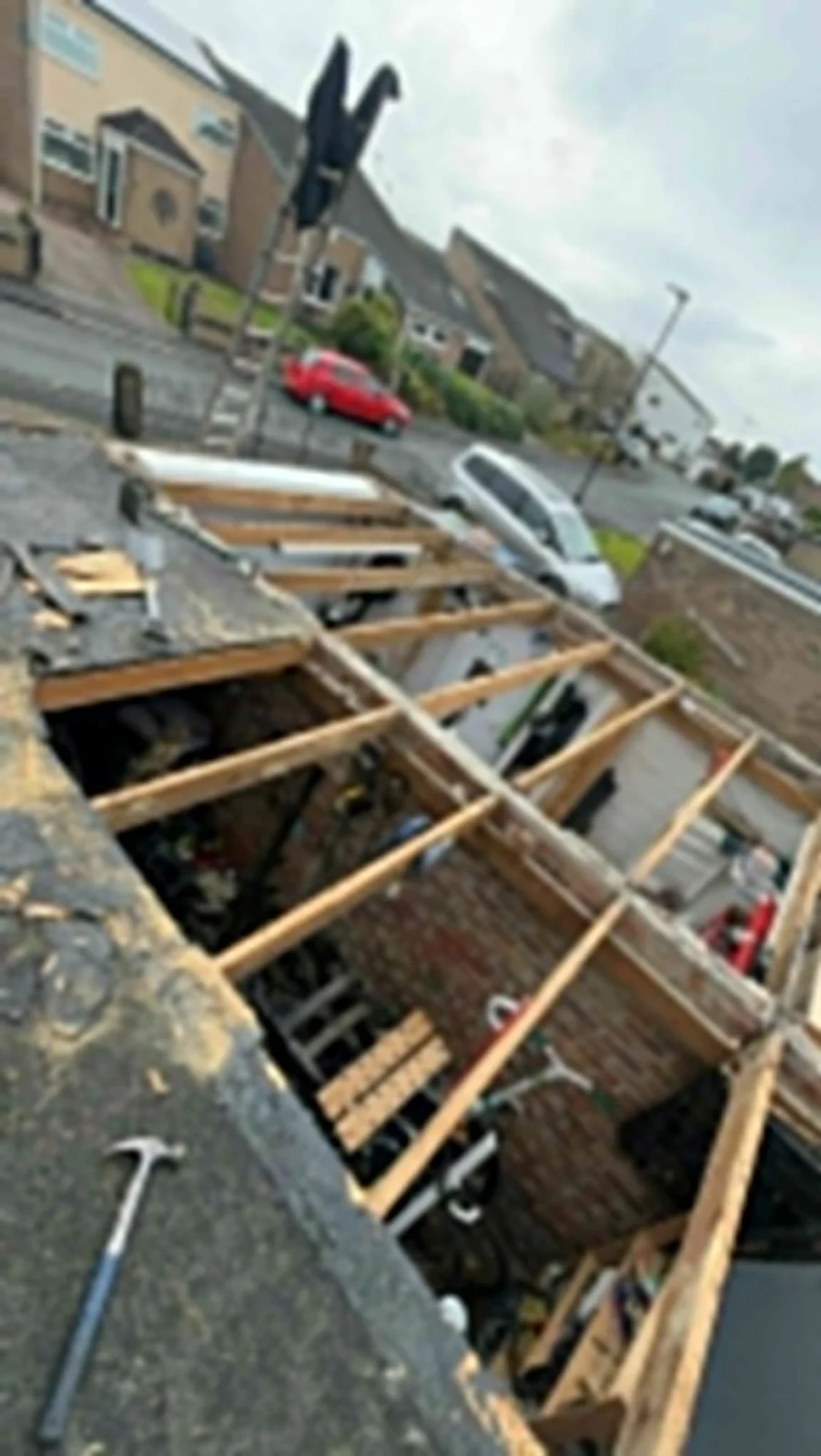
Roof work by McCluskey Roofing
Start with the roof, not a price per square metre
Two roofs with a similar footprint can require very different amounts of work. A steep pitch increases the surface to be covered and changes access needs. Hips, valleys and dormers add cutting and finishing details. A simple rectangular slope does not present the same job as a roof broken into several sections.
An estimate made without seeing those features can leave important items out. Ask how the roof was measured and what parts are included. The main house, a rear extension and a bay roof may need separate attention even though they belong to the same property.
Scaffolding, access and site layout
Scaffold is not an optional detail to ignore when comparing quotes. Its extent depends on the height of the building, the roof being accessed and the safe working positions required. Conservatories, narrow passages or sloping ground can make arrangements more involved.
Delivery space and waste removal also matter. A clear driveway is different from a terrace with no side access and limited space outside. Mention shared paths, parking restrictions and anything that could affect where equipment or a skip can go. These practical factors help explain why neighbouring properties can still receive different quotations.
The covering and the work beneath it
Slate and tile products differ in cost, weight and laying requirements. Reusing sound slate is not the same task as supplying an entirely new covering, and the usable quantity may only become clear during removal. A cheaper material is not automatically suitable for the roof pitch or supporting structure.
The membrane, battens and fixings beneath the surface belong in the conversation too. Replacing just the visible covering would not resolve damaged support layers. Ask whether the quotation describes a full strip and rebuild or a more limited scope, so you compare like with like.
Chimneys, valleys and unexpected timber defects
Rooflights, chimneys and wall junctions require separate weathering details. Leadwork may need repair or renewal, and damaged mortar can need attention before a new roof meets the stack. These are not interchangeable extras; their condition affects what the finished roof needs.
Timber defects may be concealed until the old covering is stripped. A quotation should make clear how newly revealed problems would be discussed. Do not assume every possible structural repair is included in a figure unless the scope says so. Equally, an unexplained allowance is worth asking about before work begins.
Questions to ask before agreeing a quote
Ask which materials are proposed, what access is included and how waste will be removed. Establish which roof sections and junctions are covered, and whether guttering is being checked or replaced. A clear scope lets you understand differences between quotations without relying on the total alone.
Timing should be discussed in practical terms, including weather and the possibility of hidden defects. If anything is unclear, ask for clarification before deciding. For an exact price, call 07770 714430 for a free quote.
Factors affecting the overall project cost
The cost of a roof replacement is influenced by several variables that a roofer must consider during an assessment. The size of the roof is the most obvious factor, but its complexity is equally important. A roof with many valleys, hips, and dormers requires more materials and more labour to detail correctly than a simple dual-pitch roof. The choice of materials also plays a significant role, with natural slate typically being more expensive than concrete tiles. Homeowners should also account for the cost of scaffolding, which is essential for safety and access. The removal and disposal of the old roofing materials, including the management of skips, is another component of the total price. Additionally, if the survey reveals that structural repairs are needed for the timber rafters or that the chimney stack requires repointing, these tasks will add to the overall scope of the project. A roofer should provide a clear breakdown of these various elements so the homeowner understands where the money is being spent. Discussing the options for different materials and detailing methods can help in finding a solution that fits within a specific budget while still meeting the property's needs.
The impact of site access and logistics
Logistical challenges can also affect the cost of a roofing project. Properties with limited access, such as those in dense urban areas of Newcastle or those with narrow driveways, may require specialised scaffolding or more manual labour to move materials and waste. If a property is particularly tall or in an exposed coastal location, additional safety measures or more robust fixings may be necessary, which can influence the final quote. A roofer should assess the site to identify any potential hurdles that could impact the efficiency of the work. The location of the property also determines the cost of waste disposal and the transport of materials from local suppliers. Homeowners should discuss these logistical factors with the roofer to ensure they are reflected in the initial estimate. By planning the site management carefully, a roofer can minimise unexpected costs and ensure the project proceeds as smoothly as possible. Clear communication about the expected start date and the duration of the work helps both parties manage the logistics effectively and ensures that all necessary equipment and materials are on hand when needed.
Balancing initial investment with future value
When considering the cost of a new roof, it is helpful for homeowners to think about the long-term value of the investment. A modern roof system, with its improved materials and integrated ventilation and insulation, can also contribute to the overall comfort and energy efficiency of the home. Ask how the proposed components work together and what inspections or upkeep will be needed. By looking beyond the immediate price tag, homeowners can appreciate the broader benefits of a professionally installed roof. A roofer should provide advice on which improvements, such as upgrading the leadwork or installing a dry-fix system, offer the best balance of performance and cost. This comprehensive approach ensures that the homeowner receives a roof that is not only effective but also represents a sound financial decision for the long-term protection of their property.