
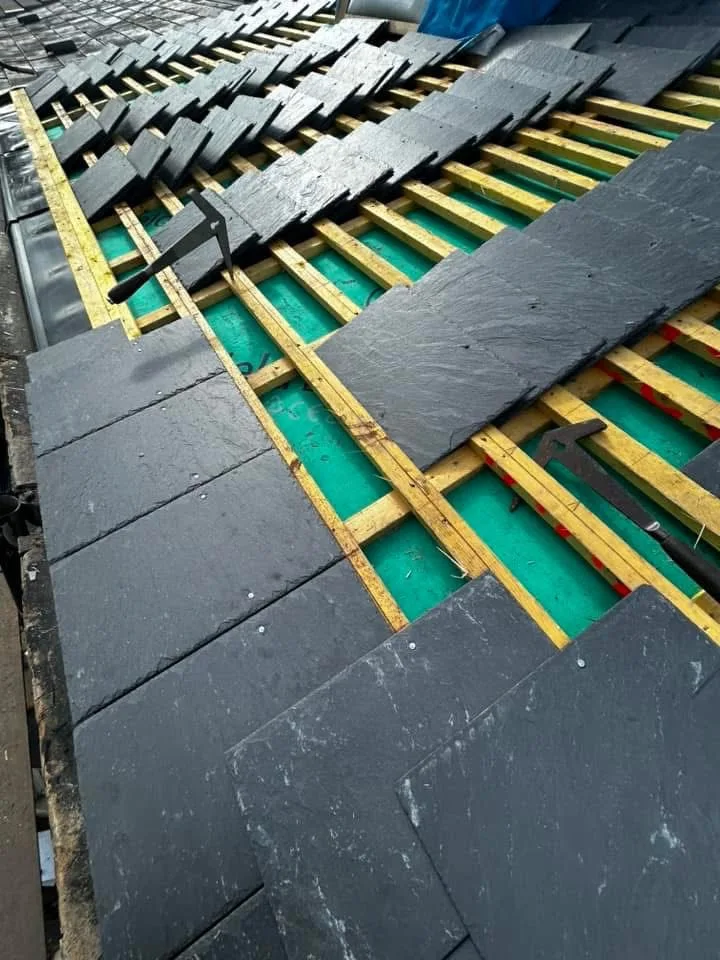
Roof work by McCluskey Roofing
Before the covering is removed
The first stage is agreeing the scope and arranging materials and safe access. Scaffold booking can influence when work begins, particularly where the site needs a more involved arrangement. Access restrictions and delivery space should be discussed beforehand rather than discovered when equipment arrives.
Material availability also matters. A particular tile or slate choice may need checking before the sequence can be settled. If you are coordinating other building work, explain it early so the roof plan can take account of shared access and the relevant junctions.
Stripping and inspection
Removing the old covering exposes the supporting layers and timbers. That provides a better view of defects that could not be seen during an external inspection. A roof that looks straightforward from the ground may reveal damaged boards or other work requiring discussion.
The amount of roof opened at one time is influenced by conditions and the planned sequence. It is not simply a race to remove every slate first. Ask how the work will be organised around weather and what happens if previously hidden defects change the agreed scope.
Rebuilding the layers
Following any required preparation, the appropriate membrane and battens are installed, then the slate or tile covering. Valleys, rooflights and awkward edges can require more detailed work than broad uninterrupted slopes. The visible area of the roof is only one part of the time calculation.
Ridge, verge and flashing details follow their own requirements. Chimney work may need coordinating with the re-roofing. These stages should be properly completed rather than rushed to meet an assumed finishing date taken from a different property.
Weather and other changes
Rain, strong wind and unsuitable conditions can affect what roofing work is safe or practical. A change in weather may alter the order in which sections are completed. This is one reason to discuss the schedule as a plan with dependencies, not as an unconditional promise of a set number of days.
Unexpected structural findings, changes agreed by the homeowner and delivery problems can also influence progress. Understanding these possibilities at the quotation stage helps avoid confusion later. Ask how updates will be communicated if the plan needs adjusting.
Preparing the household
Move vehicles or garden items where access is needed and protect possessions stored in the loft. Think about pets, children and working-from-home calls. Scaffold and construction noise can affect routines even though the main activity is outside.
At the end, waste and equipment arrangements need completing and the relevant roof details checked. For advice about your own project, request a free replacement quote. The team can explain the likely sequence once the property and scope are understood.
Factors influencing the duration of work
The time required to replace a roof varies depending on several key factors. A roofer should provide an estimate based on the size of the roof, the complexity of the design, and the type of materials being used. A simple dual-pitch roof on a mid-terrace house will generally take less time than a large detached home with multiple hips, valleys, and dormer windows. The removal of the old covering is the first phase, and the condition of the underlying timbers can only be fully assessed once the tiles or slates are off. If structural repairs are needed, this will naturally extend the project timeline. Weather conditions in the North East also play a significant role, as certain tasks cannot be performed safely or effectively in heavy rain or high winds. Homeowners should be prepared for potential delays and discuss how the property will be protected during the process to keep it watertight while the work is ongoing.
Sequential steps in a roofing project
A standard roof replacement follows a logical sequence of events, starting with the installation of scaffolding. Once the site is secure, the old materials are removed and disposed of in skips. The next stage involves the installation of a new breathable membrane and timber battens, which forms the foundation for the new covering. A roofer should explain how the slates or tiles are then laid, starting from the eaves and working up to the ridge. Detailing around chimneys and valleys happens concurrently with the main covering. The final steps include the installation of ridge and verge tiles, as well as any new guttering or leadwork. Each of these stages requires a specific amount of time, and the transition between them must be managed carefully to ensure the roof is not left exposed for longer than necessary. Understanding this workflow helps homeowners track the progress of the project and understand the daily activities on site.
Communication and site management during the build
Clear communication between the homeowner and the roofer is essential throughout the duration of the project. A roofer should provide regular updates on progress and discuss any issues that arise as soon as they are identified. Manageing the site effectively involves coordinating deliveries of materials and the removal of waste to keep the area tidy. The presence of scaffolding and the movement of workers around the property will inevitably cause some disruption, so discussing these aspects in advance is helpful. Homeowners should ask about the planned working hours and how the team will ensure the site is safe and secure at the end of each day. A well-organised project is more likely to stay on track and be completed within the expected timeframe. By setting realistic expectations and maintaining an open dialogue, both parties can ensure that the roof replacement is handled professionally and with minimal stress for the household.