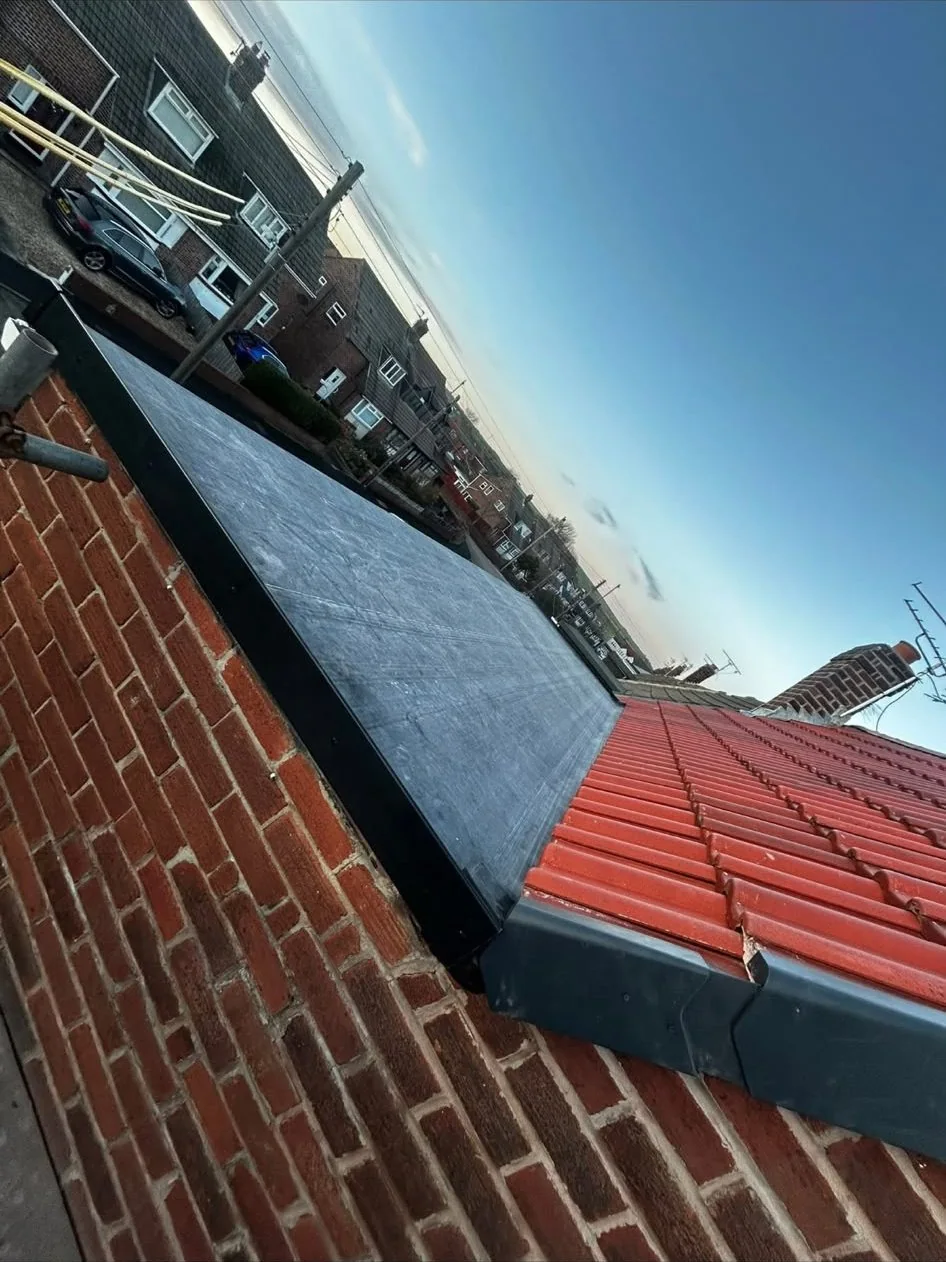
Roof work by McCluskey Roofing
Where flat roofs commonly develop problems
Standing water, splits in an old covering and leaks at a wall junction are all reasons to have a flat roof checked. Although it is called flat, the roof should be arranged to drain. Water that repeatedly collects in one area may point to a problem with falls, outlets or the underlying deck rather than just the top surface.
Upstands are the raised details at walls and roof edges. If they are too low, damaged or poorly finished, wind-driven rain can find a path behind the covering. The same applies to rooflight kerbs and pipe penetrations. We look at the whole route water takes rather than concentrating only on the damp patch inside.
Repairing versus replacing
A local defect on an otherwise suitable roof may be repairable. A covering that is brittle, separating across a wide area or laid over a damaged deck may need a different approach. Covering a soft or uneven base with another layer does not resolve the reason it deteriorated.
The decision involves the age and condition of the covering, the supporting deck and the drainage arrangement. We discuss what can be put right locally and what a replacement would involve. A clear explanation of the underlying problem is more useful than recommending the same solution for every extension or garage.
EPDM rubber and felt options
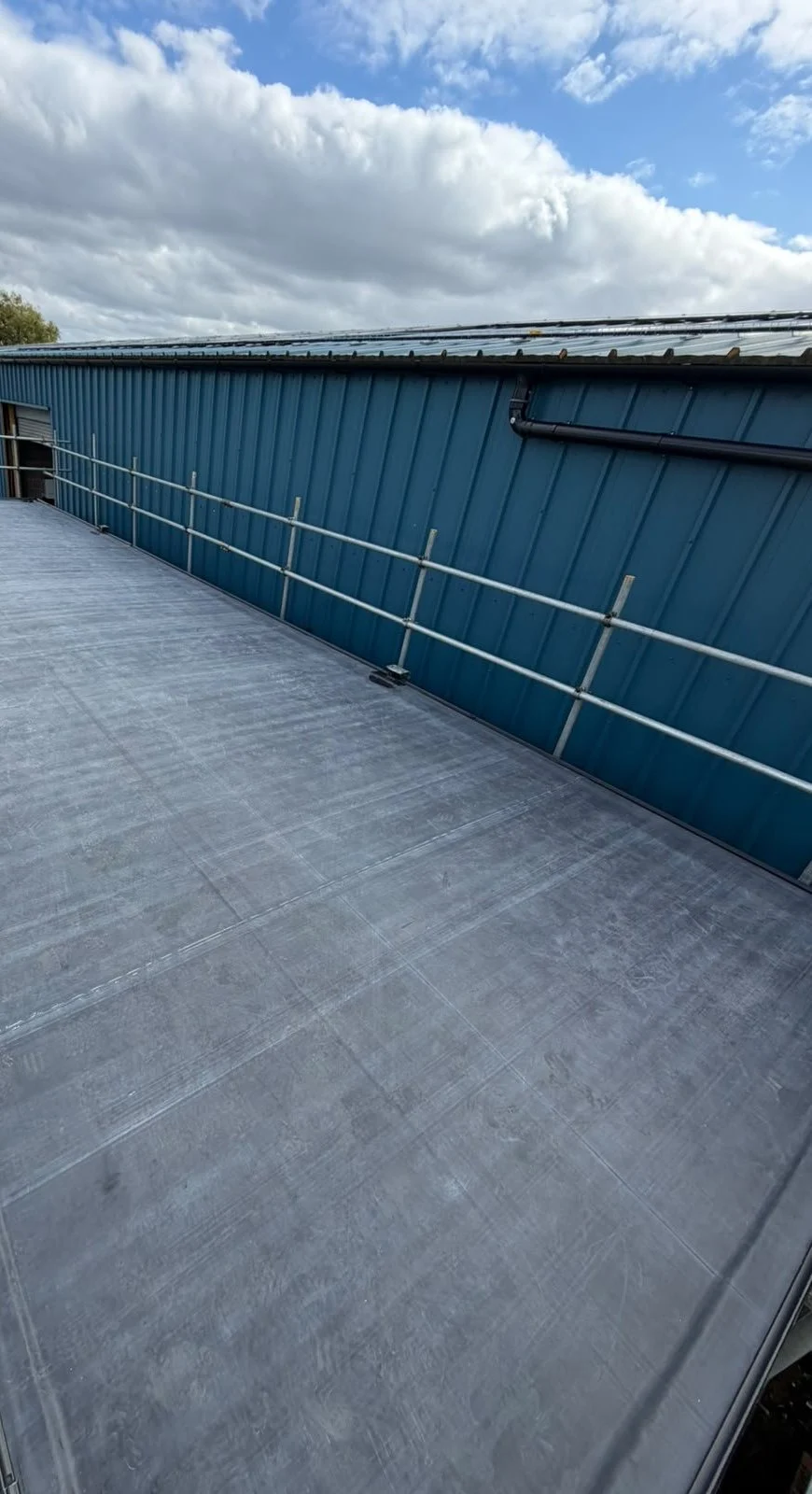
EPDM is a flexible synthetic rubber membrane commonly used on flat roofs. Many simple roof shapes can be covered with a large sheet, reducing the number of field joins. Felt systems are generally built from layers with overlapped joints. Both rely on appropriate preparation and correctly finished edges.
The best approach depends on the roof shape, existing structure, access and the details around it. Neither material removes the need for sensible drainage. Our dedicated EPDM page explains deck preparation and trimming, while the comparison guide sets out differences without assuming one product suits every situation.
Extensions, garages and dormers
An extension roof meets the main building at an important wall junction. A garage may have different ventilation and insulation needs. A dormer roof can have awkward edges and limited access. These differences affect the assessment, even where the surface area appears similar.
If the room underneath is heated, the build-up needs thought beyond the waterproof layer. Insulation and condensation risks depend on how the roof has been designed. Tell us how the space is used and whether you have noticed damp, musty smells or sagging inside. Those observations help identify what should be examined.
Looking after a flat roof safely
Keep an eye on visible gutters and outlets from a safe position, especially after leaves have fallen. Do not walk on an unfamiliar flat roof: the deck may not support you and the membrane can be damaged by unsuitable footwear or sharp objects. A dark patch alone does not show how strong the structure is beneath it.
Contact us if ponding persists, an edge trim is loose or water starts appearing indoors. Include the postcode and explain whether the roof is over a living space, garage or dormer. We can discuss your flat roof and arrange the next step towards a free quote.
Characteristics of modern flat roofing systems
Flat roofing technology has advanced significantly, offering several different options for homeowners. A roofer should explain the characteristics of systems such as EPDM rubber, GRP fibreglass, and high-performance bitumen felt. EPDM is a synthetic rubber membrane known for its flexibility and ability to handle temperature changes without cracking. GRP involves layers of glass reinforcement mat and resin, creating a seamless and rigid surface that is often used on smaller roofs or balconies. Bitumen felt systems consist of multiple layers of reinforced felt bonded together, often using a torch-on or cold-applied method. The choice of material depends on the size of the roof, its intended use, and the specific budget for the project. A roofer should assess the existing deck to ensure it is suitable for the chosen system, as the condition of the underlying timber or concrete is critical for a successful installation. Homeowners should understand how each material performs and what to expect in terms of appearance and texture once the work is complete.
Addressing drainage and ponding on flat surfaces
Effective drainage is a fundamental requirement for any flat roof to prevent the accumulation of standing water, commonly known as 'ponding.' While many flat roofs are not perfectly level, they should have a slight fall to guide water toward the gutters or outlets. A roofer should check for signs of poor drainage, such as silt deposits or staining, which can indicate areas where water sits for extended periods. If a roof has significant ponding, it may be necessary to install timber firrings or tapered insulation to create the required fall. Standing water can put extra weight on the structure and may increase the risk of moisture ingress if the membrane is damaged. Homeowners should ask about the drainage plan during the survey to ensure that the new roof will shed water efficiently. Properly designed outlets and clear guttering are also essential to ensure that water is moved away from the building correctly. Regular maintenance to keep these areas free of debris is recommended to maintain the performance of the drainage system over time.
Insulation options for flat roof structures
Upgrading the insulation during a flat roof replacement is an opportunity to improve the thermal performance of the room below. There are two main approaches: 'warm roof' and 'cold roof' configurations. A warm roof involves placing the insulation on top of the roof deck, with the waterproof membrane then applied over the insulation. This keeps the structure at a temperature similar to the interior of the house, which helps to reduce the risk of condensation forming within the roof build-up. A cold roof places the insulation between the joists, leaving a ventilated space above it to allow moisture to escape. The choice between these methods depends on the available height at wall junctions and the specific requirements of the building. A roofer should assess the existing insulation levels and recommend the most appropriate solution based on current standards. Improving the barrier against heat loss can make spaces like extensions or garages more comfortable throughout the year. Homeowners should discuss how the chosen insulation method will affect the overall thickness of the roof and its integration with the rest of the property's architecture.