
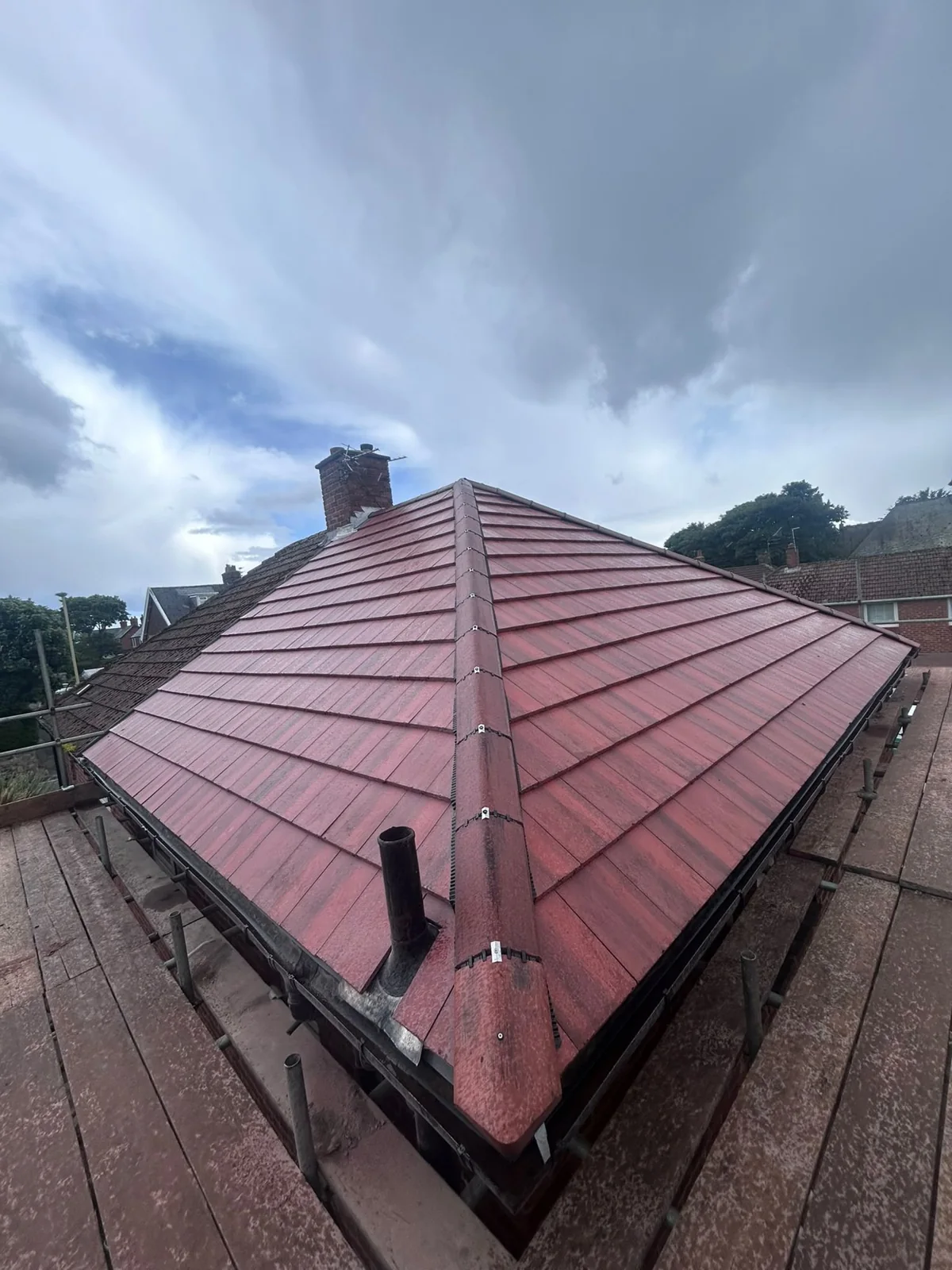
Roof work by McCluskey Roofing
Open aspects put roof edges in focus
Wind loading depends on more than proximity to the sea. Building height, roof shape and surrounding structures all influence what the edges experience. Ridges, hips and verges deserve consideration where loose components or missing material have appeared. Coastal context helps frame the inspection without proving which repair method is required.
Mortar and dry-fix arrangements both need appropriate support and compatible restraint. Neither should be described as universally correct for every exposed property. An assessment can establish whether the problem is local to a component or extends across a longer section, and then explain the practical options in terms of that roof.
Salt air and the condition of metal components
Salt-laden air can contribute to corrosion in susceptible metal components. The material, exposure and actual condition matter, so it would be misleading to predict a fixed maintenance interval or lifespan from the town name. Accessible inspection findings are more useful than a blanket statement that coastal roofs all deteriorate in the same way.
Fixings and flashings serve different roles. A weathering detail can fail because it has lifted or split, not only because the metal has corroded. Ask what defect has actually been found and how the proposed repair addresses it. Renewing a visible sheet does not automatically correct unsuitable support or a missing concealed component behind it.
Terraces and semi-detached roofs by the coast
Older terrace roofs may share a continuous visual line and chimney arrangements. Matching covering dimensions and planning the boundary detail become important when renewing one section. Some streets are relatively sheltered by nearby buildings; other roofs present exposed gables or hips. These differences matter more than treating every terrace as the same coastal case.
Semi-detached houses can add another exposed elevation and may have extension roofs below. If damp occurs near a side wall, the junction between the covering and brickwork needs considering alongside ridge and verge condition. Tell us where the mark appears indoors and when it happens, without assuming the nearest visible gap is necessarily the source.
Choosing slate or tiles for a replacement
The required pitch, installed load and fixing arrangement are specific to the selected covering. Appearance matters, especially where neighbouring properties have a consistent roofline, but it cannot replace those checks. A photograph of a finished tiled hip shows one detail; it is not a specification that can simply be transferred to a different house.
Where a protected property or local restriction may affect material changes, confirm the position with the authority before agreeing a visible alteration. A written scope can then explain preparation, underlay, covering and relevant weathering details. Ask what would be retained and what findings after lifting might need further discussion.
Describe the weather pattern without assuming the remedy
When making an enquiry from Whitley Bay, say whether the problem follows wind from an exposed aspect or prolonged rain without strong gusts. That information can help guide attention to roof edges or weathering junctions. It does not prove that a specific component has failed before inspection.
An extension room can provide another useful clue: explain whether damp appears at its outer edge or against the main house wall. The junction and supporting roof arrangement may be more relevant than the broad coastal location. Safe interior observations are enough to begin the discussion.
If you are considering renewal for appearance as well as condition, separate those goals. The assessment can then explain what repair is necessary and what changes would be elective. A preference for a different tile colour should not be presented as evidence that the existing covering cannot be repaired.
Supporting roofs and a practical enquiry
Rear extensions, garages and conservatories can have different construction from the main roof. EPDM flat roofing requires attention to the deck, falls and wall junction as well as the membrane. A solid tiled conservatory conversion additionally needs assessment of the existing frame and relevant building control requirements.
Nearby areas in our coverage include North Shields and Wallsend. Describe the postcode, roof section and any restricted access when contacting us. After wind, keep clear of unstable material and do not attempt roof access. Roofing enquiries are handled Monday to Friday, 8am to 5pm; call 07770 714430 to discuss a free quote.