Roof work by McCluskey Roofing
What EPDM is
EPDM is a synthetic rubber membrane used to waterproof flat roofs. It is flexible and can be supplied in large sheets. On a simple roof shape, using a large sheet can reduce the number of joints across the main surface. That does not mean the roof has no details: wall junctions, corners, outlets and edges still need carefully arranged finishing.
The material is only one part of the assembly. A suitable deck, appropriate adhesive and compatible trims are important to the finished result. Selecting rubber without checking the base or drainage would leave important questions unanswered. We assess the existing roof before deciding what preparation is necessary.
Why fewer joins can help
Every joint in a waterproof covering is a detail that needs proper execution. Where a roof can be covered with one main sheet, there are fewer field seams to form. Complicated shapes, large areas or particular penetrations may still need joins and separate components, so “single sheet” should not be mistaken for “no workmanship required”.
Corners and changes in direction need special attention. Stretching a sheet into an unsuitable shape is not a substitute for the right detail. The aim is a layout that suits the roof, with the membrane and finishing components working as a complete system.
Preparing the deck
The supporting surface needs to be sound, clean and suitable for the membrane. Soft timber, uneven boards and retained moisture can affect what needs replacing or correcting. Stripping the old covering may reveal deterioration that was not visible from above. These findings need discussing before the new roof is completed.
Deck preparation is also the time to consider drainage. EPDM will follow the shape underneath it; a depression in the structure is not solved merely by fitting rubber over it. Where the roof build-up includes insulation, the arrangement has to be considered alongside the use of the room below and the risk of condensation.
Trims, upstands and rainwater outlets
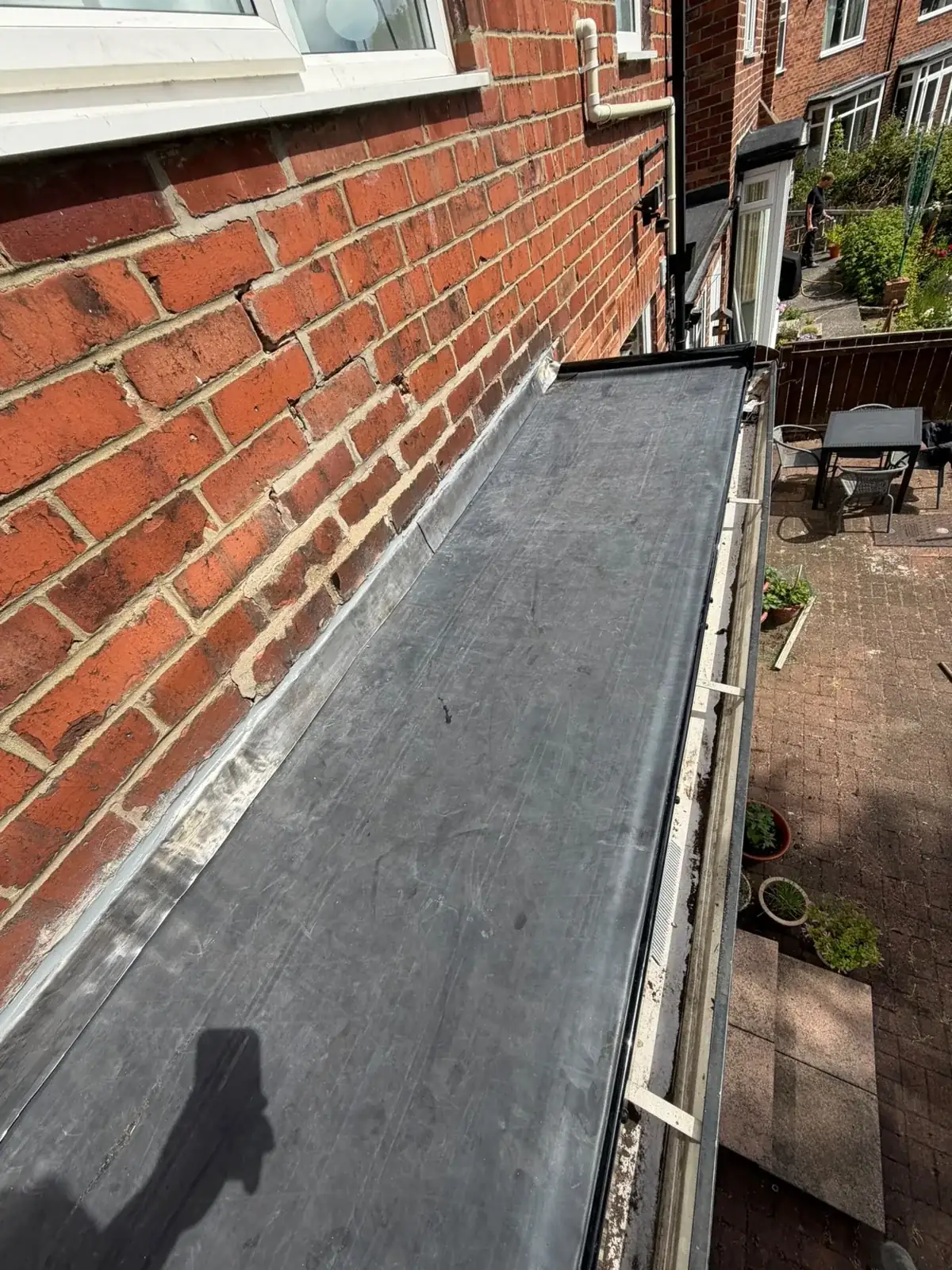
At the eaves, edge trims guide water towards the gutter and finish the membrane neatly. Where the roof meets a wall, an upstand and flashing arrangement helps prevent water going behind the covering. Rainwater outlets must sit in the right place to collect water rather than leave it trapped nearby.
Pipe penetrations, rooflight kerbs and outside corners each have their own requirements. These details can make a small roof more involved than a large uncomplicated one. Tell us about any existing leaks at a particular edge or junction so we can include that area in the assessment.
Suitable roofs and everyday care
EPDM can be considered for extensions, garages and dormers, subject to the structure and detailing. Access, roof shape and the existing deck determine the practical installation approach. If you are comparing it with felt, our guide explains laying methods, appearance and repair considerations in neutral terms.
After installation, keep drainage clear and arrange an inspection if a trim becomes loose or something damages the covering. Avoid placing sharp objects on the roof or using it as a storage area. Any necessary access should be planned safely; most homeowner observations can be made from the ground or a suitable window.
The properties and application of EPDM membranes
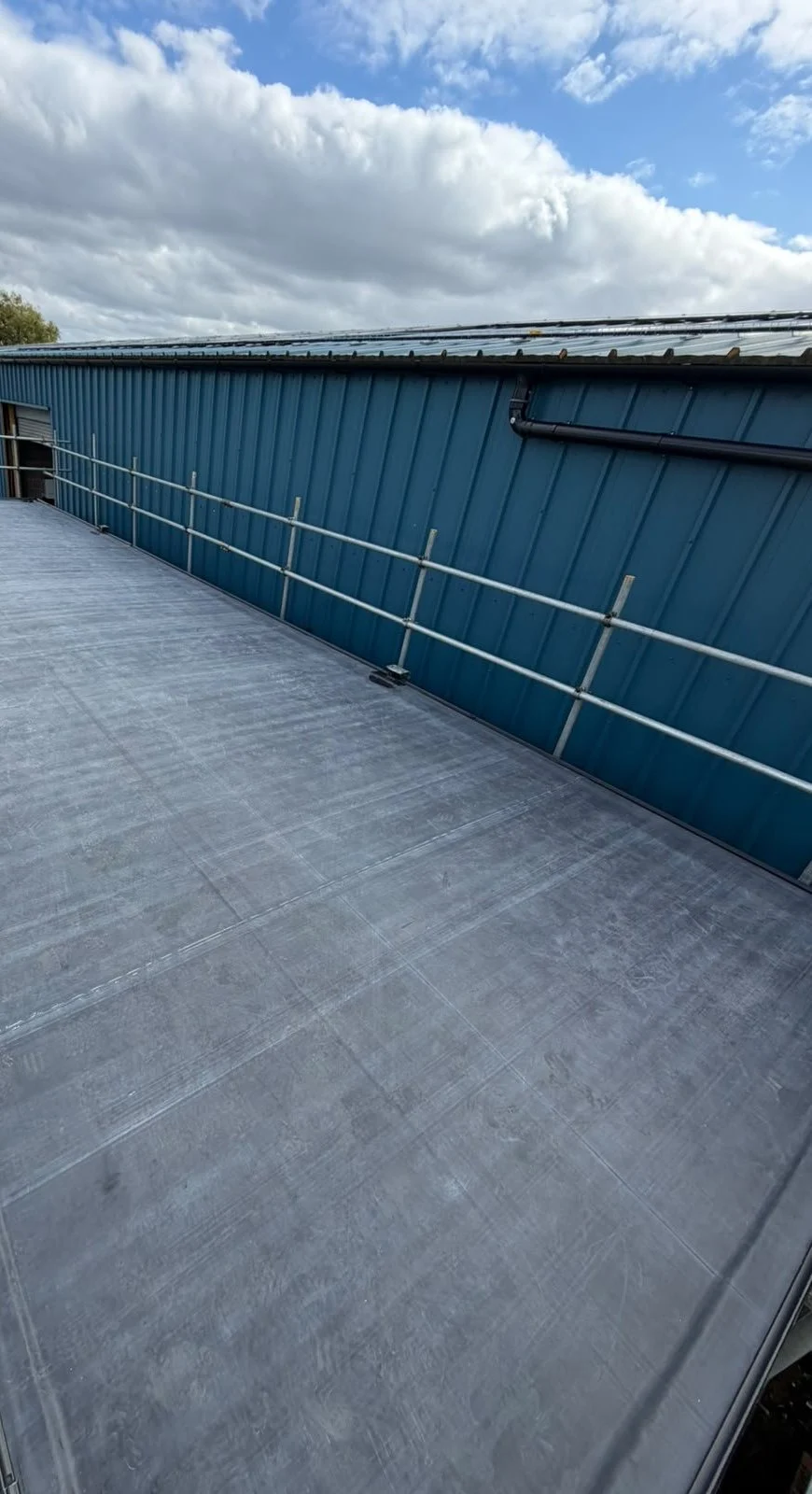
EPDM, which stands for Ethylene Propylene Diene Monomer, is a durable synthetic rubber used extensively in flat roofing. It is typically applied as a single, large sheet, which minimises the number of seams and potential weak points on the roof surface. A roofer should explain how the membrane is bonded to the roof deck using specialised adhesives. This cold-applied process avoids a roofing torch, although safe working procedures are still essential. The material is known for its flexibility, allowing it to expand and contract with the building as temperatures change throughout the year in the North East. This characteristic helps to prevent the cracking or splitting that can occur with more rigid materials. Homeowners should ask about the thickness of the membrane, as different grades are available depending on the level of foot traffic the roof might experience. The dark grey or black finish of EPDM provides a modern, clean look that complements many contemporary and traditional building styles.
Critical detailing for corners and penetrations
While the main field of an EPDM roof is a single sheet, the edges, corners, and any penetrations like pipes or rooflights require careful detailing. A roofer should use specific EPDM accessories, such as uncured flashing tapes and pre-formed boots, to create watertight seals in these areas. Flashing tapes are malleable and can be shaped to fit around complex internal and external corners, providing a continuous barrier against water. For ventilation pipes or soil stacks, specialised collars are used to ensure a tight fit. The interface between the EPDM and the masonry walls is managed with lead flashings or purpose-made trim systems that prevent water from running behind the membrane. Properly executed detailing is essential because the majority of flat roof issues occur at these junctions. Homeowners should be aware that the quality of these peripheral components and their installation is just as important as the membrane itself. A roofer should pay close attention to these areas to ensure a robust and reliable finish across the entire roof surface.
Ongoing care and considerations for rubber roofs
One of the advantages of EPDM is that it requires relatively little maintenance compared to some other roofing materials. However, a roofer should still advise on how to look after the roof to ensure it continues to perform well. Keeping the surface free of sharp debris, such as fallen branches or grit, is important to prevent punctures. If the roof is used for occasional access, such as for window cleaning, care should be taken to avoid dragging heavy equipment across the rubber. Homeowners should check that the gutters and drainage outlets remain clear so that water does not pool excessively on the surface. While the material is resistant to UV radiation and ozone, regular visual inspections are a good way to spot any potential issues early. If a small tear or puncture does occur, it can usually be repaired with a compatible EPDM patch kit. Understanding these simple care requirements helps homeowners protect their investment and maintain the integrity of their flat roof over time. A roofer should be the first point of contact if any significant damage is suspected or if a professional inspection is needed.
EPDM replacement or repair?
Repair is usually worth it when the problem is local, such as a lifted seam, a small puncture or a failed outlet, and the deck underneath is dry and solid. Replacement makes more sense when an old felt roof is cracking all over, water has soaked the boards, or the same roof keeps needing patching. We check the deck before advising either way.