
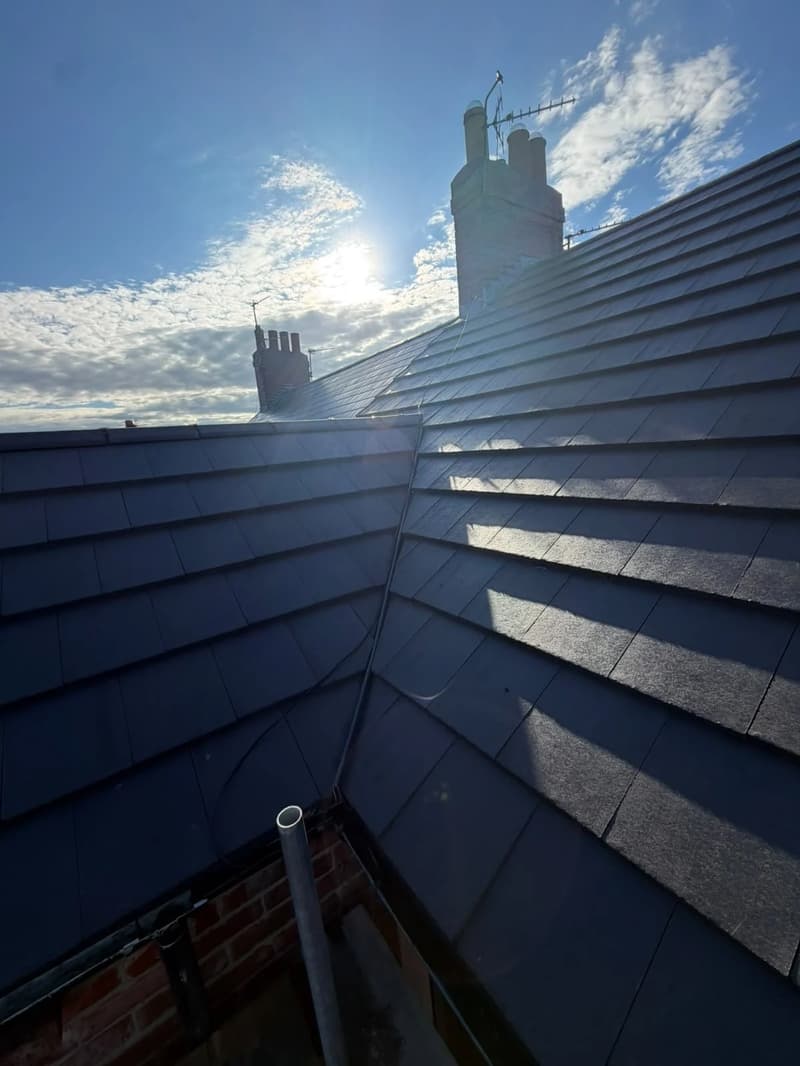
Roof work by McCluskey Roofing
What to do straight away
Put a bucket under the drip and towels around it. Move furniture, rugs and electrical items away. If water is near light fittings or sockets, switch off the electricity to that area at the consumer unit if it is safe to do so, and do not touch wet fittings.
If the ceiling is bulging, keep people out from under it. A bulge holds a surprising amount of water and can give way.
Is it the roof or a pipe?
A useful first test is to look at timing. If the drip only happens during or after rain, especially wind-driven rain, the roof is the likely source. If it carries on in dry weather, or gets worse when someone runs a tap, showers or flushes, a pipe or fitting is more likely.
Turning off the water at the stopcock for a while and watching whether the drip slows can help. If it stops, call a plumber.
Where the stain is
A stain on a top-floor ceiling next to an outside wall often points to the eaves, gutters or a flashing. One near the chimney breast suggests chimney flashing or pointing. A stain in the middle of a room may come from a valley, a roof window or a pipe in the loft.
On a ground-floor ceiling below a bathroom, plumbing is the usual suspect. Below a flat roof, the covering or its edges are likely.
Check the loft
If you can reach the loft safely, take a torch and look above the wet patch. Wet timbers, a damp patch on the felt or daylight through the roof point to a roof leak. A leaking tank, pipe or fitting will usually be obvious. Stay on the joists or boards.
Could it be condensation?
If the water appears on cold mornings rather than during rain, and the loft felt is damp all over, it may be condensation rather than a leak. Our condensation guide explains how to tell.
When it is an emergency
Heavy water, a sagging ceiling or roof damage after a storm needs prompt attention. Our emergency roof repairs page explains what to do while you wait and how to reach us.
After the leak is fixed
Let the ceiling dry fully before decorating. Stains may need a stain-blocking primer. Plaster that has softened or come away will need repairing. Wet loft insulation may need replacing.
Common roof causes
On pitched roofs, the usual culprits are slipped or broken slates and tiles, failed lead flashing around chimneys and roof windows, worn valleys and cracked ridge mortar. On flat roofs, splits in the covering, failed upstands and blocked outlets are typical.
Water can travel along timbers or the underlay before it drips, so the stain on the ceiling is not always directly below the fault on the roof. That is why tracing the leak properly matters.
Gutters and downpipes
Blocked or overflowing gutters can push water back under the roof edge and into the wall or ceiling near the eaves. Clearing them may stop the problem. If the gutter is damaged, our gutter repairs page explains the options.
Keeping a record
Take dated photos of the stain and note when it appears, how heavy the rain was and which direction the wind blew. That information is very helpful when we trace the leak, and useful if you speak to an insurer.
Flat roofs and extensions
If the wet ceiling is in an extension or a room under a flat roof, the covering, the wall junction and any roof light are the first places to check. Water can track under the covering a long way, so the leak may not be directly above. Ponding water after rain often points to the problem area.
Tanks and pipes in the loft
Cold water tanks, central heating header tanks and pipes in the loft can leak or overflow. Condensation on cold pipes can also drip in winter. These are plumbing issues rather than roof faults, but they are easy to check from the loft hatch.
Need it sorted? Book a roof leak repair
If you think the roof is the cause, tell us what you have seen and where. We will trace the leak and give you a free quote.