
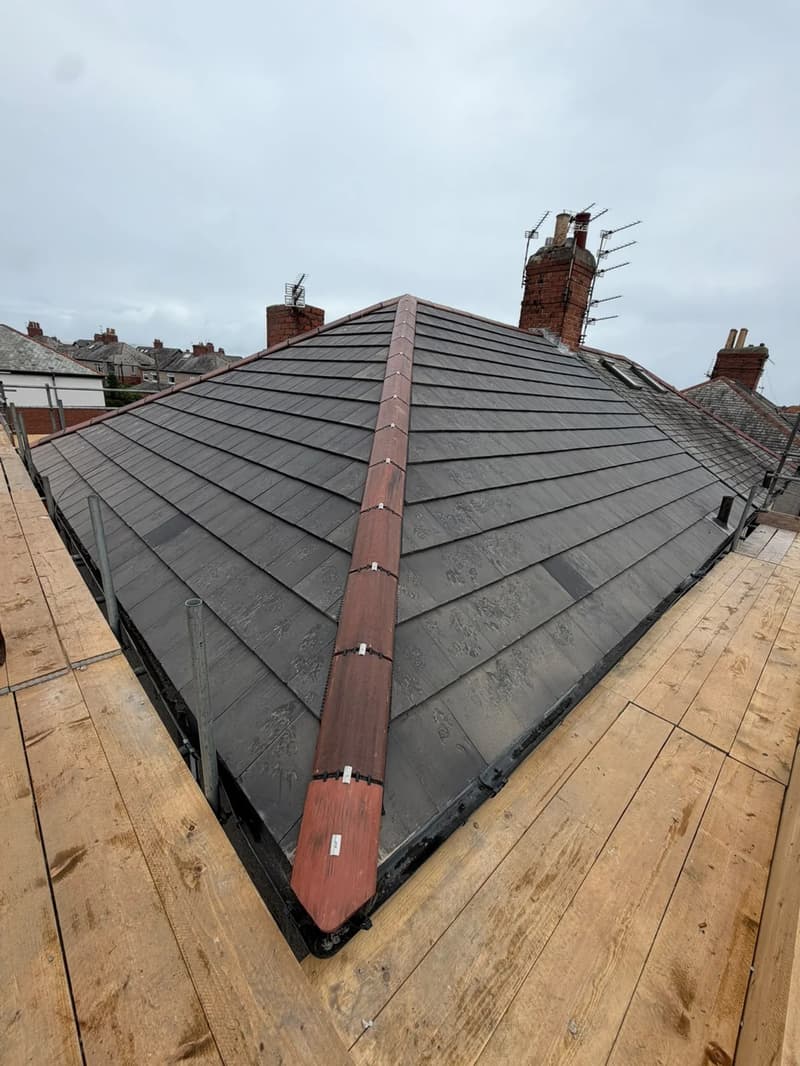
Roof work by McCluskey Roofing
Start by watching it in the rain
The easiest way to diagnose a gutter is to watch it while it rains. A steady drip from one point usually means a failed joint. Water pouring over the front edge suggests a blockage or too little fall. Water running down the back of the gutter onto the wall points to a gap between the gutter and the fascia or a missing drip detail at the roof edge.
Note where the problem is and, if you can, take a photo. It saves time when we come to look.
Leaking joints
Most plastic gutter systems are joined with unions and corners that rely on rubber seals. The seals harden and shrink over time, and they can be pushed out of position as the gutter expands and contracts. A green streak on the brickwork below is a typical sign.
Often the joint can be cleaned and resealed, or the union replaced. If the joints have failed along a whole run, replacing that run may be more sensible.
Sagging and loose brackets
Brackets screwed into the fascia board hold the gutter in line. When they break or the fascia softens, the gutter drops between supports. Water then pools at the low point instead of running to the outlet, adding weight and making it worse.
Repairs involve replacing or adding brackets and resetting the fall. If the fascia board itself is rotten, it needs attention first.
Blocked outlets and overflowing
Moss off the roof, leaves and grit collect at outlets and in the base of the gutter. Even a partial blockage can make a gutter overflow in a heavy shower. Downpipes can block too, especially at bends.
Clearing the gutter and outlets is often all that is needed. If a gutter overflows even when clean, it may be undersized for the roof or set with too little fall.
Cracks, splits and old cast iron
Plastic gutters can crack from age, sunlight or ladders resting against them. Cast iron gutters on older Tyneside houses rust at the joints and can crack. Small cracks in plastic are not usually worth patching for long, as a replacement length is often simpler.
Cast iron can sometimes be repaired, but where it is badly corroded, replacing it is often the better choice.
Repair or replace?
Repair when the problem is one joint, one bracket or a blockage. Replace when the system is brittle, discoloured and leaking in several places, or when the fascia behind needs renewing anyway. Our guttering page explains replacement in more detail.
Roof and gutter repairs together
Sometimes the gutter is only part of the picture. Slipped tiles at the eaves, a missing eaves felt support or failed leadwork can all send water where it should not go. If you also have damp inside, our roof leaks page may help.
Downpipes and drains
A gutter can only empty as fast as its downpipe allows. Blocked downpipes cause gutters to back up and overflow at the outlet. Tapping the pipe can reveal a blockage by the dull sound. Check the gully at ground level as well, because a blocked drain makes water spill back up the pipe.
Staying safe
Working on gutters from a ladder is one of the more common causes of domestic falls. If your gutters are above ground floor, or the ladder would stand on a slope or soft ground, it is safer to let someone with proper access equipment check them.
Gutters and the fascia board
The gutter is only as secure as the board it is fixed to. On many older homes, timber fascias have softened behind the gutter where water has dripped for years. Brackets will not hold in rotten timber, so the board may need replacing or capping before the gutter can be reset. It is worth checking soffits at the same time, as they often show the same signs of damp.
Need it sorted? Book a gutter repair
Tell us what you have seen and where. We will look at the gutters, the fascia and the roof edge and give you a free quote.
Photos and a short description of what you have noticed are always helpful.