
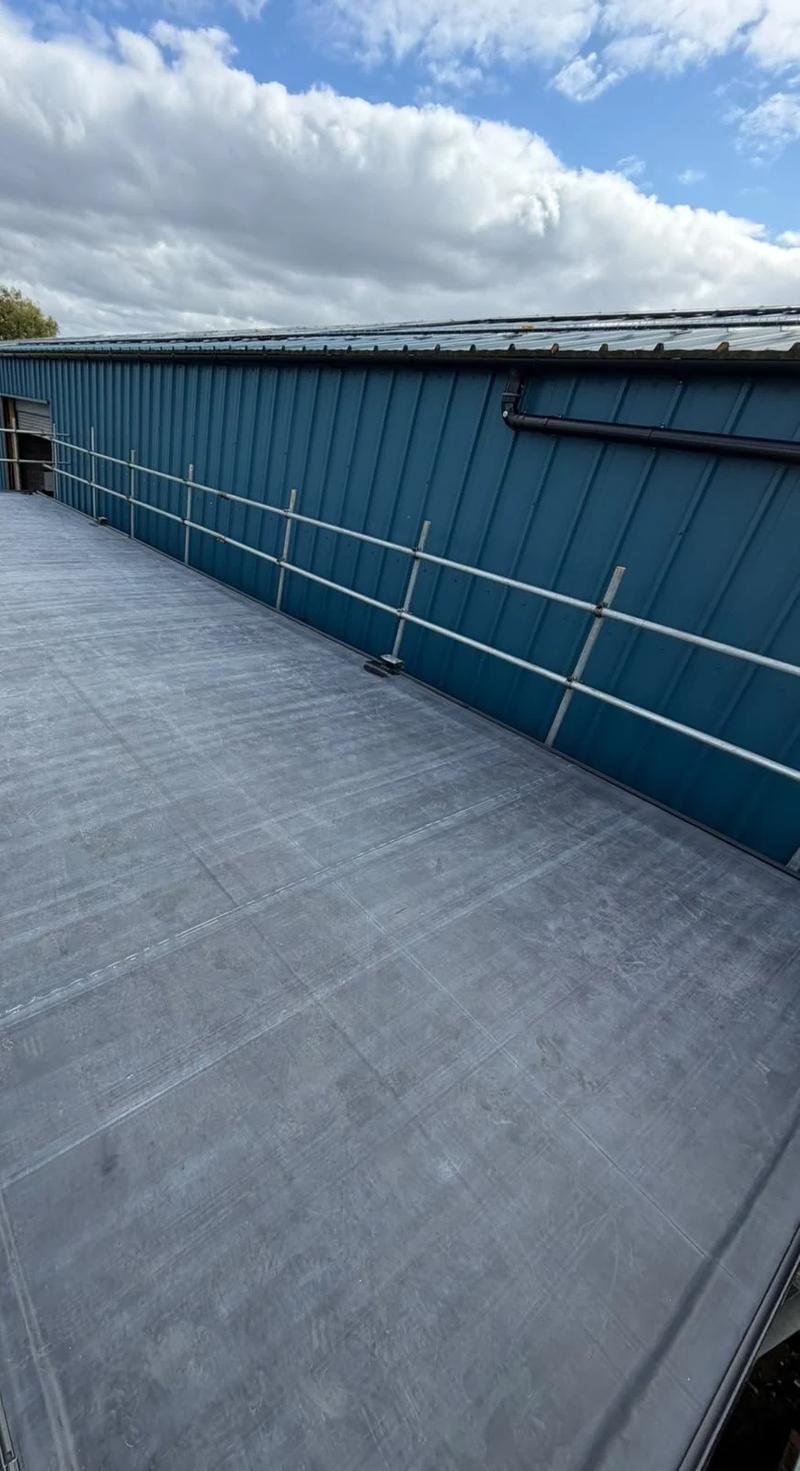
Roof work by McCluskey Roofing
Material, installation and upkeep
The covering is only part of the story. A flat roof is a build-up of layers: the joists, the deck boards on top of them, sometimes insulation, and finally the waterproof layer. If the deck is weak or damp, even a good membrane will struggle. If the roof was laid dead flat with no fall, water will sit on it for days after every shower.
Workmanship matters at least as much as the product. Most flat roof failures we see start at the edges and junctions rather than in the middle: an upstand that was not taken high enough up a wall, a trim that was poorly fixed, an outlet that sits slightly higher than the surface around it. A well-detailed roof in an ordinary material will often outlast a poorly detailed one in a premium material.
What wears a flat roof out
Standing water is the biggest enemy. Ponding puts constant load on the covering, keeps joints wet, and on felt roofs speeds up the breakdown of the surface. Over time, dips caused by sagging boards hold more water, which makes the dip deeper again.
Sunlight also takes its toll. Ultraviolet light dries out and hardens many roofing materials, which is why mineral surfacing or reflective finishes are used on felt. Foot traffic is another cause people overlook: walking on a roof to clean windows, reach a satellite dish or retrieve a ball can crack brittle felt and dent soft decks. Finally, the details around walls, rooflights and pipes move slightly as the building heats and cools, and that movement eventually opens any weak joint.
EPDM and felt in general terms
EPDM is a synthetic rubber membrane, usually laid as a single sheet on domestic roofs, so there are few or no seams across the main area. It stays flexible in cold weather and handles sunlight well. Felt is built up in layers that are bonded together, and its life depends heavily on the quality of the system and how carefully the layers and laps were laid.
Neither material is automatically right for every roof. The size and shape of the roof, how much access it gets and what is beneath it all affect the choice. Our separate comparison guide goes into the differences in more detail.
Warning signs your flat roof is failing
Some signs are visible from a window or the ground. On felt, look for blisters, cracking that looks like crazy paving, bare patches where the mineral surface has worn away and seams that have lifted. On rubber, look for membrane pulling away from upstands, lifted edges at the trims and punctures. Moss and plant growth often mark the places where water sits for longest.
Inside, watch for stains on the ceiling below, a musty smell, paint flaking near the wall junction or a ceiling that feels soft. A roof that has started to feel springy underfoot, if you have reason to be on it, usually means the deck has taken on water. These are all reasons to get it looked at before the next wet season rather than after.
Upkeep that helps
Flat roofs need very little, but they do benefit from regular attention. Clearing leaves and debris from outlets and edges, especially in autumn, lets water drain as intended. Cutting back overhanging branches reduces debris and stops scraping in the wind. Checking the roof from a safe vantage point after storms helps you catch lifted edges early.
Avoid walking on the roof unless you need to, and never pressure wash felt. If small faults appear, getting them repaired promptly is usually the cheapest way to extend the roof's useful life, because water that reaches the deck turns a small job into a larger one.
Repair or replace?
A local problem on an otherwise sound roof, such as a split, a lifted seam or a failed outlet, is normally worth repairing. Replacement starts to make sense when faults are appearing across the whole surface, when the deck underneath is wet or soft, or when you find yourself patching the same roof every year. A garage roof that is already cracking all over is often better replaced in a planned way before water damages what is stored inside.
If you are weighing up the two, our flat roof repair page explains what a repair involves, and the replacement cost guide sets out what affects the price of a new roof. McCluskey Roofing is based in Wallsend and covers Newcastle and the North East. Call 07770 714430, Monday to Friday 8am to 5pm, for a free quote.