
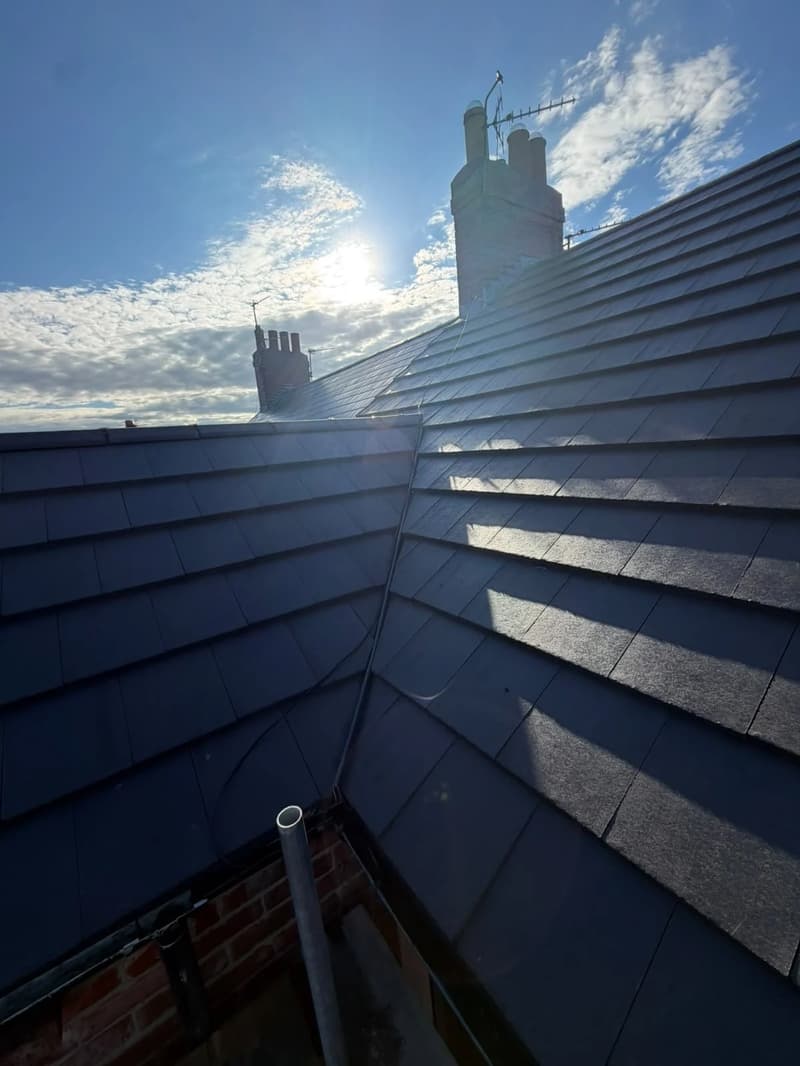
Roof work by McCluskey Roofing
Why we price after seeing the roof
A phone call or a photo tells us a lot, but rarely everything. A damp patch on a ceiling might be one cracked tile, a split in a valley or worn lead around a chimney, and each of those is a different job. Pricing before we know which would mean either guessing high to be safe or guessing low and changing the figure later. Neither is fair to you.
So we look first, then give you a free written quote for the work the roof actually needs. That way you can see what is included and compare like with like if you are getting other quotes.
Access: ladders, roof ladders, towers or scaffold
How we get to the problem is often the single largest factor. A low-level repair on a bungalow or a porch might be reachable from a ladder. Work further up a pitched roof usually needs a roof ladder hooked over the ridge. Higher or more awkward areas, or longer jobs where someone will be working for a day or more, may call for a tower or scaffolding so the work can be done safely.
The layout of the property matters too. Terraces with no rear access, conservatories underneath the work area, steep slopes and three-storey houses all affect what is needed. Scaffolding is not automatically required, but where it is, it is part of doing the job properly rather than an extra.
Finding the true cause before quoting
Water travels. It can enter at one point, run along a batten or rafter and drip out somewhere quite different. A repair aimed at the wrong spot wastes your money and leaves the leak in place, so part of our visit is tracing where water is really getting in.
That might mean looking at the roof from the loft as well as outside, checking flashings and valleys near the stain, and considering whether the damp could be condensation. Getting this right is what keeps a repair small.
Materials: matching tiles, slates and lead
Replacing a few broken pieces with a matching tile is straightforward when the range is still made. Older tiles and some natural slates can be harder to source, and finding sound reclaimed ones of the right size and colour takes time. Lead for flashings, soakers and valleys is priced by weight and thickness, so a long run of new lead costs more than a small refix.
We will explain the material options and how closely they match what is already on your roof, so you can decide how much the appearance matters on that elevation.
Hidden damage to battens, felt and timbers
Some costs only become clear once tiles are lifted. If water has been getting in for a long time, battens may have rotted, felt may have torn and, in worse cases, rafters or boards may be damp. A repair that starts as refixing slates can widen if the timber beneath them will not hold new fixings.
We point out any risk of this in the quote and talk it through with you if we uncover more than expected, rather than carrying on without a word.
Damage of this kind is more likely on roofs where a leak has been ignored for a long time or covered with temporary fixes. It is one reason an early repair usually works out cheaper: the water has had less time to reach the timber, so the job stays confined to the covering itself and the materials needed to put it right.
When repair stops being sensible
Repairs are good value when the rest of the roof is in decent order. When faults keep appearing in different places, slates slip every winter or large areas of felt and battens have perished, spending on repeated patching can add up without ever solving the problem. At that point a partial or full replacement may be the better use of your money.
Our separate guide covers the repair or replace decision in more depth, and our replacements page explains what that work involves.
Getting a free written quote
McCluskey Roofing North East Ltd is based in Wallsend and works across Newcastle, North and South Tyneside and the wider North East. Coming out to look at the roof and giving a quote is free. Call 07770 714430 or the office on 0191 468 2893, Monday to Friday 8am to 5pm, or email mccluskeyroofing1@gmail.com.
It helps to tell us where the problem is, when it shows and any work done on the roof before. Photos from the ground are useful. From there we arrange a visit and send a written quote setting out what we recommend and why.