
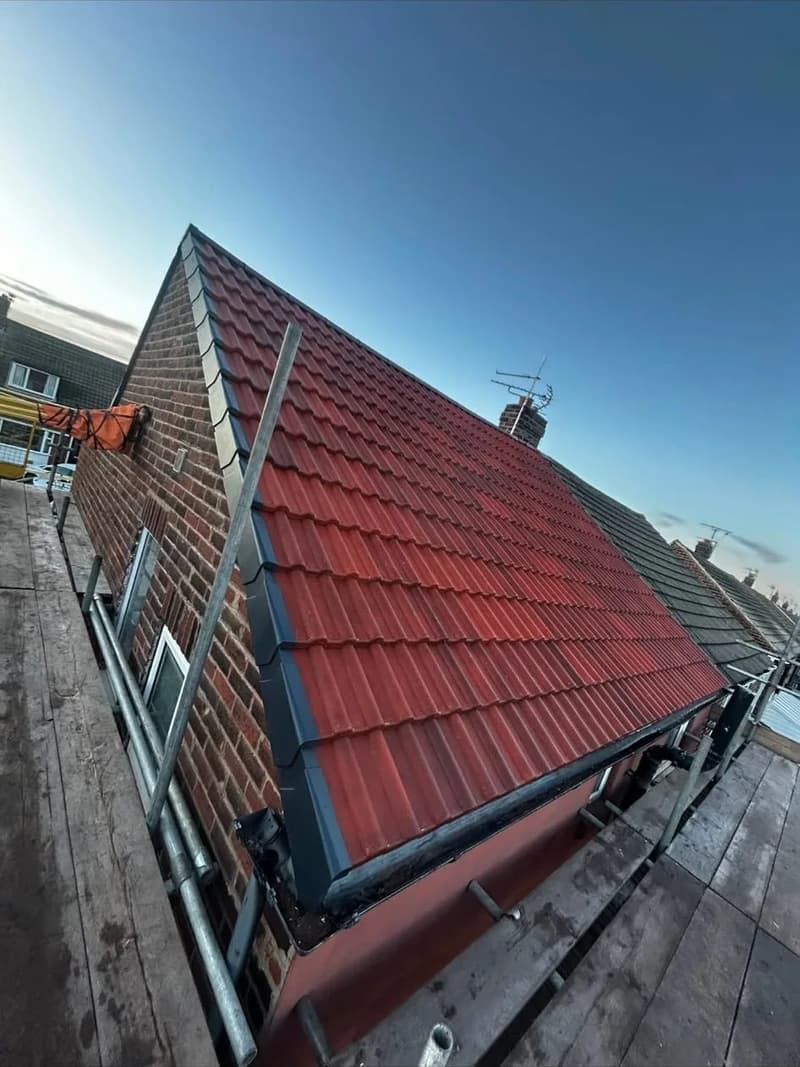
Roof work by McCluskey Roofing
What a dry verge is
The verge is the edge of the roof where the tiles finish at a gable wall. A dry verge replaces the mortar strip under those end tiles with interlocking plastic units that clip over the tile edges and fix to the battens. They cover the ends neatly and shed water away from the wall.
Most systems are made to suit particular tile profiles, so the units are chosen to match what is on your roof.
What a dry ridge is
On a dry ridge, a timber batten is fixed along the top of the roof and a breathable roll is dressed over it, sealing to the tiles on each side. Each ridge tile is then screwed or clipped down through the batten, with union pieces covering the joints.
Because there is no mortar holding them, the tiles are held mechanically, and the roll also allows air to escape from the roof space at the top.
Dry ridge vs mortar
Mortar can last well when it is mixed and laid properly, and it remains the right finish on many older roofs, particularly natural slate with traditional ridges. Its weakness is that it shrinks, cracks and loses grip as the roof moves and the seasons change. Once it is loose, wind can lift tiles off.
Dry-fix systems are not affected by cracking mortar and each tile is fixed in its own right. They do change the look slightly, and some homeowners prefer the traditional finish. If you want your existing mortar bedding repaired rather than replaced, our ridge and verge page covers that.
Can it be fitted without stripping the roof?
In most cases, yes. The old mortar and loose ridge or verge tiles are taken off, the edges are cleaned up and the dry system is fixed in their place. The main slopes stay as they are. Sometimes the last row of tiles at a verge needs refixing so the clips have something sound to fix to.
On some older roofs the existing tiles or battens are not suitable, and we will say so before starting.
What drives dry verge cost
Dry verge cost and dry ridge tiles cost depend mainly on the length of ridge and verge involved, how many ridge tiles can be reused, the system needed for your tile type and the access or scaffolding required. A short gable on a bungalow is a very different job from a three-storey end terrace.
We itemise the work so you can see what goes into the price.
Wind uplift and loose ridge tiles
Ridge tiles sit at the highest and most exposed point of the roof. When the mortar beneath them cracks, they rely on their weight alone, and strong gusts can lift them. A falling ridge tile is heavy and dangerous, so loose ridges should not be left.
A dry ridge fixes each tile individually to the batten, which is why it is often chosen on exposed sites or after a ridge has come off in a storm.
Checking the rest of the roof
When we fit a dry ridge or verge we also look at the tiles nearby, the battens at the gable and the underlay at the top of the roof. Slipped tiles or rotten batten ends are easier to deal with while access is in place. Our slipped tiles page covers those repairs.
After a storm
Ridge and verge tiles are often the first to go in high wind. If tiles have come down, make the area below safe and see our storm damage page for what to do next, then ask us for a free quote.