
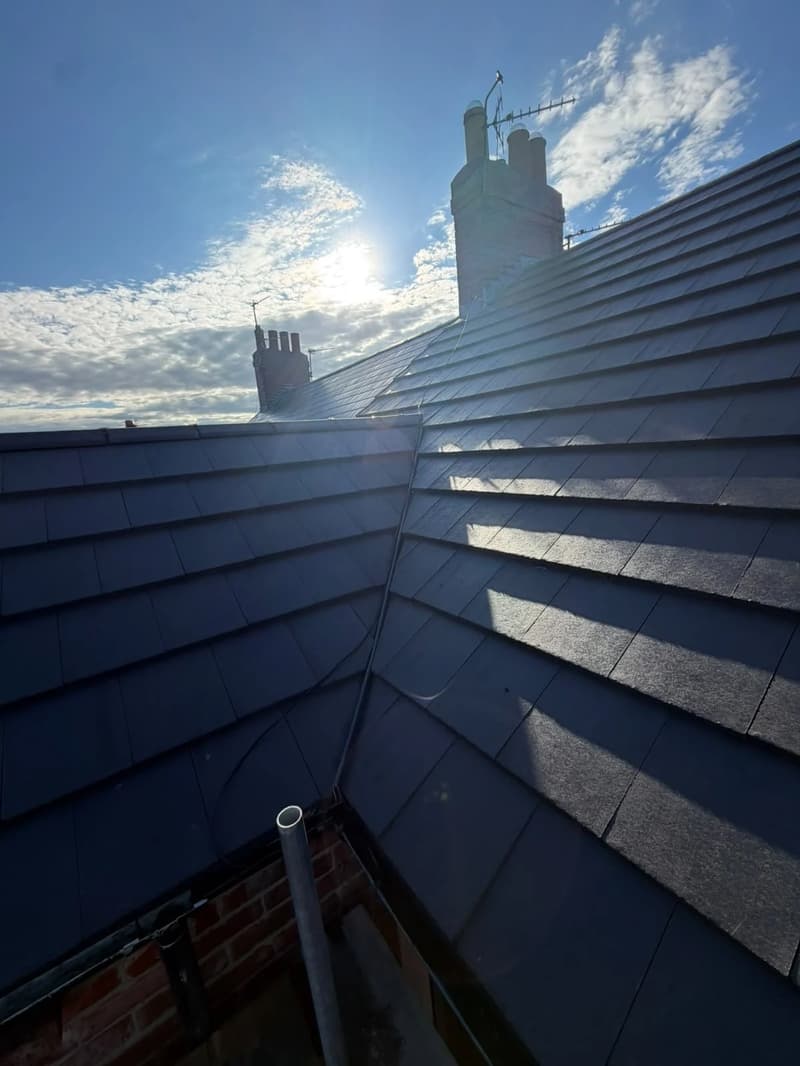
Roof work by McCluskey Roofing
What counts as a roofing emergency
A roofing emergency is when the roof is no longer keeping the weather out or when something is at risk of falling. Water coming through a ceiling, a section of roof exposed after a storm, a loose chimney pot or a lifted flat roof covering all fit.
A single slipped tile with no water getting in is usually urgent rather than an emergency, but it is still worth having it checked before the next spell of bad weather.
Make the area safe
Your safety comes first. Do not go onto the roof or up a ladder in wind or rain. If tiles, slates or masonry have fallen, keep people away from the area below, and if a chimney looks unstable, stay clear of that side of the house.
If you are worried about structural damage, contact the relevant emergency services.
Dealing with an emergency roof leak inside
Put buckets or containers under drips and lay towels around them. Move furniture, electrical items and anything valuable out of the way. If a ceiling is bulging with water, keep clear of it.
If water is near light fittings, sockets or the consumer unit, switch off the electricity to that area at the consumer unit if it is safe to do so, and do not touch wet electrical fittings. If in doubt, call an electrician.
What we do when we attend
The first aim of an emergency roof repair is to stop more water getting in. That might mean refixing or replacing tiles, sheeting an exposed area or sealing a damaged detail temporarily. Once the roof is weathertight, we look at the cause and explain what permanent repair is needed.
Our roof leaks page explains how leaks are traced, and our storm damage page covers wind and weather damage in more detail.
Photographs and insurance
Take photos of the damage inside and out from the ground, as they can help when you speak to your insurer. Check your own policy for what it covers. We can describe what we find so you can pass that on.
Keeping the leak from spreading
If water is coming through in one spot, you can sometimes reduce damage by making a small hole in the bulging plaster with a screwdriver, standing to one side with a bucket below. This lets water drain in one place rather than spreading across the ceiling. Only do this if you feel confident and the area is safe.
In the loft, a bucket or tray under a drip can help, but do not step between the joists.
Storm and wind damage
Many urgent calls come after high winds. Ridge and verge tiles, flat roof coverings and loose flashing are the most exposed parts. After a storm, check from the ground for missing tiles and debris in the garden, and look in the loft for daylight.
When it is not urgent
Not every roof problem needs an immediate visit. A damp patch that appears only in heavy rain, a single slipped tile or moss in the gutter can usually be booked as a normal repair. If you are not sure, ring us and we will help you decide.
Afterwards
Once the roof is safe, ceilings and insulation may need time to dry before decorating.
How to reach us
Call us and tell us what is happening. We will explain how quickly we can attend and what to do in the meantime. For anything less pressing, our roof repairs page and the quote form are the best place to start.