
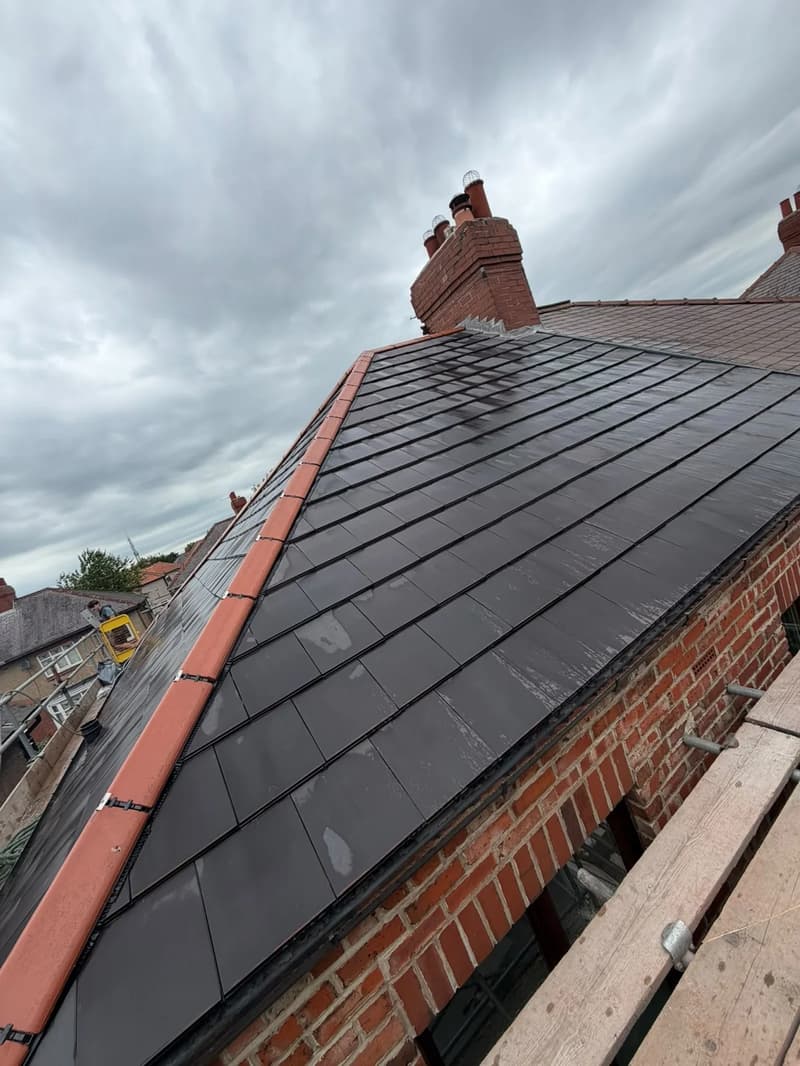
Roof work by McCluskey Roofing
Separate the stack from its roof junction
Water near a chimney can come through defective masonry, the top of the stack or the flashing where it meets the roof. The first task is to identify that route. A general masonry repair will not necessarily solve failed flashing, and renewed flashing cannot stabilise damaged brickwork. Explain whether moisture appears in the chimney breast, loft or neighbouring ceiling and whether it follows particular rain or wind conditions.
The visible location of a stain is not a complete diagnosis because water can move through the construction. An assessment should consider the stack and its surrounding roof together. Ask which defects have been identified and which areas remain inaccessible. That distinction helps you understand whether the quotation addresses confirmed work or includes an allowance for details that require closer inspection.
What influences chimney flashing work
Flashing arrangements vary with chimney position, roof pitch and the shape of the covering. Side steps, front aprons and back gutters perform different tasks. Renewal may require lifting adjacent tiles or slates, preparing masonry joints and forming suitable weathering details. The chimney flashing cost is therefore connected to the roof junction rather than just the amount of metal visible from the ground.
Existing material may be split, detached or incorrectly arranged, and a patch must be judged against the wider detail. Ask whether the proposal is for a local adjustment, partial renewal or replacement of the junction. If masonry is too weak to receive the flashing properly, related repairs may also be needed. Separate those elements in the scope so it is clear what each part achieves.
chimney repairs
- Leaks traced beyond the visible damp patch
- Ridge, verge and leadwork repairs
- Repeated leaks compared with replacement options
Need advice about your roof?
Tell us what you’ve noticed. We’ll discuss the next step towards a free quote.
Request a free quoteFlaunching, pots and cowls
The formed mortar around chimney pots helps shed water from the top of the stack. Cracking or loss of that flaunching requires consideration of the pots and masonry it surrounds. Renewing the top detail is not identical to repointing the sides of the chimney. Pot security, the shape of the finish and the condition of adjoining brickwork all influence the work that should be specified.
A cowl or terminal must suit the actual flue and its use. It should not be selected solely to cover an opening that looks exposed. Where a chimney serves an appliance, appropriate competent advice is needed before changing the terminal arrangement. Ask what is proposed, which flue is affected and whether specialist coordination is required. Different terminals serve different purposes, so a generic chimney cap description may be inadequate.
Masonry repairs versus rebuilding
Local brick repairs and repointing may address limited deterioration, but damaged or unstable sections can require a different approach. Rebuilding decisions need an assessment of the structure, shared boundaries and connection with the roof. The amount of masonry affected matters, as does how sound material will be retained and new work supported. Do not assume a loose top course represents the full extent of the problem.
If movement, loose material or an unsafe stack is suspected, keep people away from the area below and arrange professional assessment. Avoid inspecting it from the roof yourself. Structural work, rebuilding and removal are separate scopes with different implications. The quote should state the intended outcome rather than using chimney repairs as a blanket description for potentially substantial alterations.
Compare the complete access and repair scope
A stack near the ridge can require different access from one at a lower wall junction. Scaffolding, adjacent roofs and protection below the work influence planning. Waste removal and making good the disturbed roof should also be addressed. Two chimney repair quotations may not be comparable if one includes several top and junction details while another covers only a narrow masonry repair.
The separate chimney repointing cost guide concerns mortar joints; use it when that is the identified issue rather than substituting it for this broader repair assessment. For your enquiry, provide safe ground-level photographs and describe any active flues, previous work and shared ownership. A clear list of proposed items makes it easier to question omissions without relying on a generalised chimney service price.
Need it sorted? Book chimney repairs
Contact McCluskey Roofing about the specific chimney concern, including leak location, loose masonry or damaged top details. State whether any flues are active and whether the stack is shared. We can discuss the next step towards a free chimney repair quote, separating masonry and roof-junction work as appropriate. Clear information at enquiry stage helps focus the assessment beyond a general request for chimney prices.