
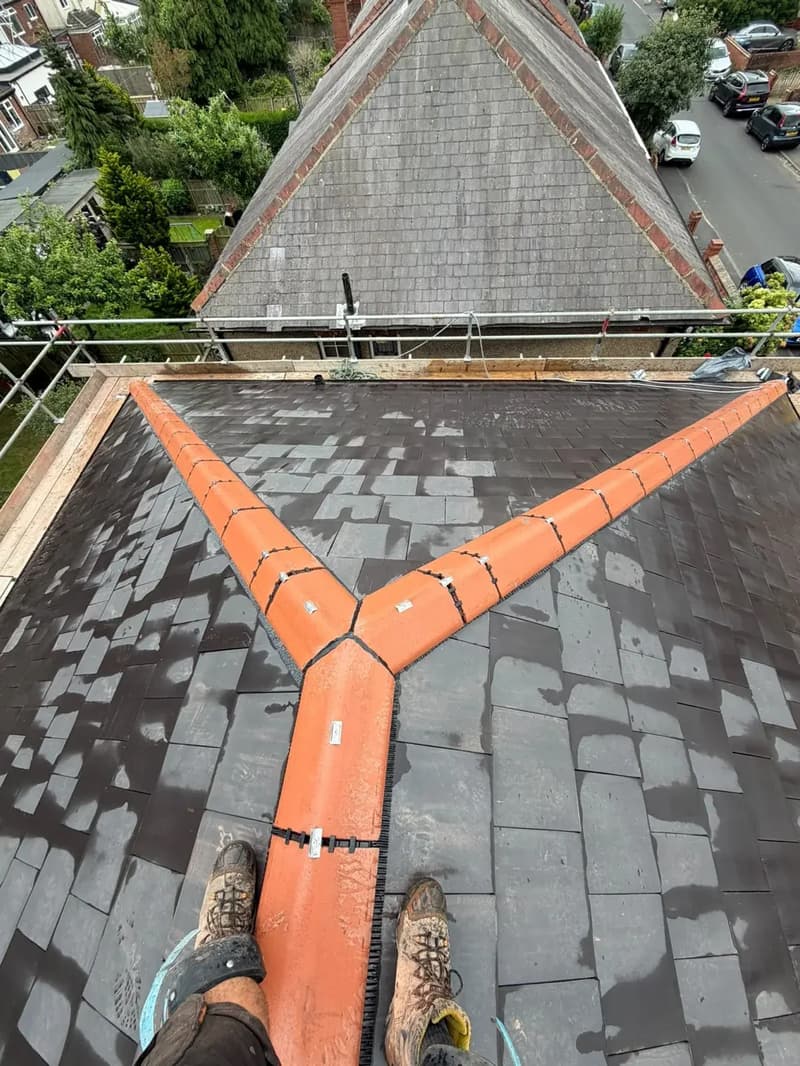
Roof work by McCluskey Roofing
Older stone homes in Killingworth village
The older village includes stone buildings whose roof appearance and masonry details can matter when changes are proposed. Slate, chimney junctions and wall abutments should be considered in relation to the building rather than treated as interchangeable decorative elements. Check whether any property-specific restrictions apply before selecting a different covering or visible roof detail.
Stone construction does not establish which mortar or leadwork approach is appropriate. The actual masonry, existing repair history and proposed work need examining. If there is damp near a chimney, explain whether the stain changes with rain or remains present in dry weather. That information helps separate potential external defects from other moisture sources without diagnosing from the wall material alone.
Township roofs from a different building era
The township expansion of the nineteen-sixties and nineteen-seventies brought estate housing with its own roof forms and later alterations. Tiles on such homes must be identified by profile and fixing needs, not simply by the period in which the estate was built. Original coverings may have been partly replaced or changed completely over time.
A displaced ridge or verge detail can be a local defect, while movement across a tiled slope calls for a wider look at fixings and support. Ask what is confirmed by the inspection and what remains uncertain. A limited repair should not conceal widespread deterioration, but the estate's age by itself is not a reason to recommend replacing every roof layer.
Forest Hall and Longbenton edges
For properties towards Forest Hall and Longbenton, the full postcode is more helpful than using a broad neighbourhood label. Roof forms can change within a short distance, and a main house may have bays, rear additions or a garage with a different covering. Identify the particular section affected when you enquire.
Access deserves the same attention. A narrow side passage, shared drive or conservatory under the eaves can influence where equipment is positioned. Explain how the back of the property is reached and whether the roof meets a neighbouring slope. These practical facts help frame a proposal based on the building, not a repeated specification for an entire postcode area.
Flat roofs, conservatories and masonry
Flat garages and extensions rely on the deck, drainage and edge details as well as the outer membrane. If standing water keeps collecting, ask how the falls and outlets will be investigated. Where the room is heated, its thermal and moisture arrangement should be part of significant roof work. A new surface is not a substitute for suitable support.
A conservatory roof replacement requires assessment of the frame and relevant structure before a solid insulated tiled option is recommended. Chimneys introduce a separate combination of masonry and leadwork, with the flue's use affecting any top alteration. Our main services explain these distinct enquiries so you can choose the appropriate subject without assuming all apply to your property.
Flat roof drainage and deck assessment
Requesting roofing advice in Killingworth
Include your postcode, covering if known and whether the issue is recent damage, recurrent water ingress or planned renewal. Add safe photographs of the whole roof section if they help explain the layout. McCluskey Roofing provides free quotes for the assessed work. Wallsend, Gosforth and Cramlington have separate nearby hubs, with local context for properties beyond Killingworth itself.