
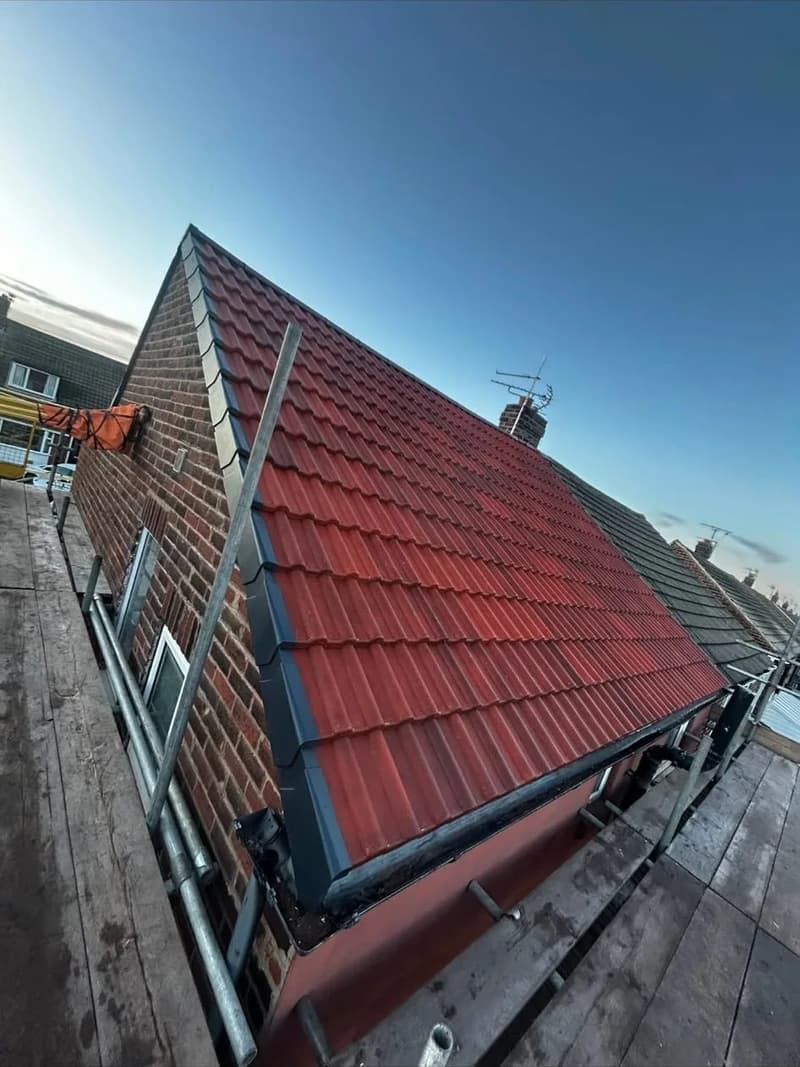
Roof work by McCluskey Roofing
Count the defects, but investigate the cause
A single cracked tile and repeated slips across a slope are different repair enquiries. The assessment needs to identify whether damage came from impact, movement, failed fixings or problems below the covering. Simply fitting another tile may not address a loose batten or recurring movement. Record where the defect appears and whether it has changed, but do not climb onto the roof to count damaged pieces.
Fragments found in a gutter may help indicate deterioration, although their source is not always obvious. Water inside the building can also travel away from the entry point before appearing on a ceiling. Tell the roofer about the leak pattern rather than assuming the tile directly above the stain is responsible. Diagnosis determines the sensible repair scope and prevents a cosmetic replacement from being mistaken for leak resolution.
Finding a compatible replacement tile
Roof tiles have profiles, interlocks, dimensions and fixing requirements that must work with the surrounding covering. A piece that looks similar from the street may not fit the existing arrangement. Matching is therefore a practical roofing decision, not just a colour choice. Older or unusual coverings can require a closer examination of what can be sourced and how any replacement will meet adjacent tiles.
Ask whether the proposal is based on an identified tile or an allowance pending inspection. If a perfect visual match is unavailable, the alternatives should still be compatible with the roof and clearly explained. There should be no assumption that a different profile can be pushed into place. The appearance may weather differently, but fit, overlap and correct fixing remain central to the repair.
slipped tile repairs
- Leaks traced beyond the visible damp patch
- Ridge, verge and leadwork repairs
- Repeated leaks compared with replacement options
Need advice about your roof?
Tell us what you’ve noticed. We’ll discuss the next step towards a free quote.
Request a free quoteAccess can dominate a small repair
The size of a damaged area does not determine how it can be reached safely. Height, roof pitch, nearby conservatories and boundaries affect access arrangements. A small defect at an awkward rear junction can involve more preparation than several accessible tiles on a simpler slope. Safe working equipment and protection should form part of the repair plan rather than being treated as optional extras.
When requesting a quote, mention whether the affected side is beside a public path, shared passage or glazed extension. Photographs from the ground can show the surrounding layout as well as the tile problem. Do not attempt a temporary repair from an unstable ladder position. The risk of injury and additional breakage is not reduced merely because the repair looks minor from below.
Check battens, underlay and nearby details
Tiles depend on their supporting and protective layers. If a defect exposes torn underlay, damaged battens or an open junction, replacing the outer piece alone may leave an unresolved weakness. Inspection may require controlled lifting of nearby tiles to understand the condition. Ask which parts can be assessed before work and what will happen if concealed defects become visible during the repair.
A ridge tile, verge edge or valley connection has a different role from an ordinary field tile. The repair specification should identify the actual location rather than using one general description for all tile work. Mortar, mechanical fixings and weathering details need appropriate attention for the arrangement present. That helps explain why repairs involving the same number of visible pieces may require different work.
When local replacement stops being the right question
If slips recur in several areas or the supporting layers are broadly deteriorated, it is reasonable to compare a local repair with wider work. That does not mean every missing tile triggers a re-roof. It means the recommendation should follow the extent of the defect and the surrounding condition. Ask why the proposed repair is suitable and what limitations it has, especially after repeated previous interventions.
For a useful written quote, describe the affected roof section, known leaks and access restrictions. Check whether matching, fixing, adjoining details and removal of broken material are included. The roof repair cost guide covers the wider assessment process, while our slipped-tiles page focuses on the practical fault. Comparing those scopes is more informative than looking for a universal charge per replacement tile.
Need it sorted? Book slipped tile repairs
For a missing, damaged or recurrently slipped tile, describe the affected slope and any water ingress to McCluskey Roofing. Safe ground-level photographs can show the tile arrangement and access around the house. Request a free repair quote covering the identified cause, compatible replacement and necessary supporting work. Keep clear of loose material below the roof and avoid attempting your own roof-level repair.