
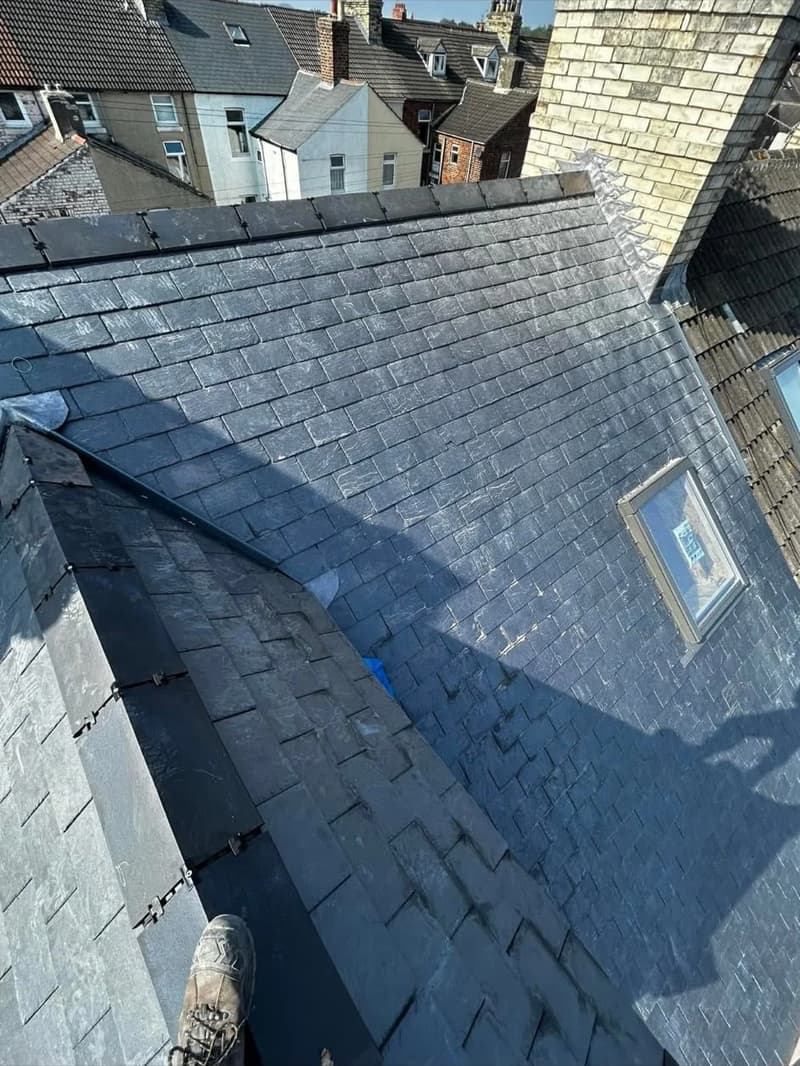
Roof work by McCluskey Roofing
South Beach and exposed roof lines
Around South Beach, a property's orientation can make roof edges and changes in pitch particularly relevant during windy rain. Exposure is only one part of the assessment: the fixing arrangement, material condition and surrounding buildings affect how the roof behaves. A leak that occurs with one wind direction should be described as such, not treated as proof that every exposed slope is defective.
Check for changes from ground level after rough weather. Missing pieces, shifted ridge tiles or material in the garden are useful observations. Avoid standing below anything loose and do not try to lift a tile back into place from a ladder. Appropriate roof access is needed to examine the damaged detail and the soundness of nearby work.
Terraces, quay-side streets and roof boundaries
Older terraces near the quay can have continuous roof lines, prominent chimney stacks and confined rear access. Water at a boundary may relate to the connection between two coverings rather than a defect directly above the indoor stain. Where one side has already been re-roofed, the difference in material or roof level deserves attention.
Blyth is not all one housing type. Cowpen, Newsham and Bebside include different combinations of older homes and later development. On each property, distinguish the principal pitched roof from bays, porches and additions. A small flat roof at the rear may receive runoff from above, making the drainage layout as important as its own waterproof covering.
What a Blyth repair enquiry should investigate
When a slate slips or a tile breaks, ask whether it is isolated damage or part of a wider fixing problem. A local replacement should leave a suitable connection to the surrounding covering. Flashing around walls and stacks also needs checking where damp appears close to masonry. Cosmetic sealant over an uncertain leak route does not provide a clear explanation of the defect.
Chimney joints and the roof opening serve different functions. Worn mortar may need masonry attention while split lead requires work at the junction. Describing both avoids assuming repointing will cure every chimney-side stain. The repair and chimney pages explain these distinctions; an assessment determines which, if either, applies to your home.
Replacing coverings without overlooking support
For a tired pitched roof, the replacement plan should account for underlay, battens, fixings and any relevant timber work. A coastal setting makes a suitable specification important, but it does not justify choosing a material before the roof pitch and structure have been understood. Adjacent homes and the appearance of the existing street may influence the finishing detail.
Flat roofs require a separate look at falls, outlets and the supporting deck. EPDM can be considered where the roof assembly and detailing suit it. For a conservatory, a solid insulated tiled conversion starts with the frame and support, not the external tile finish. These are different enquiries and should not be bundled into one assumed solution for every Blyth property.
Starting with your postcode and symptoms
Tell us whether damage followed wind, appeared gradually or returned after earlier repairs. Include your full Blyth postcode and note any shared yard or limited side passage. We offer free quotes based on the work needed. Our neighbouring hubs cover Whitley Bay and Cramlington separately, giving you a relevant starting point if your property is outside Blyth itself.