
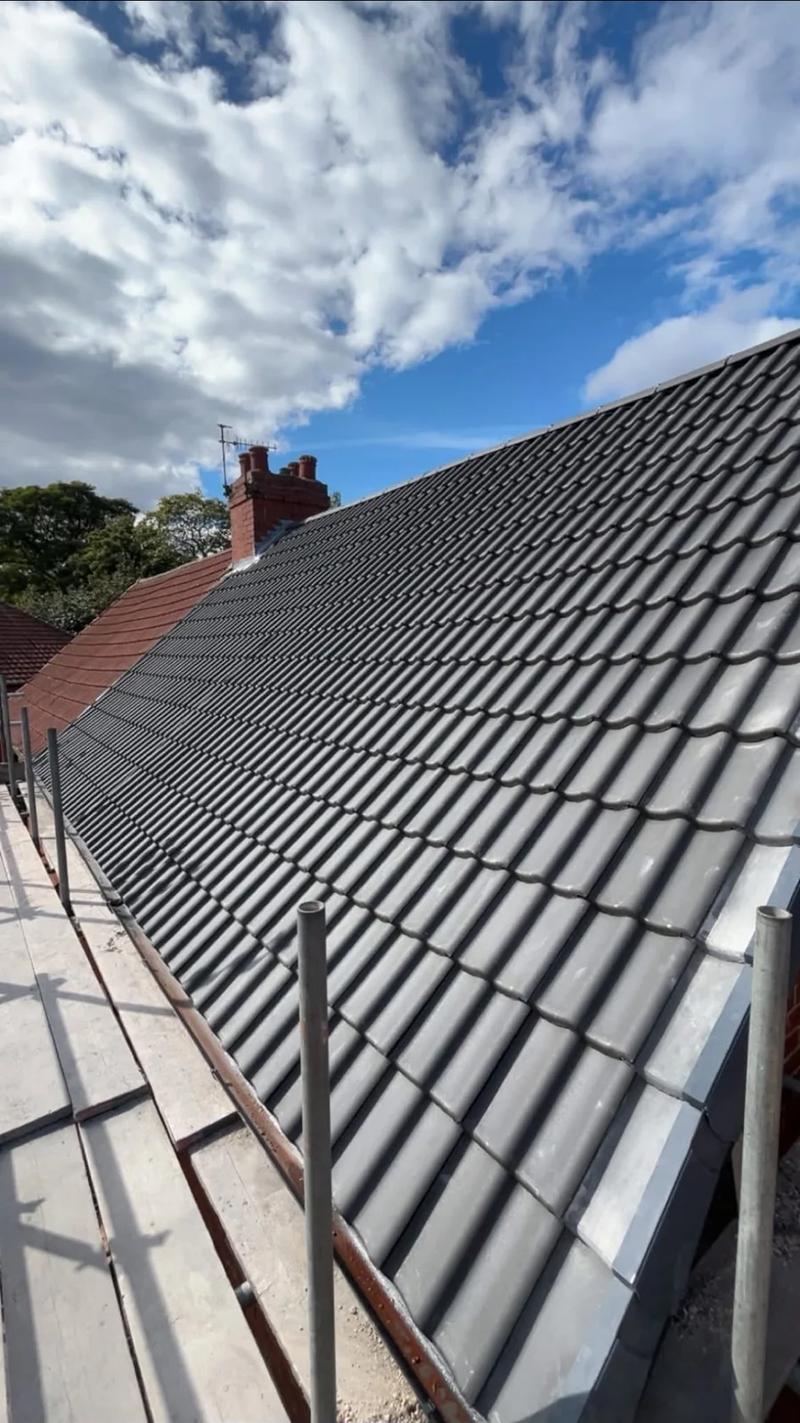
Roof work by McCluskey Roofing
Material and appearance are different questions
Clay tiles are formed from clay and fired, while concrete tiles are made from a cement-based mixture. That distinction does not tell you the full profile, finish or installed appearance. Tiles of either material can vary in shape and arrangement. Consider a sample together with photographs of the proposed roof layout, rather than treating the material name as a guarantee of one particular look.
Colour variation, edge shape and the rhythm of the courses affect how a roof sits with the building. A change in tile design may be more noticeable than a change in material alone. Where the roof adjoins another property, the meeting detail also matters. Ask how the selected covering will connect to the existing neighbour’s roof instead of choosing solely from an isolated tile sample.
Pitch and tile profile come first
Each tile design has requirements for pitch, overlap and fixing. A covering that suits one slope may not be appropriate for another, even when both are described as concrete or clay. Roof exposure and the arrangement of valleys, dormers and junctions can influence the specification. The roofer should assess the actual slopes before proposing an alternative to the existing tile.
Interlocking and plain-tile arrangements also differ in the number and layout of pieces. These details affect battens, cuts and the treatment of edges. Do not assume that two materials can be swapped on an unchanged supporting arrangement. A suitable replacement specification should explain the build-up and fixing approach, taking account of the chosen tile rather than relying on a broad material category.
tiled roof replacement
- Slate or tile options suited to the roof
- Supporting structure inspected after stripping
- Local defects compared with wider roof condition
Need advice about your roof?
Tell us what you’ve noticed. We’ll discuss the next step towards a free quote.
Request a free quoteWeight and structural suitability
The load of a replacement roof needs checking as part of the proposal. It is unsafe to assume that all clay tiles are light or that every concrete covering has the same weight. The individual tile design and installed arrangement determine the relevant load. Existing rafters, alterations and the supporting building should be considered before accepting a material change.
Insulation, rooflights or changes within the loft may introduce further design considerations alongside the covering. A structural assessment may be needed where suitability is uncertain. Ask what has been established about the existing roof and what requires further checking. The comparison is only meaningful once both proposed options can be used appropriately on the building, not merely because they are available in a preferred colour.
Weathering, maintenance and local damage
Both materials can be affected by damage and defects in surrounding roof details. Cracks, displaced pieces, failed fixings and drainage problems deserve attention regardless of tile type. Surface weathering is not the same as a failure to shed water. An assessment needs to distinguish appearance changes from faults that affect performance, rather than automatically recommending replacement because the roof looks different from a new sample.
Maintenance should also include ridges, verges, valleys and flashings, not just the main tile faces. Those connections may explain a leak where the field tiles remain sound. Replacement matching can become important after local damage, particularly with an older profile. Ask how compatible repair pieces would be identified and what the chosen new covering requires at vulnerable roof junctions.
Make the comparison using a full specification
Compare proposals that address the same roof area and the same supporting work. Underlay, battens, edge details, access and waste removal should not disappear from the discussion just because the headline decision is clay versus concrete. If one option requires a different build-up or junction treatment, that difference should be explained. A complete quote makes the practical implications visible.
Check any planning or conservation considerations affecting your property before making a significant appearance change. For a broader choice between slate and tile, use the separate comparison guide; this page concerns tile materials specifically. Bring your preferences, access information and any known roof defects to the enquiry. The selected covering should suit the roof’s construction and context as well as your desired finish.
Need it sorted? Book tiled roof replacement
To compare a concrete or clay covering for your replacement roof, tell McCluskey Roofing about the existing tiles, preferred appearance and any shared roof junctions. The proposed material needs assessing against the roof pitch and supporting structure. Ask for a free tiled roof quote with those decisions explained, rather than treating material choice as a simple sample selection.