
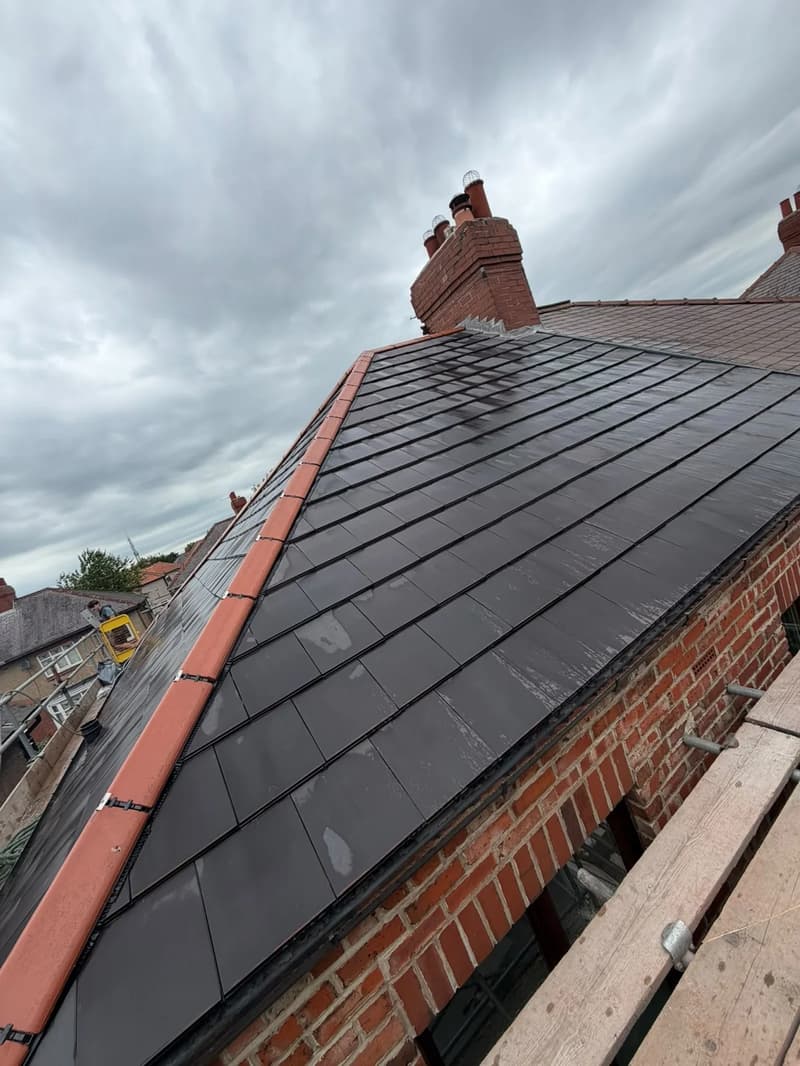
Roof work by McCluskey Roofing
Establish whether the flue is active
A chimney may serve a stove, open fire or another appliance, or it may no longer be used. Each situation has different requirements for a terminal and ventilation. A cowl intended for an unused flue should not be assumed suitable for an active one, and a decorative pot does not establish what is connected below.
Before changing the terminal, identify the appliance and follow the relevant flue and appliance guidance with advice from a competent installer. Gas appliances require appropriate gas-safety expertise. The roof-level fitting and the safe operation of an appliance are related but distinct questions; neither should be guessed from the chimney’s outside appearance.
Why a cowl may be considered
A suitable cowl or terminal may be considered to address a particular problem, such as rain entering an exposed opening or birds accessing a flue. The intended function has to be matched to the flue arrangement. Restricting the opening with an unsuitable device can interfere with ventilation or the discharge of combustion products.
Poor draught does not always originate at the pot. Flue condition, appliance use, nearby roof features and other factors may be involved. A roof inspection can examine accessible terminal details, but persistent appliance performance or smoke problems need a competent specialist assessment. A new cowl should not be presented as an automatic cure for every draught complaint.
Chimney pot replacement and its support
Cracked, loose or displaced pots need assessment of both the ceramic component and the masonry supporting it. A replacement must be suitable for the opening and any terminal required above it. The way it is bedded and secured matters, particularly on a tall exposed stack where movement can affect the surrounding finish.
Do not treat a loose pot as something to straighten by hand from the roof. Falling components can endanger people below, and access around a chimney needs appropriate equipment. Report visible movement from the ground and keep clear of the area beneath it. If the supporting top is deteriorating, pot replacement alone may not address the weakness.
Flaunching, top finishes and water shedding
The mortar finish around chimney pots is known as flaunching. It supports the top arrangement and helps shed rain away from vulnerable openings and masonry. Cracks, loose edges or hollows can allow water to gather even where the pot and cowl appear intact. These surrounding details should be checked alongside the proposed fitting.
A terminal cannot prevent water entering through failed flaunching, porous joints or defective flashing lower down. For that reason, roof-level assessment should distinguish entry through the flue opening from entry through the stack or its base. Repairs can then target the relevant detail rather than replacing the most visible component first.
Unused chimneys still need a planned arrangement
An unused flue may need weather protection while retaining appropriate ventilation. Sealing its top without considering the rest of the flue can trap moisture, especially where the fireplace opening below has also been closed. The final arrangement should reflect the building and any future use rather than assuming disuse means the chimney can be blocked completely.
If a redundant stack is badly deteriorated, broader chimney repairs may need discussing before money is spent on the pot. The condition of masonry, support and roof junctions determines whether local work is enough. The chimney repairs hub brings these options together so the terminal is considered within the whole stack.
Tell us about the pot, flue and symptom
Explain whether the chimney is in use, what appliance is connected and whether the concern is rain, birds or a loose pot. Safely taken photographs can show the top without climbing. McCluskey Roofing is based in Wallsend and takes chimney roofing enquiries across Newcastle and the North East; appliance-specific suitability should be established before a fitting is selected.