
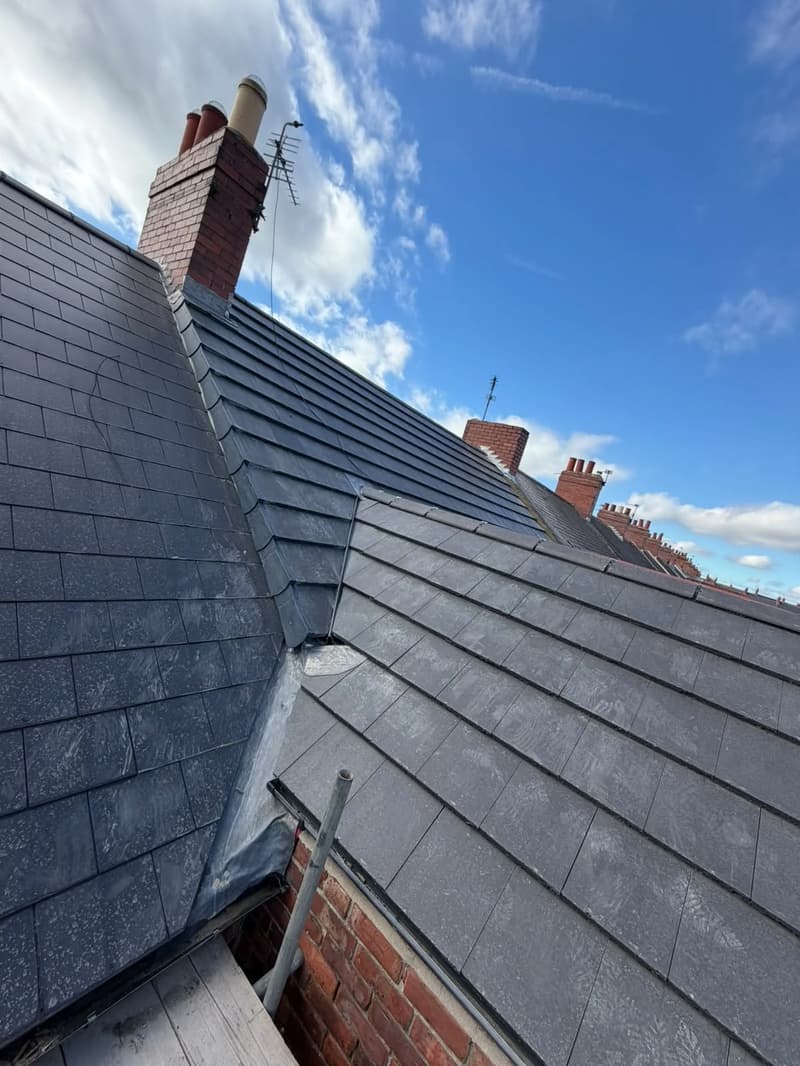
Roof work by McCluskey Roofing
Recognise the difference between joints and masonry
Repointing renews defective mortar joints while retaining suitable bricks and the existing structure. Rebuilding involves dismantling an assessed section and reconstructing it. If bricks are badly damaged or the stack has moved, replacing only the visible joint face may leave the principal fault untouched. The extent of deterioration determines the appropriate discussion.
Observations from the ground can help identify obvious leaning, missing masonry or irregular courses. They cannot confirm support or the condition of every face. Close inspection needs suitable access, and structural concerns may require a structural professional. Do not push a loose brick to test whether the stack is stable.
Decide how much of the stack needs work
A rebuild does not necessarily involve every part of the chimney. Sometimes the concern is concentrated around the upper courses, while other defects extend down towards the roof junction or below it. The scope should be based on what the assessment establishes, not a standard number of courses removed from every stack.
The chimney’s use and arrangement also matter. Shared masonry, multiple flues and connections to appliances can limit what may be altered and when. Any proposal needs to identify the retained sections and how they will remain stable and functional. A roofing description alone should not stand in for the necessary structural or flue checks.
Support, access and the sequence of rebuilding
Dismantling changes loads and can expose weaknesses that were hidden by the existing brickwork. Safe access, protection and a planned sequence are needed before work starts. Scaffolding and debris handling should suit the stack’s height and surrounding roof, rather than relying on the roof covering to support materials or falling rubble.
Where the remaining structure needs designed support, specialist advice should inform the work. Shared stacks may bring party-wall considerations, while planning restrictions or building-control requirements can apply to the alteration. These checks belong at the start of the process so a practical rebuild is not planned around assumptions that later prove unsuitable.
Reconstructing the masonry and flue arrangement
Replacement masonry needs to suit the exposure, construction and intended appearance of the stack. Brick condition, joint detailing and the arrangement of flue openings all affect the result. Reusing existing bricks is only appropriate where they remain suitable; a visual match should not outweigh their physical condition.
The top finish, pots and any terminals need considering with the rebuilt section. If an appliance remains connected, its flue arrangement must stay suitable and should be checked by the appropriate competent professional. Changing the stack height or terminal can affect more than its outline against the sky, so those details need deliberate assessment.
Weatherproof the junction, not just the new bricks
A rebuilt stack still needs a sound connection to the roof. Flashing, soakers and adjoining coverings must shed water correctly around the renewed masonry. Existing lead may not suit a changed joint position or stack shape, and surrounding tiles can be disturbed during access and dismantling. These details should be included in the assessment.
Removing the stack may be an alternative where it is redundant and structural and regulatory checks support that choice. That is a different scope, involving reinstatement of the roof opening and treatment of the remaining chimney. Comparing repair, rebuild and removal makes the decision more useful than assuming new brickwork is always the preferred answer.
Arrange a chimney condition assessment
Tell us about leaning, damaged brickwork, fallen pieces or previous repairs, and whether the chimney is shared or used. McCluskey Roofing takes enquiries across Wallsend, Newcastle and the North East. Keep clear of unstable material; a roofing discussion can establish the next assessment step without claiming that an unseen stack definitely needs rebuilding.