
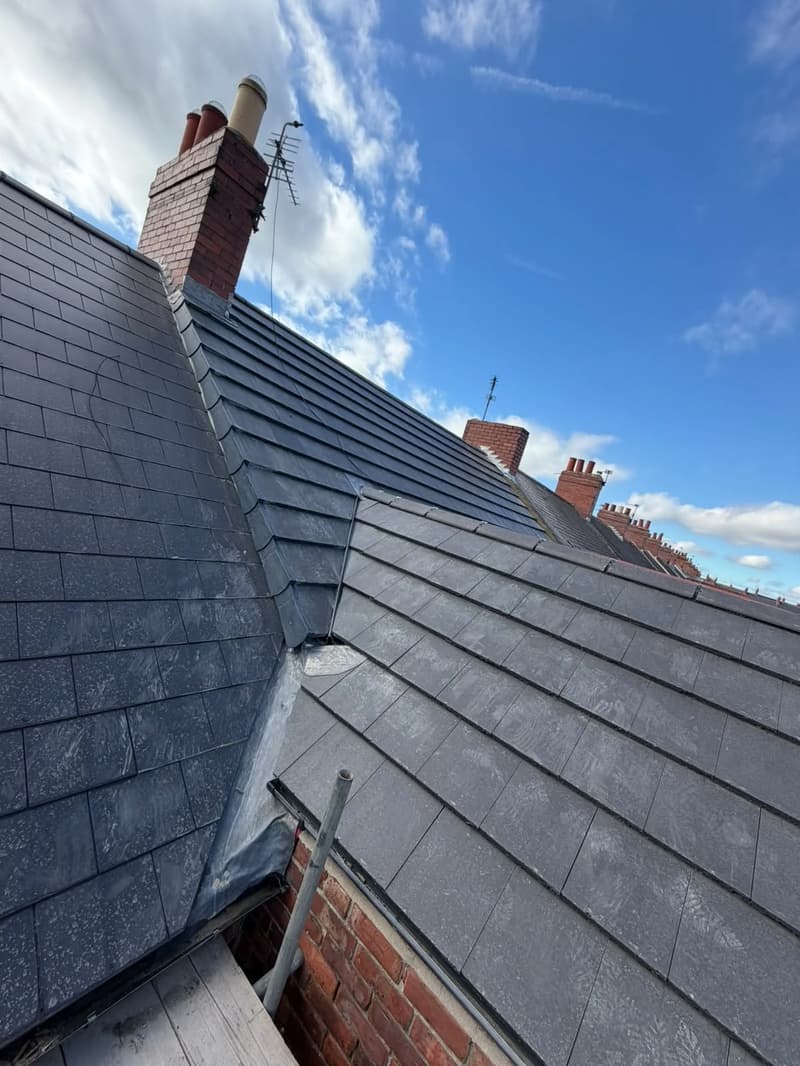
Roof work by McCluskey Roofing
Define which part of the chimney is involved
The stack is the masonry that projects above the roof; the breast and flue may continue through the building beneath it. An enquiry about removing the visible stack should not be taken as approval to alter internal masonry. The proposed boundary of the work needs describing clearly so structural and roofing requirements can be assessed.
Some stacks contain more than one flue or serve adjoining homes. Even if your fireplace is unused, another appliance or neighbouring flue may remain active. The use and ownership of each part need checking before anything is dismantled. Removing a pot or closing an opening is not a substitute for establishing those connections.
Compare removal with repointing or rebuilding
A deteriorated stack does not automatically require removal. Where masonry remains stable, repairs to joints, flaunching or flashing may be appropriate. Where the upper structure is seriously damaged, rebuilding may offer an alternative that retains the chimney. The choice depends on condition, use, support and any constraints on changing its appearance.
Removal may be considered where a stack is redundant and the checks support that option, but it should not be presented as a universal cure for leaks. Water could be entering through adjoining roof details that still require repair. Assessing the source and the masonry separately helps avoid removing sound structure to address a local flashing problem.
Structural checks and building regulations
Dismantling chimney masonry can change the stability of the remaining structure. A structural professional may need to assess support and the proposed sequence, particularly where work extends below roof level. Removing an internal breast is a separate structural alteration that can require designed support for retained masonry and approval from building control.
Planning restrictions, listed status and conservation considerations may also apply. Shared chimneys and party-wall work can involve responsibilities towards adjoining owners. Check the requirements before the scope is agreed; permission to renew a roof does not automatically settle every issue involved in taking down a chimney.
Safe dismantling and protection of the roof
A stack cannot safely be treated as loose rubble to knock down onto the surrounding covering. Suitable access, protection and an assessed dismantling sequence are needed to control the work. Debris handling must avoid overloading the roof or damaging tiles, membranes and gutters that will remain in place.
Weather protection matters while the junction is open. Once masonry has been reduced to the agreed level, the exposed area needs a suitable roof construction rather than a temporary board hidden under spare tiles. Any retained flue arrangement also needs appropriate treatment, with appliance safety handled by a competent professional where relevant.
Making good the covering and supporting layers
The former chimney opening can interrupt rafters, battens, underlay and insulation. Reinstatement should restore the roof’s support and weather-shedding layers in a compatible way. Matching visible tiles or slates matters, but the concealed structure and the surrounding overlaps are equally important to the finished result.
Valleys, roof slopes and shared boundaries may limit how the opening is closed. An assessment should explain what can be retained and what must be renewed around the removal area. It should also distinguish making the roof watertight from any internal plastering or fireplace work, so those different tasks are not assumed to be included.
Describe the chimney before arranging work
Tell us whether the chimney is used, shared or visibly leaning, and whether your request concerns only the section above the roof. McCluskey Roofing takes enquiries across Wallsend, Newcastle and the North East. Ground-level photographs and any previous survey information can help start the discussion, without climbing onto the roof or disturbing the masonry.