
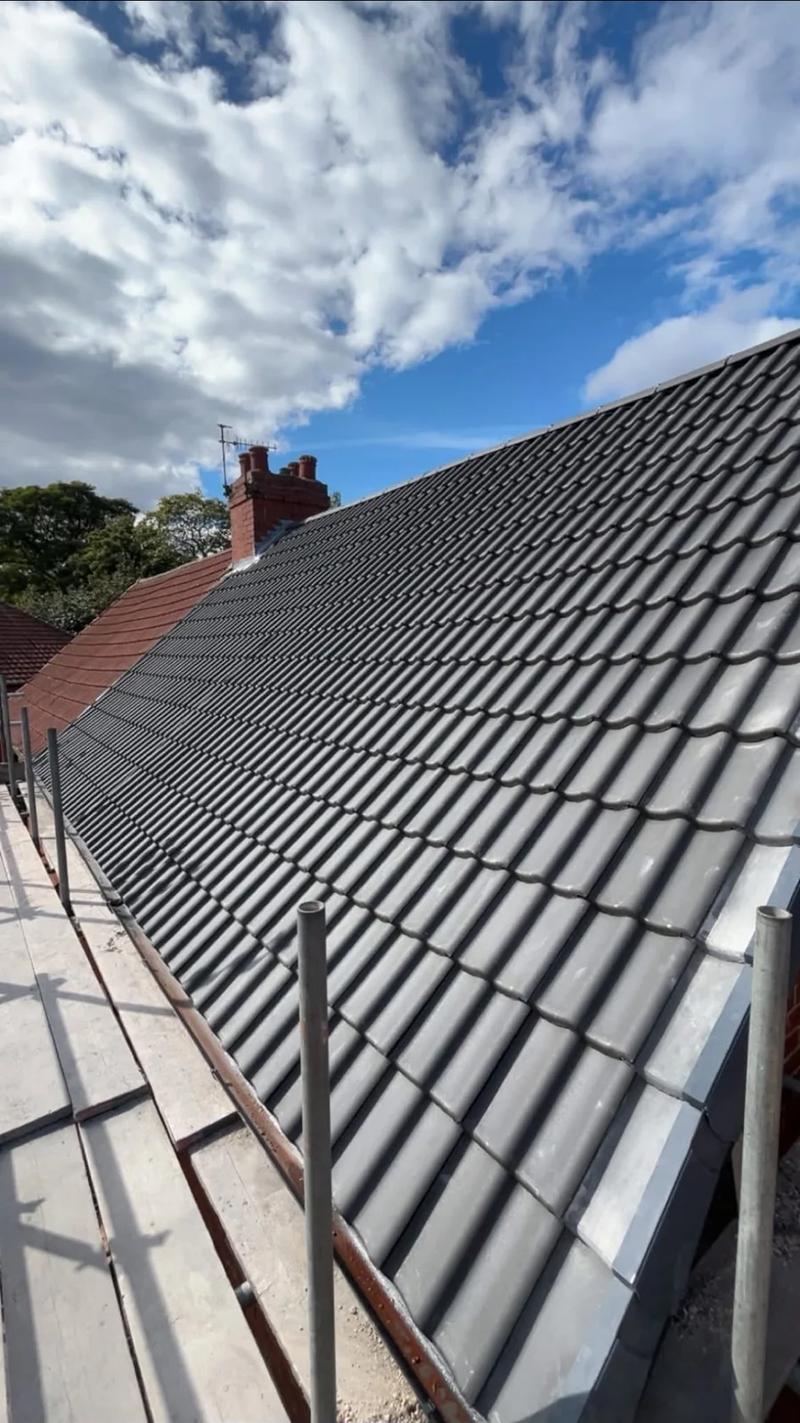
Roof work by McCluskey Roofing
First distinguish a roof dip from a sagging ceiling
An uneven external roof line and a bulging ceiling indoors are different observations, even when they occur in the same room. A ceiling can deform because of water or failed fixings without showing the whole roof structure. Equally, movement in rafters may not produce an obvious stain inside. Describe exactly what you can see and where.
If a ceiling is bulging, wet or shedding material, keep people away from the affected area. Do not puncture it, remove boards or stand beneath it to investigate. Water near electrical fittings brings additional danger and requires appropriate professional help. Immediate risk to people should be handled through the appropriate emergency services rather than waiting for a roofing enquiry response.
Observe safely and avoid loading the roof
Do not climb onto a roof that appears distorted or try to test it by walking across the dip. Roof coverings can be fragile and the support beneath may be compromised. Adding your weight, stored material or improvised access equipment can increase the risk without providing a reliable diagnosis. Keep observations to safe positions on the ground.
Photographs from a safe distance can record the visible line and surrounding features. Note whether the change seems recent, whether debris has fallen and whether doors or internal finishes have also moved. These observations help describe the concern, but they cannot confirm stability. Where movement suggests a structural problem, assessment by a suitably experienced building professional or structural engineer may be necessary.
Possible causes need distinguishing
Timbers can deflect under loads they were not designed to carry, or deteriorate after prolonged moisture exposure. Alterations to supports, roof openings or coverings may also affect the construction. A roof with older uneven lines does not necessarily have the same problem as one that has recently changed shape, so context matters.
Rafters, purlins, connections and bearing points all influence how the roof carries weight. A local dip may relate to one component, while broader distortion may involve the supporting arrangement. An inspection should not assume that laying new tiles will correct these issues. The visible covering is only one layer within the system that needs assessment.
What an inspection should establish
Where safe access permits, the assessment can consider the pattern of movement, timber condition, signs of damp and previous alterations. Loft insulation and stored items may obscure parts of the structure, while coverings hide other areas. The findings should identify what is visible and what requires further investigation rather than promising certainty without opening anything up.
A roofing assessment can identify related leaks or displaced coverings, but structural concerns may need specialist input before repair work is specified. If support design or calculations are required, those are distinct from choosing a roof covering. Building-control requirements can also apply to structural alterations and should be clarified before the proposed work proceeds.
Repairing the cause before renewing the surface
Where a particular support or connection has failed, an appropriately designed repair may be considered. Where damage is widespread, the scope can be more substantial. The sequence must establish suitable support before renewing the covering; otherwise the new surface may follow the same distortion or conceal a continuing weakness.
Roof replacement can be part of the solution when covering and supporting layers also need renewal, but replacement is not itself a structural diagnosis. Comparing options should explain which work addresses movement and which restores waterproofing. The signs-of-a-new-roof guide discusses covering deterioration, helping separate that decision from the investigation of a sagging structure.
Leaks and damp can be part of the picture
Water entering over time can affect timber, while movement can disturb tiles and flashing and create new routes for rain. Establishing which problem came first may require inspection of more than the visibly dipped area. A stain several feet away does not show where the structure is damaged or where water originally entered.
If a leak is present, explain when it appears and whether it follows particular weather. Avoid temporary patches that need you to access the unstable area. Protect belongings only where it is safe and keep people clear of damaged ceilings. A separate roofing repair assessment may help address weatherproofing once the relevant support and access concerns are understood.
Need it sorted? Book a roof inspection
Contact McCluskey Roofing to discuss a roof survey and the next assessment step. Describe the visible sag, your postcode and any recent changes or leaks. The company is based in Wallsend, taking enquiries across Newcastle and the North East. Use the existing quote form or main mobile number; do not wait for routine attendance if there is an immediate danger.