
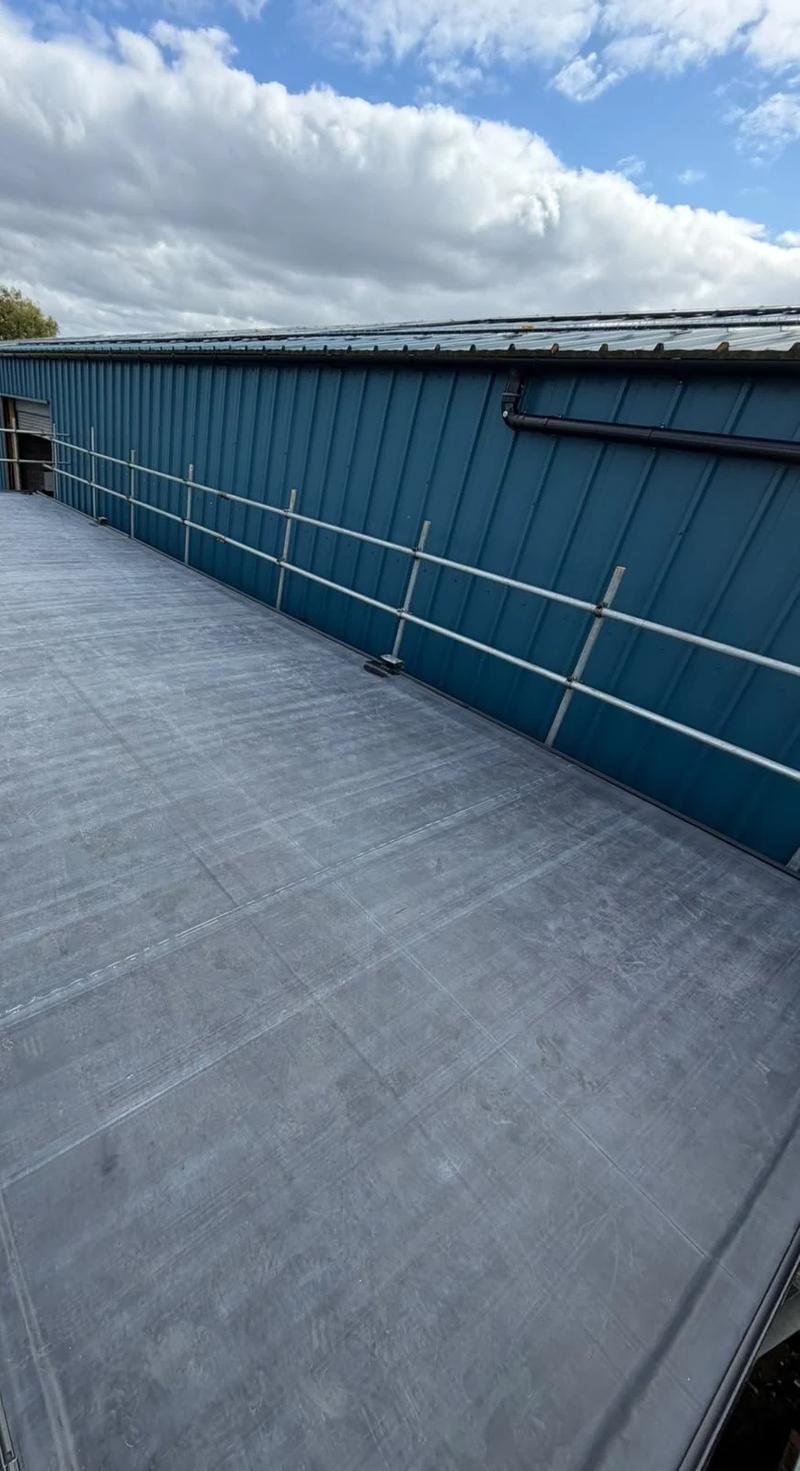
Roof work by McCluskey Roofing
Standing water needs a drainage assessment
A flat roof should have a drainage arrangement suited to its construction, with falls directing rain towards outlets or gutters. Water collecting in a hollow may relate to the original falls, movement in the deck or an obstructed outlet. The location and pattern of the water are useful clues. A puddle beside blocked debris calls for a different investigation from a broad depression in the roof surface.
Photographs taken safely from an accessible window can show where water collects and whether it changes after rain. Do not step onto the roof to measure its depth or force water towards an outlet. Fragile surfaces, slippery coverings and unknown deck condition make that unsafe. The assessment should identify the drainage route and the underlying reason it is not working as intended.
Raised areas are not all the same defect
Blisters can involve trapped air or moisture and separation within a roofing build-up. A raised area may also be associated with movement or loss of adhesion, depending on the covering and substrate. Felt, rubber and liquid-applied roofs have different construction details, so appearance alone cannot establish the cause. The material and its installation method need identifying before deciding what investigation is appropriate.
Do not puncture, cut or push down a blister as an experiment. That can damage waterproofing and create an opening where none previously existed. Record whether the area looks new, changes with temperature or sits beside a seam or junction, but leave physical examination to someone with suitable access. The visible surface should be assessed alongside the condition of the layers beneath it.
Why the deck and insulation matter
A covering may show symptoms caused by a wet, weakened or uneven substrate. Recoating or patching the surface will not necessarily correct that condition. If moisture has entered the build-up, the extent of damp material needs consideration before it is concealed. Deck movement, insulation arrangement and roof falls should form part of the diagnosis rather than being ignored once a surface defect has been identified.
Opening a limited area can sometimes be necessary to understand the construction, but it should be planned as professional investigative work with appropriate weather protection. Ask what can be established visually and what remains uncertain. A written repair scope should explain whether the proposal deals only with the waterproof surface or also includes affected supporting materials, insulation and the drainage arrangement.
Covering-specific repair choices
On felt roofs, the condition of seams and individual layers helps determine whether local repair is practical. On rubber roofs, seams, perimeter fixings, adhesion and penetrations require appropriate detailing for the material. Liquid roofing depends on substrate preparation and the condition of the surface beneath it. These are separate repair methods, not interchangeable products to spread over any raised or wet area.
The existing covering must be suitable for the proposed treatment. A compatible patch on a local fault is different from applying a new surface across widespread deterioration. Ask why the chosen repair addresses the cause and how nearby drainage details will be handled. If the roof has been patched repeatedly, that history should be included in the assessment rather than hidden beneath another general coating.
When ponding changes the replacement discussion
If poor falls or deck deformation underlie the standing water, the solution may involve more than waterproofing renewal. A replacement proposal should explain how water will reach the outlets after the work, not simply which new covering will be used. Significant trapped moisture or widespread separation may also change the scope. The decision should follow the construction findings rather than one photograph of a puddle.
Keep drainage maintenance and repairs distinct. Clearing debris may improve an obstructed outlet, but it does not correct an inadequate fall or a failed deck. Explain the roof’s use, any leaks below and the position of outlets when you enquire. If there is active leakage near electrics or an unstable ceiling, keep away from the affected area and seek appropriate assistance without trying to access the roof.
Need it sorted? Book flat roof repairs
For ponding or raised areas on your flat roof, contact McCluskey Roofing with the covering type, outlet positions and any symptoms indoors. Explain whether the roof serves a garage or a heated room and what repairs have already been tried. Request a free flat roof repair quote based on drainage and construction findings, leaving physical inspection and disturbance of blisters to suitably equipped professionals.